United Express Flight 3989 Returns After Mid-Takeoff Incident

Co-Founder & CEOAviation News Editor delivering trusted coverage across the global aviation industry.
A passenger on a United Express flight was arrested after calling 911 mid-takeoff and attempting to open a cabin door, forcing an emergency landing.
Key Takeaways
- •United Express Flight 3989 returned to IND 15 minutes after takeoff.
- •Passenger Jacob Cook attempted to open a cabin door during takeoff.
- •FAA has recorded over 830 unruly passenger incidents in 2026.
- •Disruptive passengers face civil penalties exceeding $43,000 per violation.
The Federal Aviation Administration (FAA) has launched an investigation into United Express Flight 3989 following a mid-takeoff disturbance that forced an emergency return to Indianapolis International Airport (IND). On June 30, 2026, a passenger identified as Jacob Cook reportedly called 911 from his seat during the takeoff roll, shouting for the aircraft to stop before attempting to access a cabin door. The Embraer E175, operated by Mesa Airlines on behalf of United Airlines (UA), was bound for George Bush Intercontinental Airport (IAH) in Houston when the incident occurred.
Operational Impact and Response
The aircraft returned to IND just 15 minutes after its initial departure. According to Air Traffic Control (ATC) communications captured during the event, the pilot reported, "We have a belligerent passenger trying to open the cabin door... We have passengers trying to get him secured in a seat right now." There were 68 passengers and several crew members on board at the time. Airport police took the suspect into custody upon landing. For the 68 passengers on board, the incident caused significant disruption, including itinerary delays and potential missed connections in Houston.
Regulatory Context and Enforcement
This event is the latest in a series of security breaches the FAA is tracking as part of its ongoing Unruly Passengers - Federal Aviation Administration initiative. The agency has recorded over 830 unruly passenger incidents so far in 2026. Under the current Zero Tolerance for Unruly Behavior policy, the FAA can propose civil penalties of up to $43,658 per violation. While unruly passenger incident rates have dropped over 80% since their 2021 peak, the frequency of these reports remains a persistent operational risk.
Historical Precedents
This incident mirrors other recent cabin security threats. In February 2024, a passenger on an American Airlines flight attempted to open an emergency exit mid-flight and was restrained by fellow travelers. Similarly, in June 2026, a passenger on a Frontier Airlines flight was subdued by passengers after attempting to open an exit door. These cases highlight the reliance on crew and passengers as a first line of defense, as Flight Deck Security Mandates require that cockpit doors remain locked and secured during all phases of flight, with pilots trained to remain in the flight deck rather than intervening in cabin disturbances.
Technical Comparison: E175 vs. CRJ900
| Metric | Embraer E175 | Bombardier CRJ900 |
|---|---|---|
| Typical Capacity | 76-78 passengers | 76-90 passengers |
| Maximum Range | 2,200 nm (LR variant) | 1,550 nm |
| Engines | GE CF34-8E (14,500 lbf) | GE CF34-8C5 (14,510 lbf) |
FAA Investigation and Future Milestones
The FAA investigation will likely result in formal enforcement actions by late 2026, potentially including the assessment of maximum civil penalties. Concurrently, criminal proceedings in Marion County are expected to progress through late 2026 or 2027. While some mental health advocacy groups argue that such mid-air outbursts are often symptoms of psychological distress rather than malicious intent, the regulatory focus remains on the immediate threat to aviation safety.
Why This Matters for Regional Operations
For regional carriers like Mesa Airlines, incidents of this nature create significant operational and reputational challenges. The necessity of an emergency diversion disrupts flight schedules and places immense psychological strain on passengers and crew. As the FAA continues to prioritize its zero-tolerance enforcement, airlines are increasingly focused on de-escalation training to manage cabin-based threats before they escalate into security emergencies that require immediate diversion.
Frequently Asked Questions
- What happens to passengers who interfere with flight crew duties?
- Interfering with crew duties violates federal law. The FAA enforces a zero-tolerance policy, which can result in criminal prosecution and civil penalties of up to $43,658 per violation.
- Why did the United Express flight return to Indianapolis?
- The flight returned to Indianapolis International Airport after a passenger called 911 mid-takeoff and attempted to open a cabin door, creating an immediate safety risk that required an emergency landing.
omniflights.com is your source for accurate commercial aviation news and global aviation updates. Get the latest updates on major hubs, regional terminals, and airport operations via the Airports section at omniflights.com/airports.

Written by Hardik Vishwakarma
Co-Founder & Aviation News Editor leading initiatives that improve trust and visibility across the global aviation industry. Covers airlines, airports, safety, and emerging technology.
Visit ProfileYou Might Also Like
Discover more aviation news based on similar topics

FlyDubai FZ1073 Co-Pilot Had Prior Extremism Concerns
FlyDubai flight FZ1073 co-pilot Hamam Al-Hammami, who attacked his captain with an ax, was previously barred from Oman Air for extremist views.
Flydubai FZ1073: Pilot Attempted Terrorist Act, UAE Says
Flydubai flight FZ1073 was targeted in an attempted terrorist act by co-pilot Hamam al-Hammami, who was subdued by the captain during the flight.
Flydubai FZ1073 Cockpit Attack: Inside the Terror Attempt
Flydubai flight FZ1073 diverted to Tabuk after co-pilot Hamam al-Hammami attacked Captain Smit Machchhar in a confirmed terrorist act.
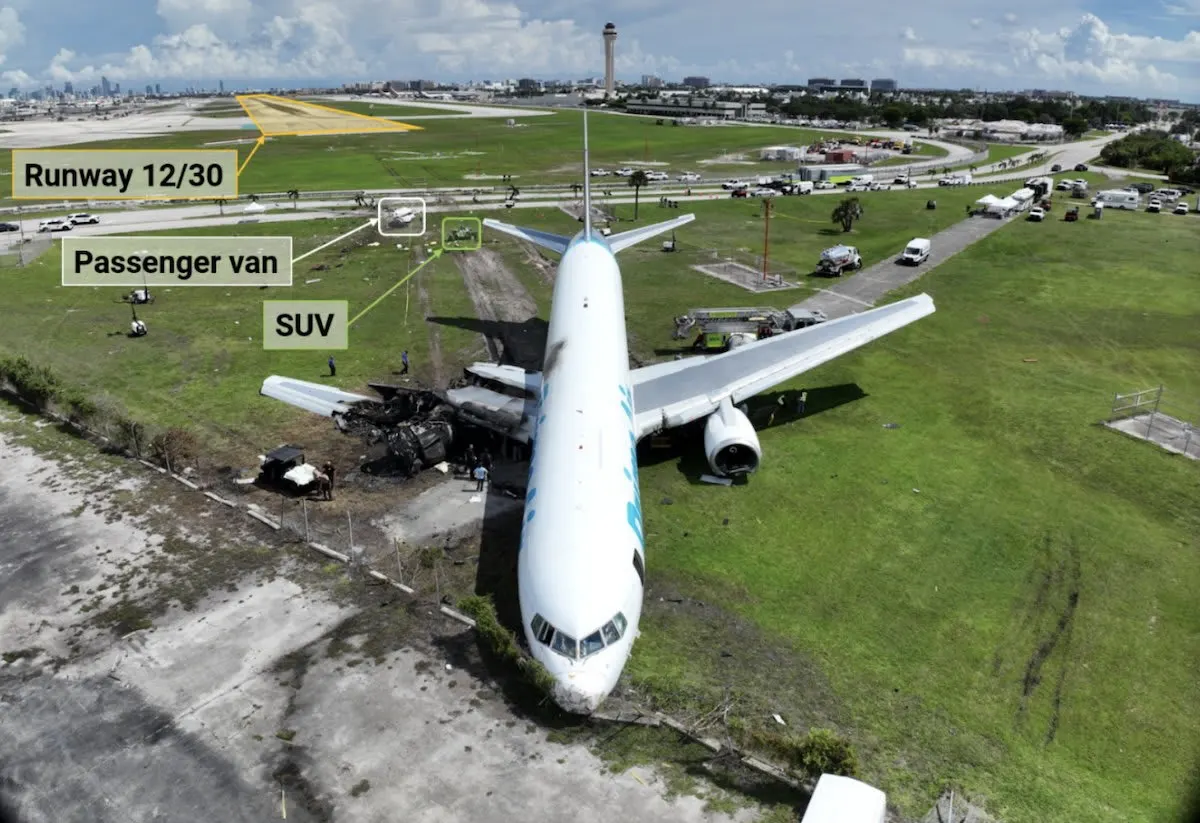
21 Air 767 Crash: NTSB Report Details Fatal MIA Overrun
The NTSB preliminary report on the 21 Air 767 crash at Miami International Airport confirms five ground fatalities following a late, high-speed landing.
Flydubai FZ1073 Hijacker Flagged as Security Risk by Oman
A Flydubai co-pilot accused of attempting to crash flight FZ1073 had been previously barred from flying in Oman due to extremist concerns.
FAA Clears Boeing 737 MAX Software Issue, Resumes MAX 10
The FAA cleared a Boeing 737 MAX software issue after a safety review, allowing the 737 MAX 10 certification process to resume immediately.