Cirrus SF50 Collides With Idaho Construction Equipment

Co-Founder & CTOCo-Founder & CTO driving the technology and data systems behind Omni Flights.

One passenger was injured when a Cirrus Vision Jet collided with construction equipment during a rejected takeoff at an Idaho airport.
Key Takeaways
- •Cirrus SF50 collided with construction equipment at KDIJ airport in Idaho.
- •One passenger was hospitalized following the rejected takeoff on August 14.
- •Runway 04/22 was shortened to 3,850 feet due to active irrigation repairs.
- •NTSB is investigating the ground collision and runway safety protocols.
The federal investigation into a Cirrus Vision Jet accident is underway following a Driggs-Reed Memorial Airport collision in Idaho on August 14, 2026. The accident, which occurred during a rejected takeoff, has prompted an NTSB runway incursion investigation to determine how the single-engine civilian jet entered a closed runway segment. At approximately 6:24 a.m. local time, the aircraft collided with heavy construction equipment on the partially closed runway, resulting in one passenger injury.
The incident highlights the ongoing challenges of airport construction safety and pilot situational awareness during active infrastructure updates. For general aviation operators, the collision underscores the critical importance of verifying temporary runway configurations, as the airport was operating with significantly reduced runway length due to repairs on a ruptured irrigation line.
The Runway Restriction and Collision Details
The aircraft involved in the ground collision was a Cirrus SF50 Vision Jet, registered as N71KD to Vision71 Technologies. According to the FAA (Federal Aviation Administration), the aircraft was attempting to depart from runway 04/22 at KDIJ (Driggs-Reed Memorial Airport). Under normal operating conditions, runway 04/22 normally measures 7,301 feet by 100 feet. However, due to active construction, the available runway distance had been shortened to just 3,850 feet.
A NOTAM (Notice to Air Missions) had been active since August 5, 2026, alerting pilots to the temporary displaced threshold and partial runway closure. Despite the active advisory, the aircraft entered the closed portion of the runway during its takeoff roll.
Doug Self, the Driggs city administrator, clarified the timeline of the accident in an official statement: "At approximately 6:30 a.m. [MDT] on Friday, August 14, 2026, a Cirrus Vision Jet airplane entered a closed section of runway at Driggs Reed-Memorial Airport and attempted takeoff through a portion of runway that was under construction. The pilot was able to slow the plane upon approaching the construction site but could not avert a collision with construction material."
The collision resulted in substantial damage to the aircraft and the construction materials. One passenger aboard the jet was injured and required hospitalization, while the pilot and other occupants did not report life-threatening injuries. The NTSB (National Transportation Safety Board), alongside the FAA, has initiated an investigation into the ground collision to evaluate runway safety protocols and determine the factors that led to the aircraft attempting a takeoff on the closed segment.
The incident has also drawn attention to the division of responsibility during airport construction. According to the FAA, the responsibility for avoiding closed runway sections lies entirely with the Pilot in Command (PIC) through mandatory pre-flight NOTAM briefings. Conversely, aviation safety advocates have raised alternative perspectives, arguing that temporary runway configurations and displaced thresholds during active construction create unacceptable hazards for high-performance aircraft, requiring stricter physical barriers rather than relying solely on NOTAMs.
Context and Operational Comparisons
This ground collision reflects broader industry trends regarding airport construction safety and runway incursions. The FAA has recently increased scrutiny on the effectiveness of NOTAMs and pilot situational awareness during active construction projects.
In general aviation, the Cirrus Vision Jet remains one of the most popular light personal jets among owner-operators, making its operational incidents highly relevant to general aviation safety discussions. To understand the operational characteristics of this single-engine jet, it is helpful to compare it to other light business jets in its class.
Cirrus SF50 Vision Jet G2+ vs. HondaJet HA-420: Key Specifications
| Metric | Cirrus SF50 Vision Jet G2+ | HondaJet HA-420 |
|---|---|---|
| Engine Configuration | 1x Williams FJ33-5A | 2x GE Honda HF120 |
| Max Cruise Speed | 311 ktas | 422 ktas |
| Max Range | 1,275 nm | 1,223 nm |
This accident shares similarities with historical precedents involving general aviation aircraft. On August 24, 2021, a Cirrus SF50 Vision Jet registered as N1GG suffered a runway excursion and post-impact fire after the pilot executed an RTO (Rejected Takeoff) in Lansing, Michigan. The pilot in that event rejected the takeoff due to a reported loss of rudder and brake authority, illustrating how rejected takeoffs in light jets can quickly culminate in ground collisions and airframe damage. Additionally, a Cessna P206 ground collision at Sulphur Creek Ranch Airport in Idaho on July 14, 2019, highlighted the hazards of takeoff emergencies and terrain or obstacle collisions at smaller, remote Idaho airfields.
The Mechanics of the Shortened-Runway Rejected Takeoff
This development indicates that operating high-performance turbine aircraft on shortened runways leaves exceptionally thin margins for error. A runway reduced from 7,301 feet to 3,850 feet represents a 47% reduction in available takeoff and stopping distance. For a single-engine jet like the Cirrus SF50, initiating an RTO under these conditions requires immediate pilot recognition and aggressive braking action to avoid overrunning the displaced threshold. The data suggests that when aircraft enter closed construction zones, the presence of heavy equipment and stockpiled materials transforms a standard runway excursion into a high-energy collision. Historically, similar situations have led to calls for more conspicuous visual markings, such as lighted runway closure markers, to supplement paper NOTAMs during active airport construction.
The KDIJ Investigation and Restoration Timeline
The investigation will proceed through several defined regulatory milestones. The NTSB is expected to publish its preliminary report on the accident by late August to early September 2026. This document will outline the initial factual findings, including flight data recorder information and pilot interviews.
Meanwhile, airport operations at KDIJ are adjusting to the aftermath. Driggs-Reed Memorial Airport officials expect the restoration of the full runway configuration by September 5, 2026, once the irrigation line repairs and wreckage clearance are complete. The final accident report from the NTSB, which will determine the probable cause of the collision, is expected to be published between August 2027 and August 2028.
Why Airport Construction Safety Matters to Owner-Operators
This collision signals a critical checkpoint for general aviation owner-operators who fly high-performance single-engine jets into regional airports. For these pilots, the incident underscores that pre-flight preparation must extend beyond weather checks to rigorous review of active NOTAMs and temporary runway thresholds. As regulators place greater focus on runway incursions, this event may accelerate demands for improved physical barriers and visual warnings at active construction zones.
Frequently Asked Questions
- What caused the Cirrus Vision Jet crash at Driggs-Reed Memorial Airport?
- The Cirrus SF50 Vision Jet collided with construction equipment during a rejected takeoff on a shortened runway. The aircraft entered a closed section of the runway where repairs were being made to a ruptured irrigation line.
- How much of the runway was available at KDIJ during the accident?
- At the time of the accident, the runway was operating with only 3,850 feet of available length due to active construction, down from its normal length of 7,301 feet.
- Were there any injuries in the Idaho Cirrus Vision Jet collision?
- Yes, one passenger aboard the aircraft was injured and required hospitalization. The other occupants did not report life-threatening injuries.
omniflights.com provides comprehensive commercial aviation news covering airlines, aircraft, and airports. For airline finances, mergers, and industry strategy, visit the Business category at omniflights.com/business.
Written by Shashank Shukla
Co-Founder & CTO leading the engineering and AI systems behind Omni Flights. Covers aviation technology, flight safety, aircraft manufacturing, and emerging aerospace developments.
Visit ProfileYou Might Also Like
Discover more aviation news based on similar topics

Families Demand DCA Midair Collision Safety Reforms
Families of 67 victims from the 2025 DCA midair collision are pressing Congress for mandatory ADS-B In technology to prevent future aviation tragedies.

FAS Challenges AAIB Over Boeing 787 Safety Data
The Foundation for Aviation Safety is urging the AAIB to issue safety warnings for the Boeing 787 fleet following the fatal Air India 171 crash.
NTSB Safety Recommendations Lag Amid 6 Monthly Near-Misses
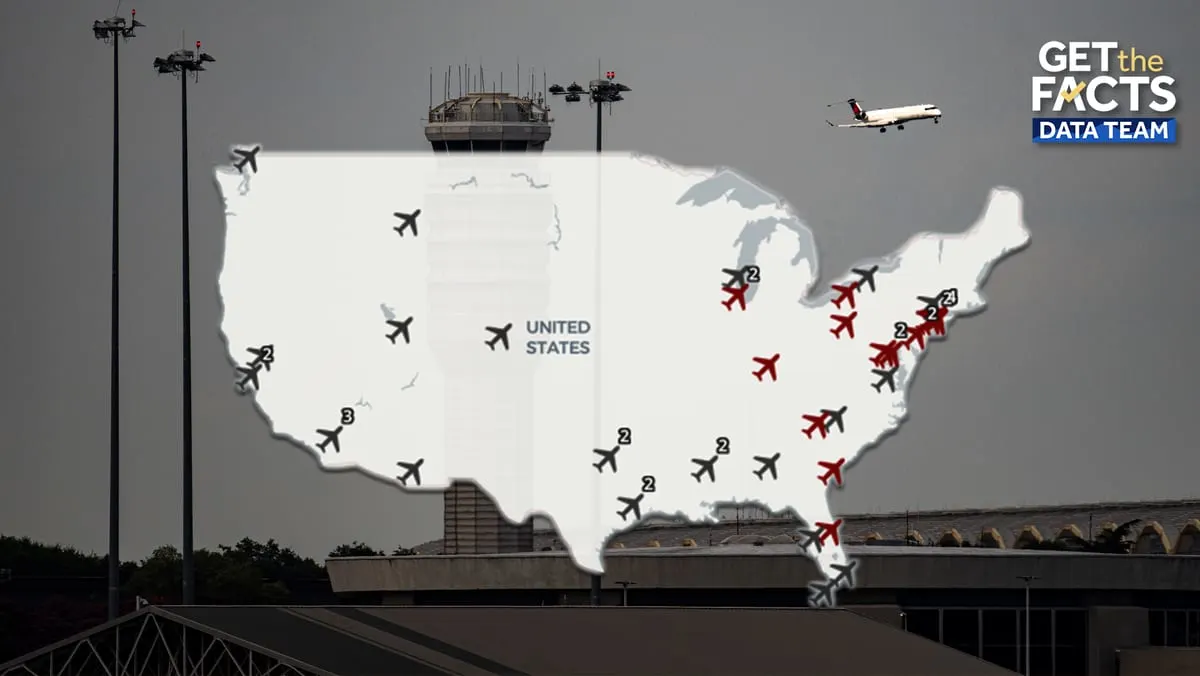
Approximately 6 near-miss incidents occur monthly at U.S. airports as 270 NTSB safety recommendations remain unaddressed by federal regulators.
NTSB Rejects FAA Safety Responses After 67-Fatality Crash
The NTSB labeled 11 FAA responses to 2025 DCA mid-air collision recommendations as unacceptable, citing the lack of a mandatory ADS-B In requirement.
EASA Orders Urgent Airbus A380 Wing Spar Inspections
The EASA ordered urgent inspections on 16 Airbus A380s after discovering wing spar cracks that could compromise structural integrity.
Ryanair Flight RK514 Diverts to Birmingham After Emergency
Ryanair flight RK514 diverted to Birmingham Airport on September 13, 2026, following a medical emergency involving a passenger.