Bahamasair ATR 42-600 Lands Safely After Gear Failure

Co-Founder & CTOCo-Founder & CTO driving the technology and data systems behind Omni Flights.

A Bahamasair ATR 42-600 landed safely at Nassau after a landing gear failure extended the 35-minute domestic flight to nearly two hours.
Key Takeaways
- •Bahamasair Flight UP136 experienced a primary landing gear failure on August 14.
- •Crew deployed the alternate gear system after circling for nearly two hours.
- •Flight landed safely at Nassau with emergency services standing by.
- •Incident occurred amid heightened local anxiety following a recent fatal crash.
On August 14, 2026, Bahamasair flight UP136 experienced a primary landing gear failure during a routine Marsh Harbour to Nassau flight. The regional turboprop was forced to circle near the capital for nearly two hours before executing a safe landing at Lynden Pindling International Airport (LPIA).
While the flight crew successfully deployed the alternative landing gear system, the extended flight time and visible emergency preparations triggered substantial passenger fear and trauma. This ATR 42-600 incident has highlighted broader concerns regarding Bahamas aviation safety, occurring just weeks after a fatal domestic crash in the region.
The Mechanics of Flight UP136's Emergency Landing
The flight, operated by an ATR 42-600 with registration C6-BFV, departed Marsh Harbour on Friday morning for what was scheduled to be a 35-minute domestic flight. However, as the aircraft approached Nassau, the primary landing gear failed to deploy. The crew immediately initiated emergency response protocols and notified air traffic control at LPIA.
To troubleshoot the system, the aircraft began a series of holding patterns, extending the total flight duration to approximately 1 hour and 45 minutes. According to Bahamasair management, the flight crew activated the aircraft's alternative landing gear system, which relies on manual or gravity-drop redundancy to lock the gear into place.
Passenger Jade Adderley, who was traveling with his wife and six-year-old son, described the mounting anxiety on board as the aircraft repeatedly approached the runway before climbing back into the air. "The nose went down and he went to land," Adderley said, "but we went back up in the air again." As the aircraft circling continued over the water, passenger anxiety intensified.
Regional Safety Context and Passenger Anxiety
The psychological impact of the delay was compounded by recent events in Bahamian aviation. Adderley noted that during the ordeal, his thoughts turned to the Andros aviation tragedy that occurred on July 10, 2026. In that incident, a Flamingo Air Cessna 402 crashed near San Andros, resulting in 10 fatalities. Following that accident, the Aircraft Accident Investigation Authority (AAIA) launched a comprehensive investigation, and regulators temporarily suspended Flamingo Air's Air Operator Certificate (AOC). This fatal accident has driven a trend of heightened passenger sensitivity to regional aviation safety in the Bahamas.
While Bahamasair characterized the event as a standard precautionary deployment of an alternative system that concluded safely, passengers experienced the prolonged flight as a severe emergency. Upon landing, the ATR 42-600 was met on the tarmac by emergency vehicles, including ambulances and police units, in accordance with the airport's emergency response activation protocols. No emergency assistance was ultimately required, and the aircraft was taxied to the terminal where passengers disembarked safely. Bahamasair confirmed that the aircraft was subsequently repaired and returned to service.
Technical Comparison: Bahamasair Turboprop Fleet
To understand the operational profile of the aircraft involved, the following table compares the ATR 42-600 to its larger stablemate, the ATR 72-600, both of which form the backbone of Bahamasair's regional network.
ATR 42-600 vs ATR 72-600: Key Specifications
| Metric | ATR 42-600 | ATR 72-600 |
|---|---|---|
| Passenger Capacity | 48-50 passengers | 70-78 passengers |
| Maximum Range | 716 nm | 740 nm |
| Engines | Pratt & Whitney Canada PW127M | Pratt & Whitney Canada PW127M |
Redundancy Systems and the Mechanics of Alternate Gear Deployment
The resolution of Flight UP136’s gear issue underscores the high level of system redundancy built into modern regional turboprops. When primary hydraulic pressure fails to actuate the landing gear, regional aircraft like the ATR 42-600 utilize a manual release mechanism. This system allows gravity and aerodynamic forces to assist in extending and locking the landing gear into place.
However, executing this alternate checklist requires significant time. Pilots must fly the aircraft through specific maneuvers and holding patterns to ensure the gear is fully down and locked before attempting a landing. This technical necessity often conflicts with passenger perception, as prolonged circling and low-altitude passes can be interpreted as a sign of imminent danger rather than a controlled, systematic troubleshooting process.
Investigation and Reporting Timelines
Following standard procedure for mechanical anomalies, the Bahamian Aircraft Accident Investigation Authority (AAIA) is expected to review the maintenance logs and flight data recorder information for the ATR 42-600. A preliminary incident report detailing the root cause of the primary landing gear failure is expected to be released in late 2026.
The findings will likely influence Bahamasair Maintenance and Operations, which faces medium-severity impacts regarding component reliability and scheduled maintenance intervals for its ATR fleet.
The Psychological Reality of Regional Aviation Safety
This incident highlights the delicate balance between mechanical reliability and public trust in regional aviation. While the redundant systems functioned exactly as designed, preventing any physical injuries, the event illustrates how closely passenger psychology is tied to recent regional safety records. For airlines operating in tight-knit domestic markets, managing post-incident communication is as critical to maintaining market confidence as the technical execution of emergency checklists.
Frequently Asked Questions
- What happened to Bahamasair Flight UP136?
- On August 14, 2026, Bahamasair Flight UP136 experienced a primary landing gear failure during a flight from Marsh Harbour to Nassau. The flight crew successfully deployed an alternative landing gear system and landed safely at Lynden Pindling International Airport after circling for nearly two hours.
- What type of aircraft was involved in the Bahamasair landing gear incident?
- The incident involved an ATR 42-600 turboprop aircraft, registered as C6-BFV. Following the safe landing, the aircraft underwent repairs and was returned to active service.
- Why were passengers on Bahamasair Flight UP136 particularly anxious during the emergency?
- Passenger anxiety was heightened due to a recent fatal aviation accident in the Bahamas. On July 10, 2026, a Flamingo Air Cessna 402 crashed near San Andros, resulting in 10 fatalities and leading to increased public concern over regional aviation safety.
Access up-to-date commercial aviation news and airline industry developments via omniflights.com. For airline finances, mergers, and industry strategy, visit the Business category at omniflights.com/business.
Written by Shashank Shukla
Co-Founder & CTO leading the engineering and AI systems behind Omni Flights. Covers aviation technology, flight safety, aircraft manufacturing, and emerging aerospace developments.
Visit ProfileYou Might Also Like
Discover more aviation news based on similar topics

Families Demand DCA Midair Collision Safety Reforms
Families of 67 victims from the 2025 DCA midair collision are pressing Congress for mandatory ADS-B In technology to prevent future aviation tragedies.

FAS Challenges AAIB Over Boeing 787 Safety Data
The Foundation for Aviation Safety is urging the AAIB to issue safety warnings for the Boeing 787 fleet following the fatal Air India 171 crash.
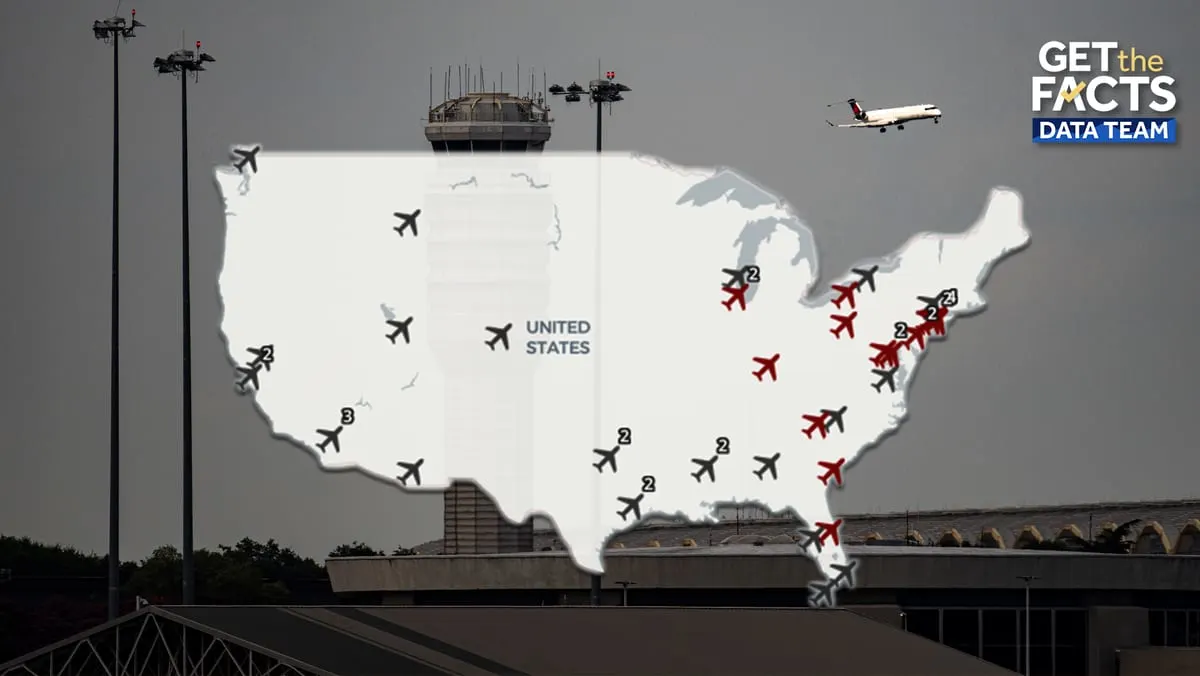
NTSB Safety Recommendations Lag Amid 6 Monthly Near-Misses
Approximately 6 near-miss incidents occur monthly at U.S. airports as 270 NTSB safety recommendations remain unaddressed by federal regulators.
NTSB Rejects FAA Safety Responses After 67-Fatality Crash
The NTSB labeled 11 FAA responses to 2025 DCA mid-air collision recommendations as unacceptable, citing the lack of a mandatory ADS-B In requirement.
EASA Orders Urgent Airbus A380 Wing Spar Inspections
The EASA ordered urgent inspections on 16 Airbus A380s after discovering wing spar cracks that could compromise structural integrity.
Ryanair Flight RK514 Diverts to Birmingham After Emergency
Ryanair flight RK514 diverted to Birmingham Airport on September 13, 2026, following a medical emergency involving a passenger.