Skymantics Wins $4.2M FAA Contract for Flight Data Tech

Co-Founder & CEOAviation News Editor delivering trusted coverage across the global aviation industry.

Skymantics won a $4.2M FAA contract to advance Trajectory Based Operations (TBO) by validating next-generation flight information services.
Key Takeaways
- •Skymantics awarded $4.2M FAA contract to validate FF-ICE services.
- •Project supports the U.S. transition to Trajectory Based Operations (TBO).
- •Aims to replace legacy flight plans with 4D dynamic trajectories.
- •Live-flight demos will involve airlines and global ANSPs.
Data analytics firm Skymantics, LLC has been awarded a $4.2 million contract by the Federal Aviation Administration (FAA) to evaluate critical flight information services that underpin the modernization of the U.S. air traffic management system. The project, known as the Demonstration of En-route Adaptation Coordination and Negotiation Services (DEACNS), is a key step in the FAA's transition to Trajectory Based Operations (TBO) and the global implementation of Flight and Flow Information for a Collaborative Environment (FF-ICE).
This initiative aims to replace legacy flight planning systems with a dynamic, data-rich environment where aircraft, airlines, and air traffic control share a single, authoritative source of flight information. By maturing concepts like the Flight Object, Flow Object, and the Globally Unique Flight Identifier (GUFI), the project will establish a framework for managing flight data consistently across the National Airspace System (NAS). The ultimate goal is to enhance situational awareness, improve predictability, and enable more efficient use of airspace, which could reduce flight delays and fuel consumption.
According to an estimate from Airbus, the implementation of TBO and FF-ICE has the potential to reduce the inaccuracy of current air traffic management prediction models by approximately 30-40 percent. To validate these benefits, Skymantics will lead a series of controlled laboratory simulations and live-flight demonstrations. These tests will involve collaboration with airframe manufacturers, airlines, third-party planning vendors, and both domestic and international Air Navigation Service Providers (ANSP).
“As the industry shifts toward a more collaborative and data-centric future, we are proud to partner with the FAA on the DEACNS project to modernize the National Airspace System,” said Charles Chen, CEO of Skymantics. “Leveraging our deep expertise in data analytics and systems engineering, we will build a safer, more interconnected airspace for all.”
Stakeholder Impact
The transition to FF-ICE represents a significant technological and operational shift for several key aviation stakeholders.
- Air Navigation Service Providers (ANSPs): These organizations, including the FAA, face the high-impact task of upgrading legacy automation systems. They must be re-engineered to process modern, XML-based data formats like the Flight Information Exchange Model (FIXM) and support the complex negotiation services required by FF-ICE.
- Airline Dispatch and Flight Operations: Airline operations centers will move from filing static flight plans to engaging in continuous, dynamic trajectory negotiation. This change will allow for more optimized routing in real-time but requires new software and updated operational procedures.
- Third-Party Flight Planning Vendors: Companies that provide flight planning software to airlines will need to update their products to support FF-ICE messaging standards and the generation and management of GUFIs.
Broader Industry Context
The DEACNS project is part of a multi-decade global effort to modernize air traffic control. It builds upon the foundation laid by the FAA's NextGen System Wide Information Management (SWIM) program, which established the necessary IP-based data-sharing infrastructure throughout the 2010s. The official FAA portal on Trajectory Based Operations details this long-term strategy.
This evolution represents a fundamental shift from traditional, clearance-based air traffic control to the more fluid and optimized model of TBO. Instead of simple routes, TBO relies on precise 4D trajectories that include latitude, longitude, altitude, and time. This allows automation systems to continuously deconflict and optimize flight paths for maximum efficiency.
The last major global flight planning update was the ICAO 2012 Flight Plan (FPL2012) mandate, which was necessary to accommodate advanced navigation capabilities. The FF-ICE framework, detailed by both Eurocontrol and the International Civil Aviation Organization (ICAO), is designed to replace and vastly expand upon the capabilities of the FPL2012 format.
Legacy Flight Planning vs. FF-ICE
| Metric | Legacy Flight Planning | FF-ICE |
|---|---|---|
| Format | FPL2012 (teletype) | FIXM (XML-based) |
| Identifier | Standard Callsign | Globally Unique Flight Identifier (GUFI) |
| Trajectory | 2D/3D static route | 4D dynamic trajectory |
Technical Analysis
This contract award signifies a crucial validation phase for the next generation of air traffic management technology. While the concept of TBO has been developed for years, the DEACNS project aims to provide the concrete, operational data needed to justify large-scale investment and guide the final stages of deployment. It moves FF-ICE from a theoretical concept to a system being tested under real-world conditions. The project's success is critical for the FAA to keep pace with global modernization efforts, particularly in Europe, where FF-ICE implementation is already mandated.
This transition also introduces new complexities. Aviation cybersecurity analysts have noted that sharing detailed 4D trajectory data across numerous international systems could expose aircraft and ground infrastructure to new cyber threats, requiring robust security protocols. The DEACNS demonstrations will be essential in identifying and mitigating such risks before widespread adoption. Ultimately, this project is less about developing a single piece of software and more about proving the viability of a globally interoperable system for air traffic flow management.
What Comes Next
The timeline for FF-ICE implementation is advancing globally. The European Commission, through the SESAR Deployment Manager, has a confirmed mandate for the initial phase, FF-ICE/R1, to be implemented by December 31, 2025.
In the U.S., the DEACNS project awarded to Skymantics is a multi-year effort. According to federal contract information, the project task is expected to be completed by April 2028. The findings from its simulations and live-flight demonstrations will directly inform the FAA's subsequent investment decisions and deployment schedules for the wider National Airspace System.
Why This Matters
For the aviation industry, the Skymantics DEACNS project is a critical step toward realizing the long-promised benefits of a modernized, digital air traffic management system. It provides a structured pathway to validate the technologies that can lead to fewer delays, more efficient routes, and lower fuel burn. This development signals an acceleration in the shift away from decades-old infrastructure, positioning the U.S. to maintain compatibility with evolving global standards and ensure a safer, more interconnected airspace.
Frequently Asked Questions
- What is the FAA's Trajectory Based Operations (TBO) initiative?
- Trajectory Based Operations (TBO) is a Federal Aviation Administration initiative to modernize air traffic management. It shifts from static, clearance-based control to using precise 4D trajectories (latitude, longitude, altitude, and time) to optimize flight paths, improve efficiency, and balance airspace demand.
- What is FF-ICE and the Globally Unique Flight Identifier (GUFI)?
- FF-ICE, or Flight and Flow Information for a Collaborative Environment, is an ICAO concept for a global system of sharing flight data. The Globally Unique Flight Identifier (GUFI) is a key component, providing a single, consistent identifier to track a flight across different air traffic control systems worldwide.
Stay ahead of the airline industry with commercial aviation news from omniflights.com. Follow aviation sustainability efforts, emissions research, and green initiatives in the Environmental section at omniflights.com/environmental.
Written by Hardik Vishwakarma
Co-Founder & Aviation News Editor leading initiatives that improve trust and visibility across the global aviation industry. Covers airlines, airports, safety, and emerging technology.
Visit ProfileYou Might Also Like
Discover more aviation news based on similar topics
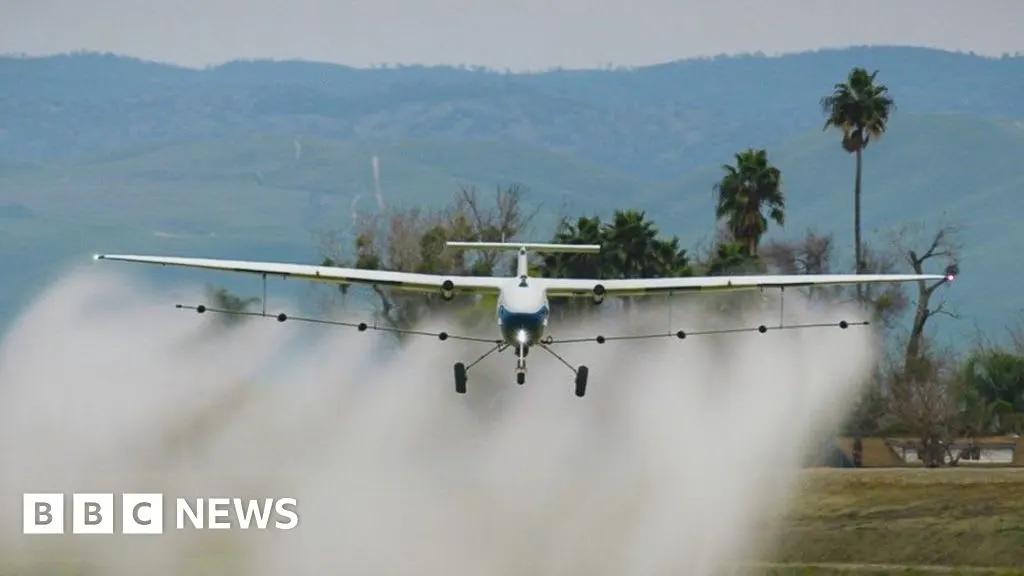
Autonomous Fixed-Wing Aircraft Development Gains Momentum
Start-ups are advancing autonomous fixed-wing aircraft for agricultural and cargo tasks, aiming to prove safety before pursuing passenger operations.

Boeing 787-9 Completes Short Inlet Tests in Montana
Boeing completed 52 hours of flight tests on a 787-9 with an experimental 30% shorter engine inlet to evaluate noise and fuel efficiency.

Airbus A321neo to Test Folding Wings of Tomorrow Project
Airbus launched a three-year flight-test campaign using an A321neo to evaluate folding wings that extend up to five meters.
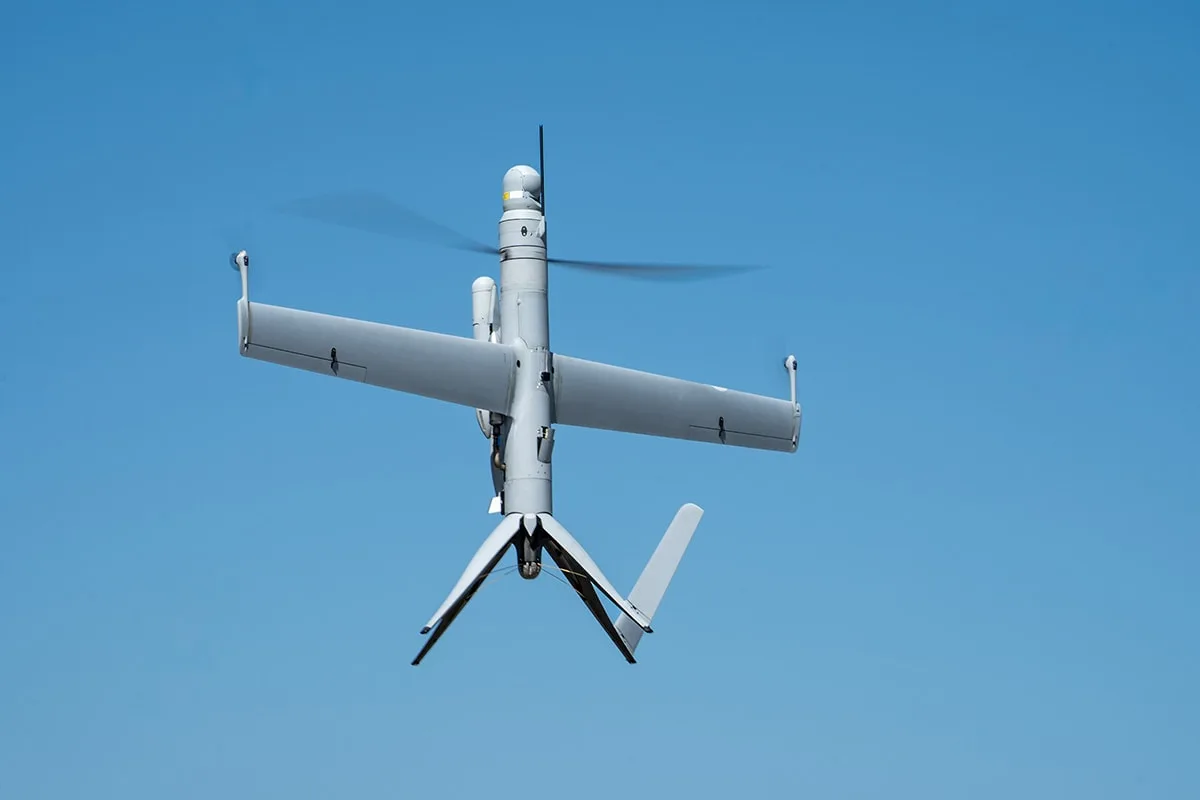
Voyageur Orders Canada's First Airbus U030 Flexrotor
Voyageur Aviation ordered Canada's first Airbus U030 Flexrotor, a 25 kg tactical drone, to expand its maritime and Arctic surveillance capabilities.
LATAM Selects SES Multi-Orbit Wi-Fi for 60+ New Jets
LATAM Airlines signed a multi-year deal with SES to equip more than 60 incoming Airbus and Embraer aircraft with multi-orbit satellite Wi-Fi.

Lufthansa 787-9 Tests Tech to Cut Fuel and Noise
Boeing, Lufthansa, and Rolls-Royce partnered to test emissions-reducing technologies on a 787-9, targeting a 20% fuel efficiency improvement.