SAF Coalition Lobbies Congress for 45Z Tax Credit Extension

Co-Founder & CEOAviation News Editor delivering trusted coverage across the global aviation industry.

The SAF Coalition met with Congress to advocate for extending the 45Z tax credit, aiming to boost domestic sustainable aviation fuel production.
Key Takeaways
- •Urges Congress to extend the 45Z Clean Fuel Production Tax Credit through 2033.
- •Highlights that domestic SAF production more than doubled in 2025.
- •Contrasts US growth with slowing global SAF output projections from IATA.
- •Faces an airline industry grappling with a $3.6 billion SAF cost premium in 2025.
More than 50 organizations comprising the Sustainable Aviation Fuel (SAF) Coalition convened on Capitol Hill for their second annual fly-in on March 25, 2026, to advocate for policies aimed at scaling up domestic production of renewable jet fuel. The coalition's primary objective is to secure long-term policy certainty, focusing on the extension and enhancement of the 45Z Clean Fuel Production Tax Credit to support the burgeoning U.S. market.
The push for legislative support comes at a critical time for the aviation industry. While domestic production of Sustainable Aviation Fuel, a drop-in renewable alternative to conventional jet fuel, is accelerating, global trends present a more complex picture. Airlines are facing significant cost pressures and an uncertain supply landscape as they work toward ambitious decarbonization targets, making stable U.S. policy a key factor in the global energy transition.
US Growth vs. Global Headwinds
According to SAF Coalition Executive Director Alison Graab, domestic SAF production more than doubled in 2025. This rapid expansion is central to the coalition's argument that with the right policy incentives, the United States can become a global leader in SAF manufacturing, creating jobs for American farmers and energy producers. The coalition is urging Congress to pass H.R. 6518 and S. 3759, bills designed to reinstate higher credit rates and extend the 45Z credit through 2033.
However, data from the International Air Transport Association (IATA), the global trade association for airlines, suggests a potential slowdown in global SAF output. While global production is expected to reach 1.9 million tonnes in 2025—double the 1 million tonnes produced in 2024—growth is projected to decelerate, reaching 2.4 million tonnes in 2026. This volume represents just 0.8% of total global jet fuel consumption projected for that year. IATA Director General Willie Walsh has cautioned that global production is falling short of expectations, citing "poorly designed mandates" like the European Union's ReFuelEU Aviation regulation as a key challenge.
The Push for Policy Certainty
The high cost of SAF remains a primary obstacle. The fuel currently trades at two to five times the price of its fossil-based equivalent. According to IATA, this price premium translated into an additional $3.6 billion in fuel costs for the airline industry in 2025. This financial burden underscores the industry's reliance on government incentives to bridge the price gap and de-risk long-term investments in new production facilities, which primarily use the Hydroprocessed Esters and Fatty Acids (HEFA) pathway.
The SAF Coalition's focus on a long-term extension of the 45Z tax credit is informed by historical precedent. The U.S. Biodiesel Tax Credit (BTC) faced numerous expirations and retroactive reinstatements between 2010 and 2022, creating significant market volatility. By securing a stable policy framework through 2033, the coalition aims to prevent a similar pattern of investment uncertainty that could stifle the growth of the domestic SAF market.
Industry and Stakeholder Impact
The expansion of the SAF industry has far-reaching implications. For commercial airlines, which face a severe cost burden, increased domestic production is essential to lower costs and meet emissions targets. The stability of the 45Z credit is critical for their long-term fuel procurement strategies.
U.S. agricultural producers, particularly corn and soybean farmers, stand to benefit from increased demand for their crops as feedstocks. This could potentially raise crop prices and stimulate rural economies. Meanwhile, renewable diesel refiners are watching the policy landscape closely; favorable tax credits could incentivize them to shift up to 20% of their production capacity from renewable diesel to the more complex SAF manufacturing process.
However, the approach is not without its critics. Some environmental organizations argue that increased reliance on crop-based feedstocks competes with the global food supply and could lead to indirect land-use changes that offset the carbon benefits. IATA has also voiced concerns, arguing that production incentives are more effective than mandates, which can distort markets and inflate costs without guaranteeing an adequate supply.
What Comes Next
The legislative efforts of the SAF Coalition are timed against key deadlines. Under current law, the 45Z tax credit structure is set to expire on December 31, 2027. Securing an extension before this date is paramount for maintaining investment momentum.
Globally, the regulatory environment continues to evolve. The European Union's ReFuelEU mandate for e-SAF, a synthetic fuel, is scheduled for implementation in 2030. This and other international policies will continue to shape global SAF demand and trade flows, making a stable U.S. production environment even more crucial for domestic energy security and market competitiveness.
Why This Matters
This lobbying effort represents a pivotal moment for the U.S. sustainable aviation sector. Securing a long-term extension of the 45Z tax credit could solidify the U.S. as a global leader in SAF production, providing airlines with a more stable and cost-effective path to decarbonization. Failure to establish policy certainty risks ceding market leadership and could leave the domestic aviation industry vulnerable to volatile global energy markets and supply constraints.
Get breaking commercial aviation news and expert airline analysis at omniflights.com. Get the latest updates on major hubs, regional terminals, and airport operations via the Airports section at omniflights.com/airports.
Written by Hardik Vishwakarma
Co-Founder & Aviation News Editor leading initiatives that improve trust and visibility across the global aviation industry. Covers airlines, airports, safety, and emerging technology.
Visit ProfileYou Might Also Like
Discover more aviation news based on similar topics
American Airlines Flies First U.S. eSAF Passenger Flight
American Airlines completed the first U.S. commercial flight using Infinium eSAF, a synthetic fuel that reduces lifecycle emissions by over 90%.

Akasa Air Partners with BPCL to Advance SAF in India
Akasa Air signed an MoU with BPCL to establish a SAF supply framework ahead of India's expected 1% blending mandate by 2027.

Delta, Shell Aviation Ink 5-Year SAF Supply Agreement
Delta Air Lines and Shell Aviation have signed a five-year agreement to supply Sustainable Aviation Fuel across five major U.S. hubs through 2030.

Indonesia to Mandate 1% SAF Blend for Flights by 2027
Indonesia will require a 1% Sustainable Aviation Fuel blend on international flights departing from Jakarta and Bali starting in 2027.
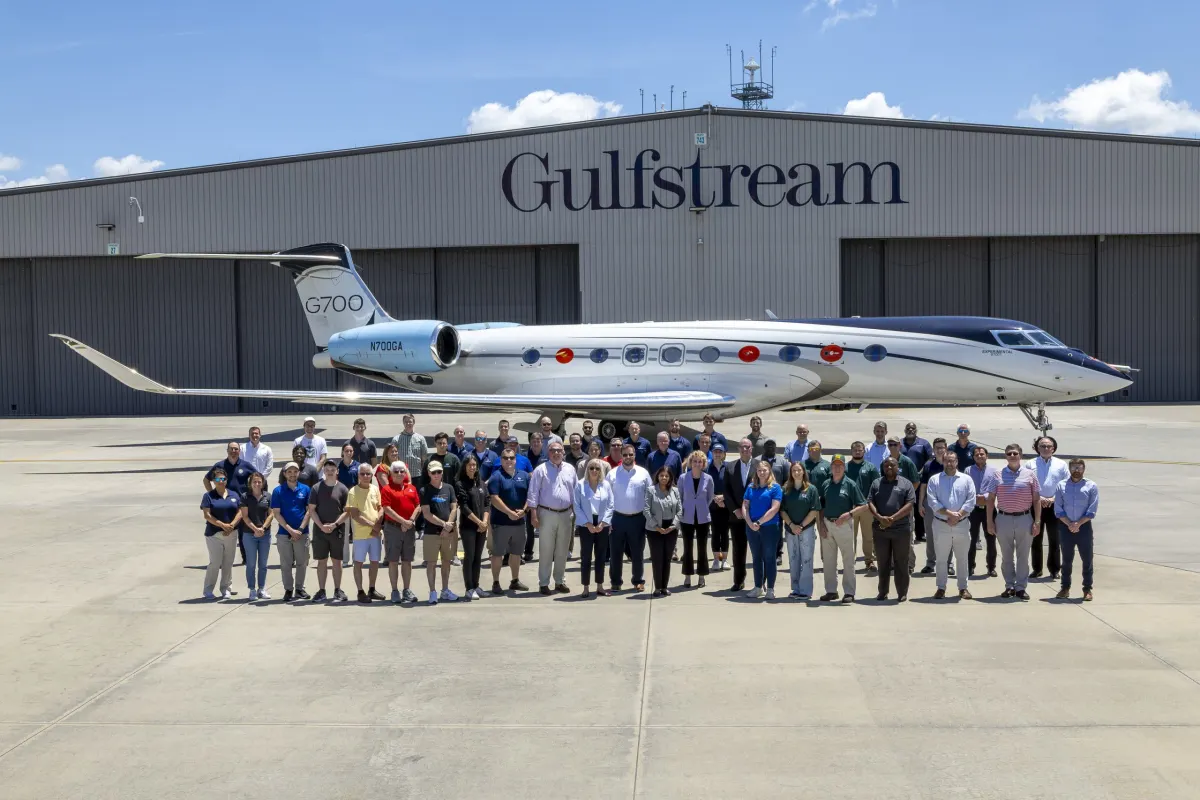
Gulfstream G800 Completes 100% SAF High-Altitude Emissions Test
Gulfstream tested 100% SAF on a G800 at 50,000 feet to measure emissions, marking a key step toward certifying unblended synthetic fuels.

LATAM Airlines Operates First SAF-Linked Passenger Charters
LATAM Airlines Group and PONANT completed 13 charter flights using SAF, reducing 160 tonnes of CO2 emissions via a book-and-claim methodology.