DHL Triples SAF Use, Becomes Top Global Purchaser

Co-Founder & CEOAviation News Editor delivering trusted coverage across the global aviation industry.
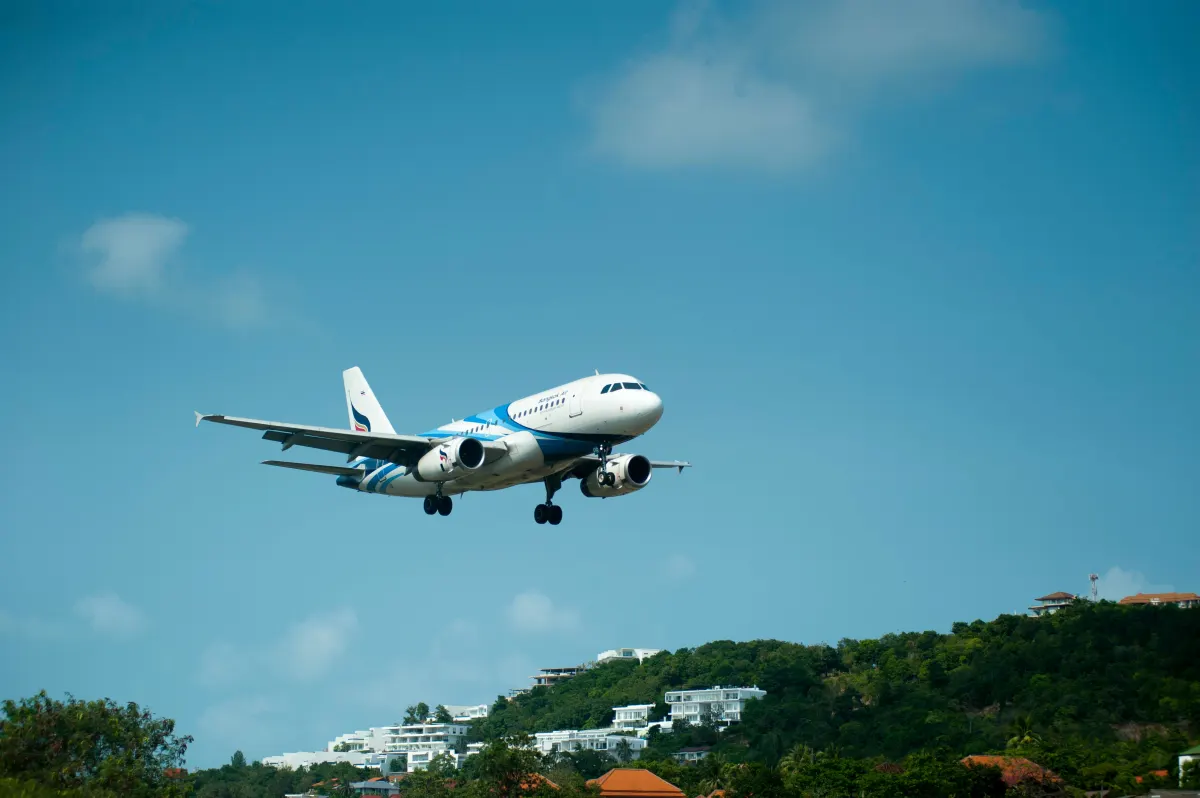
DHL tripled its Sustainable Aviation Fuel use to 185 kilotonnes in 2025, becoming one of the top three global purchasers alongside IAG and Air France-KLM.
Key Takeaways
- •DHL utilized 185 kilotonnes of SAF in 2025, a 10% blend ratio.
- •A 5-year deal with IAG Cargo secures 240 million liters of SAF at London Heathrow.
- •DHL is now a top-three global SAF purchaser, alongside IAG and Air France-KLM.
- •The strategy anticipates the E.U.'s mandatory 6% SAF blend by 2030.
Logistics giant DHL significantly increased its use of Sustainable Aviation Fuel (SAF) in 2025, positioning the company as one of the world's leading purchasers of the low-carbon alternative. The company's total DHL SAF usage 2025 reached 185 kilotonnes, representing a 10% blending ratio across its air network. This volume is a nearly threefold increase from its 3.5% blend ratio in 2024, underscoring a strategic acceleration in its decarbonization efforts.
The move places DHL among the top three global Sustainable Aviation Fuel purchasers, a group that includes airline conglomerates International Airlines Group (IAG) and Air France-KLM. A cornerstone of this expansion is a new five-year IAG Cargo SAF agreement, which will see DHL uplift 240 million liters of SAF at London Heathrow (LHR). This single agreement is projected to reduce lifecycle Greenhouse Gas (GHG) emissions by approximately 640,000 tonnes of CO2 equivalent.
Financial and Strategic Commitments
DHL Group's investment in SAF for 2025 amounted to approximately €200 million ($230 million), according to its financial reports. This spending is not merely to meet internal targets but is a strategic response to evolving regulatory landscapes and customer demand for greener supply chains. The increased SAF adoption is crucial for ReFuelEU Aviation compliance, the European Union's framework mandating SAF use.
"The real story behind our progress with SAF is not the percentage points, it's the shift in mindset across the logistics and aviation ecosystem," said Andreas Mündel, SVP Strategy & Operations at DHL Group. "SAF has moved from being a niche alternative to becoming a cornerstone of how global supply chains decarbonise at scale."
The collaboration with IAG Cargo was highlighted by Travis Cobb, EVP Global Network Operations & Aviation at DHL Express, who stated, "This agreement shows what is possible when two committed SAF users in the industry pool their efforts."
Regulatory Landscape and Market Impact
The push for SAF is heavily influenced by regulations like the ReFuelEU Aviation Regulation. This E.U. mandate requires fuel suppliers to blend a minimum of 2% SAF at E.U. airports from 2025, a figure set to rise to 6% by 2030. By securing long-term offtake agreements now, companies like DHL are positioning themselves to meet these future mandates while securing a supply of what is currently a limited resource.
Furthermore, DHL is leveraging a 'book and claim' model through its GoGreen Plus service. This system, which operates under the Scope 3 Emissions Reporting framework, allows DHL to purchase SAF and allocate the resulting emissions reductions to its customers. This provides companies like e-commerce retailers SHEIN and Mytheresa with a verifiable way to reduce their own indirect carbon footprints from shipping.
The impact of these large-scale agreements extends to SAF producers such as Neste and BP, who gain the long-term revenue certainty needed to finance the construction of new biofuel refineries. For conventional jet fuel suppliers, it signals a gradual but steady erosion of market share at major hubs where SAF blending is becoming standard practice.
Technical Analysis
DHL's strategy reflects a broader industry trend of pre-mandate procurement to de-risk future supply chain vulnerabilities. By locking in hundreds of millions of liters of SAF years ahead of the more stringent 2030 mandates, the company mitigates price volatility and supply scarcity. This proactive approach also establishes DHL as a market leader in sustainable logistics, a key differentiator for corporate clients with their own ambitious ESG targets.
Historically, similar large corporate commitments have been essential for catalyzing the SAF market. Early offtake agreements by FedEx and Southwest Airlines in 2021-2022 were crucial for de-risking capital investments for pioneering producers. Similarly, Amazon Air's 2020 purchase of 6 million gallons of SAF helped validate the 'book and claim' model for dedicated cargo operators, a precedent DHL is now expanding upon at a global scale.
However, the transition is not without challenges. Some environmental groups express concern that 'book and claim' systems can obscure actual physical emissions at a local level. Furthermore, the high cost and limited feedstock availability for current-generation SAF raise questions about the long-term scalability of corporate targets without significant breakthroughs in synthetic fuels.
Sustainable Aviation Fuel (HEFA) vs Conventional Jet A-1
| Metric | Sustainable Aviation Fuel (HEFA) | Conventional Jet A-1 |
|---|---|---|
| Lifecycle GHG Reduction | Up to 90% | Baseline |
| Current Blending Limit | 50% max | 100% |
| Cost Premium | 2x to 5x higher | Baseline |
What Comes Next
Looking ahead, the regulatory requirements for SAF are set to increase significantly. The ReFuelEU Aviation mandate is confirmed to rise to a 6% blending requirement on January 1, 2030. In parallel, DHL Group has established its own corporate sustainability goal, targeting a 30% SAF blending ratio across its network by the same year.
Achieving this ambitious target will require continued investment and the formation of new strategic partnerships to secure a much larger volume of SAF from a diverse range of producers and technology pathways, including power-to-liquid e-fuels.
Why This Matters
DHL's massive increase in SAF procurement is a pivotal moment for the air cargo industry's decarbonization efforts. It demonstrates that large-scale SAF adoption is commercially viable and strategically necessary, moving beyond pilot programs to become a core component of business operations. This move not only pressures competitors to accelerate their own sustainability initiatives but also sends a powerful demand signal to the energy sector to ramp up SAF production capacity globally.
Frequently Asked Questions
- How much Sustainable Aviation Fuel did DHL use in 2025?
- DHL utilized 185 kilotonnes of Sustainable Aviation Fuel (SAF) in 2025. This represented a ten percent blending ratio across its air network and was a nearly threefold increase from its 2024 usage.
- What is the ReFuelEU Aviation regulation?
- The ReFuelEU Aviation regulation is a European Union mandate that requires aviation fuel suppliers to blend a minimum of two percent Sustainable Aviation Fuel (SAF) at E.U. airports starting in 2025. This mandatory blending percentage is scheduled to rise to six percent by 2030.
- What is a 'book and claim' system for SAF?
- A 'book and claim' system allows a company like DHL to purchase a specific quantity of Sustainable Aviation Fuel (SAF) and claim the associated carbon reduction benefits for its customers, even if the physical fuel is used on a different flight or by another carrier. This model helps fund overall SAF production and allows logistics customers to verifiably reduce their Scope 3 emissions.
Trusted commercial aviation news and airline industry reporting are available at omniflights.com. Discover how innovation is shaping aviation through aircraft systems, avionics, and digital tools at omniflights.com/technology.
Written by Hardik Vishwakarma
Co-Founder & Aviation News Editor leading initiatives that improve trust and visibility across the global aviation industry. Covers airlines, airports, safety, and emerging technology.
Visit ProfileYou Might Also Like
Discover more aviation news based on similar topics

American Airlines Flies First U.S. eSAF Passenger Flight
American Airlines completed the first U.S. commercial flight using Infinium eSAF, a synthetic fuel that reduces lifecycle emissions by over 90%.
Akasa Air Partners with BPCL to Advance SAF in India
Akasa Air signed an MoU with BPCL to establish a SAF supply framework ahead of India's expected 1% blending mandate by 2027.

Delta, Shell Aviation Ink 5-Year SAF Supply Agreement
Delta Air Lines and Shell Aviation have signed a five-year agreement to supply Sustainable Aviation Fuel across five major U.S. hubs through 2030.
Indonesia to Mandate 1% SAF Blend for Flights by 2027
Indonesia will require a 1% Sustainable Aviation Fuel blend on international flights departing from Jakarta and Bali starting in 2027.
Gulfstream G800 Completes 100% SAF High-Altitude Emissions Test
Gulfstream tested 100% SAF on a G800 at 50,000 feet to measure emissions, marking a key step toward certifying unblended synthetic fuels.
LATAM Airlines Operates First SAF-Linked Passenger Charters
LATAM Airlines Group and PONANT completed 13 charter flights using SAF, reducing 160 tonnes of CO2 emissions via a book-and-claim methodology.