EcoCeres to Build GBA's First Full SAF Supply Chain

Co-Founder & CEOAviation News Editor delivering trusted coverage across the global aviation industry.
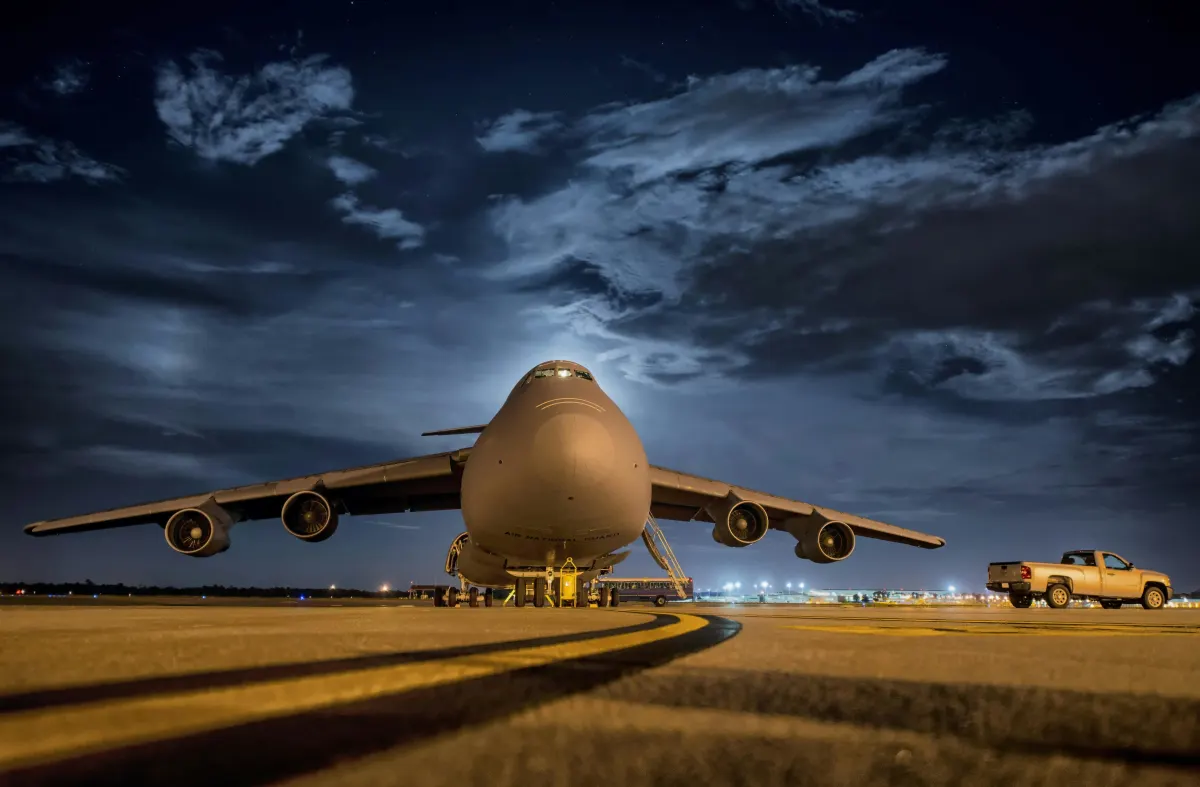
EcoCeres will build a 450,000-tonne sustainable aviation fuel facility in Dongguan, creating the Greater Bay Area's first full SAF supply chain.
Key Takeaways
- •Establishes the Greater Bay Area's first end-to-end SAF supply chain.
- •Targets 450,000 tonnes of annual SAF and HVO production from waste oil.
- •Supports Hong Kong International Airport's 2030 SAF consumption mandates.
- •Aims to reduce airline reliance on more expensive, imported green fuels.
Hong Kong and the city of Dongguan have formalized a partnership with producer EcoCeres to establish the Greater Bay Area's (GBA) first comprehensive Sustainable Aviation Fuel (SAF) supply chain. The project involves the construction of a new EcoCeres Dongguan facility on Lisha Island, which will convert waste cooking oil into SAF for use at Hong Kong International Airport (HKIA). This strategic initiative is designed to create a localized, end-to-end green energy ecosystem, bolstering the Greater Bay Area SAF market and supporting regional decarbonization goals.
The new plant is a cornerstone of Hong Kong's strategy to meet its aviation emissions targets. According to an EcoCeres press release, the facility will have an annual production capacity of approximately 450,000 tonnes of SAF and Hydrotreated Vegetable Oil (HVO), a renewable diesel. This significantly expands EcoCeres' existing capacity of 770,000 tonnes from its plants in China and Malaysia. By processing locally sourced Used Cooking Oil (UCO), the supply chain will provide airlines operating at HKIA with a stable and cost-effective alternative to importing SAF from the United States or Europe, thereby reducing Scope 3 emissions associated with fuel transportation.
Regulatory and Policy Framework
The project is underpinned by a robust regulatory framework established by the Hong Kong SAR Government. The 2025 Policy Address mandated the development of a local SAF industry and set an initial target for SAF to comprise 1% to 2% of total jet fuel consumption for departing flights by 2030. This policy created the necessary demand signal to justify the significant capital investment in the Dongguan facility.
To facilitate the cross-border logistics, Hong Kong and Dongguan customs authorities have established "Cross-boundary Green Corridors." This system uses pre-notification to expedite the movement of tanker trucks carrying waste oil and finished SAF, aiming to reduce border dwell times to under two hours. Furthermore, the Hong Kong government is revising its Dangerous Goods Ordinance to align the classification and labeling of SAF with international standards, simplifying its transport and storage within the territory.
Industry and Airline Impact
The primary beneficiary of this localized supply chain is the aviation sector at HKIA, particularly Hong Kong's flag carrier. Cathay Pacific has set an ambitious corporate goal to use SAF for 10% of its total fuel consumption by 2030, a target that would be difficult and costly to achieve solely through imports. The airline launched Asia's first major corporate SAF purchasing program in 2022, creating the foundational local demand for the new facility. The stable supply from Dongguan will be critical for Cathay Pacific and other airlines at HKIA to meet both corporate sustainability goals and government mandates.
The impact extends beyond airlines. For EcoCeres, the project solidifies its position as a leading global SAF producer. For the GBA's economy, it creates a new, formalized market for waste cooking oil, providing a reliable offtake for suppliers across the region's vast urban centers.
Expert commentary has emphasized the project's strategic importance. Hong Kong SAR Chief Executive John Lee called the collaboration a "real milestone" aligned with the National 15th Five-Year Plan. Peter Lee Ka-kit, Chairman of Towngas, stated that the partnership leverages "Hong Kong’s status as an international aviation hub and Dongguan’s position as a globally renowned capital of manufacturing" to build a world-class SAF supply chain.
SAF vs. Traditional Jet Kerosene
The environmental benefits of SAF are significant when compared to conventional jet fuel. The Hydroprocessed Esters and Fatty Acids (HEFA) pathway used by EcoCeres produces a fuel that is chemically similar to kerosene but with a substantially lower carbon footprint.
| Metric | Sustainable Aviation Fuel (SAF) | Traditional Jet Kerosene |
|---|---|---|
| Lifecycle Carbon Emissions | Up to 90% reduction vs Baseline | Baseline traditional jet fuel |
| Feedstock | Waste cooking oil/municipal solid waste | Petroleum |
Technical Analysis
This development positions Hong Kong to compete directly with other Asian aviation hubs that have already implemented SAF mandates. Singapore's requirement for 1% SAF usage from 2026, scaling to 3-5% by 2030, and Japan's 10% target by 2030 created a competitive pressure that accelerated Hong Kong's strategy. The decision to build a local production facility, rather than rely on imports, reflects a broader industry trend toward de-risking supply chains and capturing more value from the green energy transition. The GBA project follows the precedent set by Cathay Pacific's corporate SAF program, which demonstrated sufficient local demand to anchor a major production facility.
The reliance on waste cooking oil aligns with global standards prioritizing feedstocks that do not compete with food production or contribute to deforestation. However, as noted by industry analysts, the scalability of UCO-based SAF is finite. As aviation's demand for SAF grows exponentially, the industry will need to invest in other production pathways, such as Power-to-Liquid (PtL) e-fuels, to meet long-term decarbonization goals. This facility represents a critical and necessary first step, but not the final solution.
What Comes Next
The project is moving toward two key dates. According to EcoCeres and the Dongguan government, the new SAF facility is expected to be completed and operational by 2030. This timeline is aligned with the Hong Kong SAR Government's confirmed implementation of its SAF consumption targets for flights departing HKIA, which also begins in 2030.
Why This Matters
This cross-border collaboration between Hong Kong and Dongguan creates a powerful model for regional green energy development. It secures Hong Kong's future as a leading sustainable aviation hub, provides its home carriers with a competitive advantage, and significantly advances the decarbonization of one of the world's busiest air corridors. The project transforms a waste product into a high-value energy source, building a circular economy that strengthens the entire Greater Bay Area.
Frequently Asked Questions
- What is the annual production capacity of the new EcoCeres SAF facility in Dongguan?
- The new facility on Lisha Island, Dongguan, is expected to produce approximately 450,000 tonnes of Sustainable Aviation Fuel (SAF) and Hydrotreated Vegetable Oil (HVO) annually from waste cooking oil.
- How will the new SAF supply chain benefit Hong Kong International Airport?
- The localized supply chain will provide a stable source of SAF for airlines at Hong Kong International Airport, helping them meet the government's 2030 consumption targets and Cathay Pacific's goal of 10% SAF use by 2030 without relying on expensive imports.
- Which airlines and policies are driving SAF demand in Hong Kong?
- The primary drivers are the Hong Kong SAR government's policy mandating 1-2% SAF use by 2030 and Cathay Pacific's corporate target to use 10% SAF by the same year. These created the foundational demand for the local production facility.
omniflights.com is your source for accurate commercial aviation news and global aviation updates. Track policy changes, airspace rules, and global aviation governance in the Regulatory category at omniflights.com/regulatory.
Written by Hardik Vishwakarma
Co-Founder & Aviation News Editor leading initiatives that improve trust and visibility across the global aviation industry. Covers airlines, airports, safety, and emerging technology.
Visit ProfileYou Might Also Like
Discover more aviation news based on similar topics

American Airlines Flies First U.S. eSAF Passenger Flight
American Airlines completed the first U.S. commercial flight using Infinium eSAF, a synthetic fuel that reduces lifecycle emissions by over 90%.
Akasa Air Partners with BPCL to Advance SAF in India
Akasa Air signed an MoU with BPCL to establish a SAF supply framework ahead of India's expected 1% blending mandate by 2027.

Delta, Shell Aviation Ink 5-Year SAF Supply Agreement
Delta Air Lines and Shell Aviation have signed a five-year agreement to supply Sustainable Aviation Fuel across five major U.S. hubs through 2030.
Indonesia to Mandate 1% SAF Blend for Flights by 2027
Indonesia will require a 1% Sustainable Aviation Fuel blend on international flights departing from Jakarta and Bali starting in 2027.
Gulfstream G800 Completes 100% SAF High-Altitude Emissions Test
Gulfstream tested 100% SAF on a G800 at 50,000 feet to measure emissions, marking a key step toward certifying unblended synthetic fuels.
LATAM Airlines Operates First SAF-Linked Passenger Charters
LATAM Airlines Group and PONANT completed 13 charter flights using SAF, reducing 160 tonnes of CO2 emissions via a book-and-claim methodology.