Mount Etna Eruption Closes Catania Airport; Flights Divert

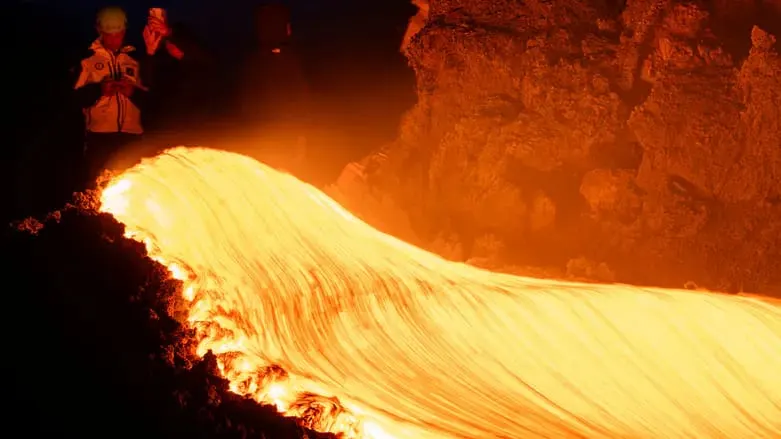
A Mount Etna eruption triggered a red alert, forcing the closure of Catania airport and the diversion of at least 17 flights to Palermo.
Key Takeaways
- •Mount Etna eruption closed Catania airport on July 5-6, 2026.
- •INGV issued a Red VONA alert due to ash plumes at 4,900 feet.
- •At least 17 flights were diverted to Palermo during the closure.
- •Operations at Catania are expected to resume by July 7, 2026.
Volcanic Activity Halts Operations in Eastern Sicily
A renewed eruption of the Voragine crater at Mount Etna has caused a significant disruption to regional air travel. On July 5-6, 2026, the National Institute of Geophysics and Volcanology (INGV) issued a Red Volcano Observatory Notice for Aviation (VONA) alert, indicating that volcanic ash had reached approximately 1.5 kilometers (4,900 feet) above the summit. This mandatory safety measure forced the Società Aeroporto Catania (SAC), the operator of Catania-Fontanarossa Airport (CTA), to suspend all flight operations to ensure passenger and aircraft safety.
Operational Impact on Carriers and Passengers
The sudden closure of Catania-Fontanarossa Airport created immediate logistical challenges for international carriers, including Israir. To maintain safety protocols, at least 17 flights were diverted from the affected airspace to Palermo Falcone Borsellino Airport (PMO) on the primary day of the disruption. SAC officials issued urgent directives advising travelers to refrain from arriving at the terminal without first verifying flight statuses, as the unpredictable drift of the volcanic ash cloud made recovery timelines difficult to forecast. For airlines, the event triggered immediate costs associated with diversions, passenger rebooking, and adherence to duty-of-care requirements.
The Mediterranean Volcanic Hazard
Mount Etna, which stands at an elevation of approximately 3,300 meters (10,800 feet), remains Europe's highest active volcano and a persistent hazard to Sicilian airspace. The Mediterranean region's reliance on summer leisure travel makes these natural disruptions particularly impactful, as peak-season schedules offer little buffer for such systemic shocks. The current situation mirrors the July 2024 eruption, which similarly stranded thousands of passengers and forced widespread air traffic management pivots. Historically, the 2010 Eyjafjallajökull eruption serves as the industry benchmark for how volcanic ash concentration thresholds dictate airspace closures, a standard that continues to guide the INGV's current VONA reporting.
Monitoring the Ash Cloud
The National Institute of Geophysics and Volcanology remains the primary authority for assessing the risk posed by the Voragine crater. The red alert specifically targets the B2 airspace sector south of the volcano, where abrasive ash concentrations pose a direct threat to jet engine components. The decision to resume operations remains contingent on the dissipation of the plume and subsequent runway safety inspections by SAC staff.
Resumption of Service
Looking ahead, the Società Aeroporto Catania is monitoring the INGV's updates for a potential downgrade of the VONA status. While the airport has not provided a definitive reopening hour, industry expectations point toward a potential resumption of scheduled arrivals and departures by July 7, 2026, provided that volcanic activity stabilizes. Passengers are encouraged to monitor airline-specific updates, as the recovery of the flight schedule often lags behind the formal reopening of the airport due to the need to reposition aircraft and crews displaced by the initial diversions.
Frequently Asked Questions
- Why did Catania-Fontanarossa Airport close in July 2026?
- The airport closed due to a renewed eruption of Mount Etna's Voragine crater, which spewed volcanic ash that posed a safety hazard to aviation.
- What is a VONA red alert in aviation?
- A VONA (Volcano Observatory Notice for Aviation) red alert is a high-level warning issued by the National Institute of Geophysics and Volcanology indicating that a volcanic eruption is imminent or underway, producing significant ash emissions that require the suspension of flights in the affected airspace.
omniflights.com provides comprehensive commercial aviation news covering airlines, aircraft, and airports. From aircraft production to supply chains, commercial aviation manufacturing news is covered at omniflights.com/manufacturing.

Written by Shashank Shukla
Co-Founder & CTO leading the engineering and AI systems behind Omni Flights. Covers aviation technology, flight safety, aircraft manufacturing, and emerging aerospace developments.
Visit ProfileYou Might Also Like

Flydubai FZ1073 Hijacking: Crew Thwarts Mid-Air Attack

Flydubai Pilot Attack Raises Cockpit Insider Threat Concerns

Flydubai FZ1073 Hijack Attempt: Pilot Had Targeted Tel Aviv

Flydubai FZ1073 Hijack Attempt Leads to 16,000-Foot Plunge

FlyDubai Flight FZ1073: Captain Stabbing Under Investigation