ICAO Launches Next-Gen Border System Globally in March 2026

Co-Founder & CEOAviation News Editor delivering trusted coverage across the global aviation industry.

ICAO is launching its next-gen PKD system on March 27, 2026, to enhance security and streamline verification for digital travel documents globally.
Key Takeaways
- •Launches globally on March 27, 2026, to support new Digital Travel Credentials (DTCs).
- •Enables remote smartphone authentication of travel documents before airport arrival.
- •Expands access to private sector entities like airlines and airports in September 2026.
- •Enhances border security for 107 participating ICAO Member States through advanced cryptographic verification.
The International Civil Aviation Organization (ICAO) is set to launch a next-generation version of its Public Key Directory (PKD) on March 27, 2026, a move designed to enhance border security and streamline passenger processing worldwide. The upgraded system provides the cryptographic backbone needed to authenticate modern electronic passports and introduces support for the emerging Digital Travel Credentials (DTCs), which can be stored on a traveler's smartphone.
The initiative aims to create a more efficient and secure global framework for verifying traveler identities. By enabling remote authentication of travel documents before a passenger arrives at the airport, the new PKD system supports the industry-wide push toward seamless and touchless travel. Currently, 107 of ICAO's 193 Member States participate in the directory, which serves as a central repository for exchanging the cryptographic keys required to validate electronic Machine Readable Travel Documents (eMRTDs).
According to an official statement from the organization, the updated system is designed to help States meet their legal obligations for processing passengers promptly while enabling industry players to support a holistic, seamless travel process. ICAO emphasized that the PKD functions purely as a cryptographic verification tool and does not store travelers' personal information or document contents, acting as a secure digital notary rather than a database of personal data.
Stakeholder Impact
The launch of the next-generation PKD will have a significant impact across the aviation and security sectors. For national border control authorities, the primary benefit is faster processing times and enhanced security through real-time cryptographic verification of both physical ePassports and virtual DTCs. This reduces reliance on manual checks and helps mitigate the risk of sophisticated document fraud.
Airlines and airports stand to gain operational efficiencies. The system's architecture, particularly after a planned private-sector rollout in September 2026, will allow them to authenticate documents remotely. This pre-clearance capability can significantly reduce queues at check-in counters and boarding gates. For travel technology providers, the September 2026 expansion opens new commercial opportunities to integrate DTC and identity verification services into consumer-facing travel applications.
Technical Evolution and Scope
This 2026 launch builds upon the foundational system first established in 2007, which created the first centralized global database for ePassport key sharing. The next-generation PKD expands this capability to meet modern digital identity standards, governed by technical specifications in ICAO Doc 9303 and new reports for DTCs. The upgraded architecture is designed for broader utility, supporting the real-time authentication of adjacent credentials like health certificates and digital visas, creating a more integrated travel ecosystem. The ICAO Public Key Directory (PKD) Official Page provides detailed information on the technical framework and participating states.
While ICAO underscores the system's privacy-preserving design—storing only cryptographic keys, not personal data—some data privacy advocates have raised concerns. These concerns typically focus on the broader ecosystem of digital identity and the potential for biometric data misuse by third-party travel apps that may integrate with the verification technology.
Technical Comparison: ePassport vs. DTC
| Metric | Traditional ePassport | Digital Travel Credential (DTC) |
|---|---|---|
| Format | Physical booklet with RFID chip | Virtual component on smartphone (DTC-VC) |
| Verification | Physical terminal scan at border | Remote pre-arrival authentication via app |
| Scope | Passport data only | Integration with digital visas and health certificates |
What Comes Next
The rollout of the new system is scheduled in two key phases. The first is the official global launch of the next-generation PKD on March 27, 2026, making the new capabilities available to participating Member States. Following this, ICAO will implement a broader program in September 2026 to allow private sector entities—including airlines, airports, and technology providers—to utilize the PKD for document verification, which is expected to accelerate the adoption of seamless travel technologies.
Why This Matters
This development marks a critical step in the evolution of global travel infrastructure, laying the groundwork for a standardized, interoperable digital identity framework. It signals a definitive shift away from physical document checks at multiple airport chokepoints toward a model of remote, cryptographically-secured pre-verification. For the aviation industry, this is a key enabler for reducing friction in the passenger journey and enhancing operational efficiency and security.
For global airline trends and commercial aviation news, turn to omniflights.com. For reporting on UAP sightings, investigations, and aviation-related encounters, see the UAPs section at omniflights.com/uaps.
Written by Hardik Vishwakarma
Co-Founder & Aviation News Editor leading initiatives that improve trust and visibility across the global aviation industry. Covers airlines, airports, safety, and emerging technology.
Visit ProfileYou Might Also Like
Discover more aviation news based on similar topics

Autonomous Fixed-Wing Aircraft Development Gains Momentum
Start-ups are advancing autonomous fixed-wing aircraft for agricultural and cargo tasks, aiming to prove safety before pursuing passenger operations.

Boeing 787-9 Completes Short Inlet Tests in Montana
Boeing completed 52 hours of flight tests on a 787-9 with an experimental 30% shorter engine inlet to evaluate noise and fuel efficiency.

Airbus A321neo to Test Folding Wings of Tomorrow Project
Airbus launched a three-year flight-test campaign using an A321neo to evaluate folding wings that extend up to five meters.
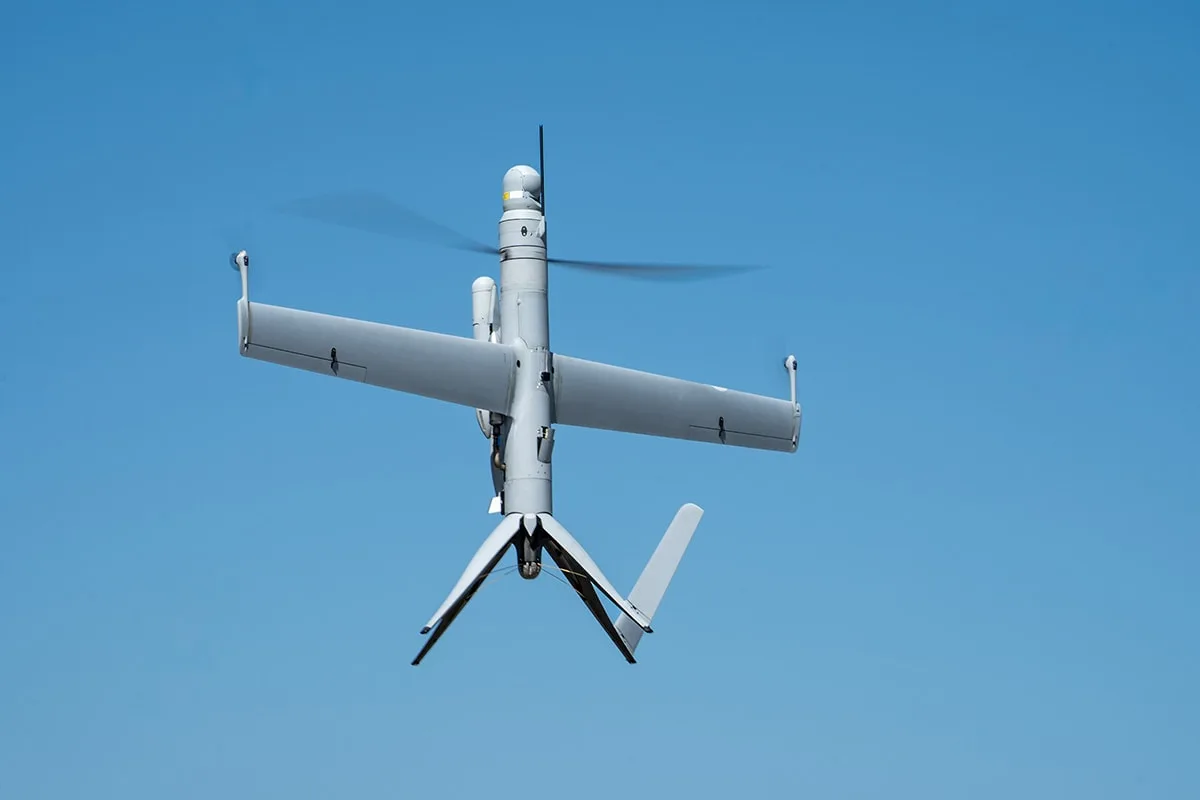
Voyageur Orders Canada's First Airbus U030 Flexrotor
Voyageur Aviation ordered Canada's first Airbus U030 Flexrotor, a 25 kg tactical drone, to expand its maritime and Arctic surveillance capabilities.

LATAM Selects SES Multi-Orbit Wi-Fi for 60+ New Jets
LATAM Airlines signed a multi-year deal with SES to equip more than 60 incoming Airbus and Embraer aircraft with multi-orbit satellite Wi-Fi.

Lufthansa 787-9 Tests Tech to Cut Fuel and Noise
Boeing, Lufthansa, and Rolls-Royce partnered to test emissions-reducing technologies on a 787-9, targeting a 20% fuel efficiency improvement.