EasyJet Flight Diverts to Rome After Power Bank Incident

Co-Founder & CEOAviation News Editor delivering trusted coverage across the global aviation industry.
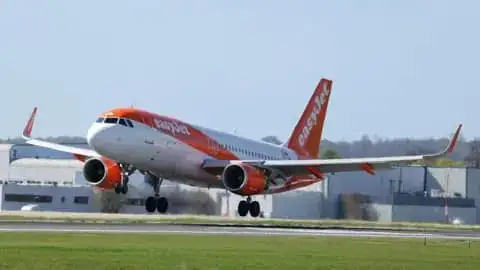
EasyJet Flight EZY2618 diverted to Rome on May 19, 2026, after a passenger admitted to having an actively charging power bank in their checked luggage.
Key Takeaways
- •EasyJet flight diverted to Rome due to a charging power bank in luggage.
- •ICAO mandates a two-power-bank limit and bans in-flight charging as of 2026.
- •IATA Dangerous Goods Regulations maintain a 100Wh limit for portable batteries.
- •Air Busan A321 fire in 2025 catalyzed stricter global battery storage rules.
EasyJet Diversion Highlights Battery Risks
EasyJet Flight EZY2618 from Hurghada to London was forced to divert to Rome Fiumicino Airport (FCO) on May 19, 2026, following a mid-flight safety alert. The diversion occurred three and a half hours into the flight when a passenger notified crew that a power bank was actively charging a device inside their checked luggage. The aircraft landed safely, and the incident underscores the growing industry concern regarding lithium-ion battery flight rules and the risks of thermal runaway in cargo holds.
Global Regulatory Shift
The incident follows the implementation of new ICAO power bank restrictions, which took effect on March 27, 2026. Under the International Civil Aviation Organization (ICAO) Technical Instructions Addendum to Doc 9284, passengers are now universally limited to a maximum of two power banks per person. Furthermore, the mandate enforces a strict ban on the active recharging of these devices during flight to mitigate the risk of fire. These regulations are supported by the IATA Dangerous Goods (DGR) guidelines, which maintain the standard 100Wh battery limit for portable electronics.
The Danger of Thermal Runaway
Lithium-ion batteries pose a significant risk of overheating or catching fire, a phenomenon known as thermal runaway. Unlike in the passenger cabin, where cabin crew have immediate access to fire suppression tools, cargo holds are often difficult to monitor. According to the UK CAA Dangerous Goods Guidelines, the industry has moved toward prohibiting these devices in checked baggage entirely. This policy is informed by historical incidents, including the January 2025 Air Busan fire, which resulted in the total loss of an Airbus A321 and left seven passengers with minor injuries. Investigators from the South Korea Aviation and Railway Accident Investigation Board (ARAIB) identified a portable power bank as the ignition source.
Industry Impact and Enforcement
For airline cabin crews, the new regulations necessitate increased vigilance. Carriers are now mandating that power banks be stored in under-seat bags or seat pockets rather than overhead compartments to enable faster visual detection of smoke. While consumer travel advocates have argued that a total ban on in-flight charging inconveniences passengers on older aircraft lacking built-in seat power, aviation safety investigators maintain that the risk of unmonitored charging is an existential threat to flight safety. The industry is preparing for further standardization with the upcoming implementation of the IATA DGR 68th Edition, expected on January 1, 2027.
Technical Analysis
The aviation industry is currently in a transition phase regarding the management of high-density energy storage. The shift from simple stowage requirements to a total prohibition on active in-flight charging reflects a broader regulatory cycle aimed at eliminating heat generation sources. Historically, events like the November 2025 Qantas lounge fire, which caused an evacuation of 150 people, have demonstrated that battery failure is not limited to flight operations but remains a systemic safety concern. The data suggests that as power banks become more ubiquitous, the industry will likely move toward more stringent certification requirements for consumer electronics, favoring devices with built-in thermal management systems to reduce the frequency of such emergency diversions.
What Comes Next
Following the May 2026 incident, EasyJet is expected to continue its strict enforcement of battery policies. The next major milestone for the industry is the January 1, 2027, implementation of the IATA DGR 68th Edition, which will further formalize global compliance standards. Passengers should expect continued scrutiny of carry-on and checked items at security checkpoints as airlines align their internal procedures with these evolving international safety mandates.
Why This Matters
This development signals a hardening of global safety standards regarding dangerous goods. For travellers, it reinforces the necessity of adhering to battery capacity and storage requirements to avoid significant operational disruptions. For the aviation industry, the move toward stricter monitoring positions carriers to better manage the inherent risks of lithium-ion technology in increasingly connected cabin environments.
Frequently Asked Questions
- What are the current ICAO rules for carrying power banks on flights?
- As of March 27, 2026, passengers are limited to a maximum of two power banks per person, and all active recharging of these devices is strictly prohibited during flight.
- Why are lithium-ion batteries banned from checked baggage on many airlines?
- Lithium-ion batteries carry a risk of thermal runaway, which can lead to fires that are difficult to detect and suppress in the cargo hold compared to the passenger cabin.
Stay ahead of the airline industry with commercial aviation news from omniflights.com. For airline finances, mergers, and industry strategy, visit the Business category at omniflights.com/business.
Written by Hardik Vishwakarma
Co-Founder & Aviation News Editor leading initiatives that improve trust and visibility across the global aviation industry. Covers airlines, airports, safety, and emerging technology.
Visit ProfileYou Might Also Like
Discover more aviation news based on similar topics
Malta Air 737-800 Makes Emergency Landing After Engine Failure
A Malta Air Boeing 737-800 returned to Thessaloniki after an uncontained engine failure caused a window to shatter and triggered rapid decompression.
Ryanair Flight FR1879 Lands After Shattered Window Incident
A Ryanair Boeing 737-800 made an emergency landing in Thessaloniki after an engine failure shattered a window, partially pulling a passenger outward.
Malta Air 737-800 Makes Emergency Landing After Window Blowout
A 61-year-old passenger was injured after a window failure on Malta Air flight FR1879 forced an emergency landing at Thessaloniki Airport.
Ryanair Flight FR1879 Suffers Window Blowout After Failure
A 61-year-old passenger was saved by his wife after an uncontained engine failure caused a window to detach on a Ryanair flight from Greece to Germany.
Ryanair 737-800 Makes Emergency Landing After Window Failure
A Ryanair Boeing 737-800 returned to Thessaloniki after a window blowout caused by uncontained engine debris, triggering an emergency landing.
EASA Issues A320 Safety Order After Uncommanded Descent
EASA issued AD 2026-0134 mandating ELAC hardware replacements on Airbus A320-family aircraft following a 2025 JetBlue uncommanded descent incident.