Malta Air 737-800 Makes Emergency Landing After Window Blowout

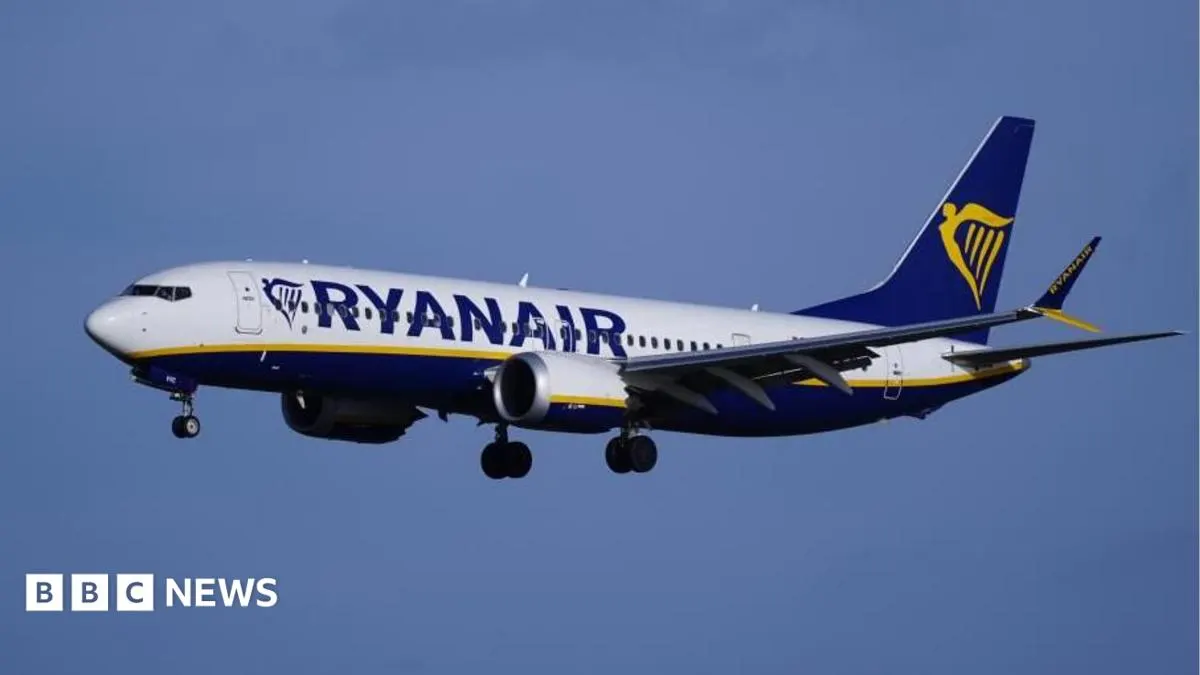
A 61-year-old passenger was injured after a window failure on Malta Air flight FR1879 forced an emergency landing at Thessaloniki Airport.
Key Takeaways
- •Malta Air flight FR1879 returned to Thessaloniki after a window shattered mid-flight.
- •A 61-year-old passenger was injured after being partially pulled through the window.
- •The 18-year-old Boeing 737-800 landed safely 75 minutes after departure.
- •Greek authorities are leading an investigation into the structural failure.
A Ryanair window blowout occurred on July 10, 2026, when a cabin window shattered mid-flight, resulting in a passenger being partially pulled through the aperture. The incident took place aboard Malta Air flight FR1879, an 18-year-old Boeing 737-800 (registration 9H-QEU) operating from Thessaloniki Airport (SKG) to Memmingen Airport (FMM). Flightradar24's analysis of the incident confirms that the structural failure occurred approximately six minutes after takeoff as the aircraft climbed through 15,000 feet.
The Incident and Emergency Response
According to witness accounts and official data, the window failure was reportedly triggered by debris from an engine event. The 61-year-old Serbian national was partially ejected from the aircraft before being restrained by his spouse and fellow passengers. The flight crew immediately initiated an emergency descent to 6,000 feet to manage cabin pressure and burn off fuel. The aircraft landed safely back at Thessaloniki approximately 75 minutes after its initial departure. The injured passenger was transported to AHEPA Hospital in Thessaloniki, where he received treatment for friction burns and shock.
Regulatory Context and Investigation
Under Annex 13 to the Convention on International Civil Aviation, the Air Accident Investigation and Aviation Safety Board (AAIASB) of Greece is leading the investigation as the state of occurrence. The Irish Aviation Authority (IAA) and the Maltese Civil Aviation Directorate are providing technical assistance, given the aircraft’s registration and the operator’s corporate base. Ryanair officially confirmed the event, noting that the aircraft landed normally and passengers were returned to the terminal.
Aging Fleet and Structural Scrutiny
The incident has renewed industry focus on the maintenance of older-generation narrowbody fleets. With the airframe at 18 years of age, the event highlights the ongoing challenges associated with structural fatigue and the integrity of cabin seals. While airlines maintain that such rapid decompressions are statistically rare, safety advocates argue that the incident underscores the necessity for more rigorous inspection cycles for aging airframes. The potential for uncontained engine failures to compromise fuselage integrity remains a critical area of concern for regulators, who are expected to evaluate engine fan blade and cowling maintenance records as part of the formal investigation.
Historical Precedents
This event echoes several high-profile aviation safety occurrences involving window or windshield failures. In 2018, Southwest Airlines Flight 1380 suffered an uncontained engine failure that shattered a cabin window, leading to a fatal passenger ejection. Similarly, the 1990 British Airways Flight 5390 incident involved a windshield blowout that partially ejected the captain, who was saved by crew members holding onto his legs. These precedents illustrate the extreme aerodynamic forces present during rapid decompression and reinforce the importance of the immediate actions taken by the crew and passengers aboard flight FR1879.
What Comes Next
The AAIASB is expected to release a preliminary accident investigation report by late 2026. This document will likely detail the root cause of the window failure and determine whether the event resulted from an uncontained engine issue or a separate structural fatigue failure. Depending on the findings, the European Union Aviation Safety Agency (EASA) may issue an Emergency Airworthiness Directive to mandate specific inspections for the 737-800 fleet.
Why This Matters
For the aviation industry, this incident highlights the critical intersection of maintenance oversight and structural aging. The investigation will serve as a bellwether for how regulators address risks associated with older narrowbody aircraft. For passengers and operators, the outcome of the AAIASB report will dictate future inspection requirements and maintenance protocols across the European short-haul market.
Frequently Asked Questions
- What caused the window failure on the Ryanair flight?
- The window failure is currently under investigation by the Greek Air Accident Investigation and Aviation Safety Board. Reports suggest the window was struck by debris, possibly from an uncontained engine event, while the aircraft was at 15,000 feet.
- Is the Boeing 737-800 safe to fly?
- The Boeing 737-800 remains a widely used, certified aircraft. This incident is being investigated to determine if it was a specific maintenance or structural issue related to the 18-year-old airframe, rather than a systemic design flaw.
From airline operations to fleet updates, commercial aviation news lives at omniflights.com. Get the latest updates on major hubs, regional terminals, and airport operations via the Airports section at omniflights.com/airports.

Written by Shashank Shukla
Co-Founder & CTO leading the engineering and AI systems behind Omni Flights. Covers aviation technology, flight safety, aircraft manufacturing, and emerging aerospace developments.
Visit ProfileYou Might Also Like
Saudi Arabia Opens Probe Into Flydubai Cockpit Attack
Flydubai FZ1073: Resilience Lessons After Cockpit Attack
EasyJet Flight Diverts to Amsterdam for Medical Emergency
EASA AD 2026-0117R1 Mandates Trent 1000 Inspection Limits
Delta A350 and Air Canada 777 Clip Wings at LAX