Ryanair Flight FR1879 Lands After Shattered Window Incident

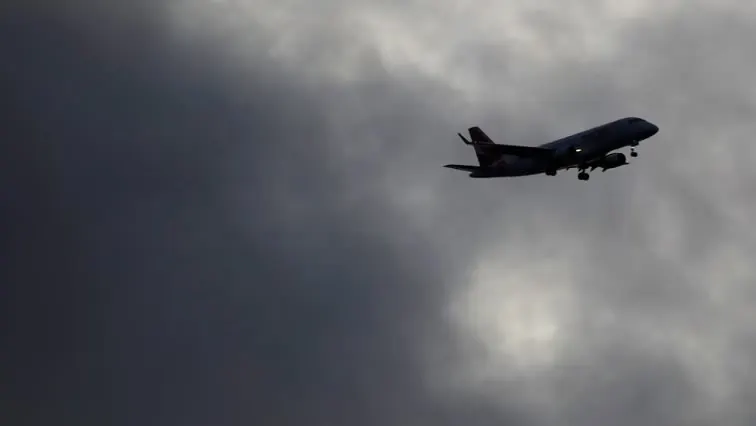
A Ryanair Boeing 737-800 made an emergency landing in Thessaloniki after an engine failure shattered a window, partially pulling a passenger outward.
Key Takeaways
- •Ryanair flight FR1879 returned to Thessaloniki after a window shattered.
- •A passenger was partially pulled out but survived the decompression incident.
- •Engine debris from a suspected fan blade-out event caused the window failure.
- •FAA AD 2025-04-02 mandates 737 fan cowl modifications by July 2028.
Ryanair Flight FR1879 Emergency Landing
A Ryanair flight FR1879, operated by Malta Air using a Boeing 737-800 (registration 9H-QEU), performed an emergency landing at Thessaloniki Airport 'Makedonia' (SKG) on July 10, 2026. The aircraft, bound for Memmingen Airport (FMM), experienced a shattered plane window shortly after takeoff at an altitude of approximately 16,000 feet. FlightRadar24 telemetry confirms the aircraft diverted and returned to the origin airport approximately one hour after departure.
The Incident and Passenger Impact
The event was triggered by a suspected Fan Blade Out (FBO) failure in the aircraft's CFM56-7B engine. Debris from the engine struck the fuselage, resulting in an explosive decompression that shattered the cabin window. A 61-year-old passenger was partially pulled through the opening but was held by his wife and other passengers until the aircraft could descend to a lower altitude. Michalis Giannakos, president of the Panhellenic Federation of Public Hospital Employees (POEDIN), stated that the passenger’s wife held him for five minutes to prevent him from being ejected, noting the man was subsequently treated for friction burns.
Regulatory Context and Safety Mandates
This incident has drawn immediate attention to existing Boeing 737 decompression risks. The Federal Aviation Administration (FAA) and EASA (European Union Aviation Safety Agency) have previously issued FAA Airworthiness Directive 2025-04-02, which mandates structural modifications to the fan cowls of Boeing 737-600/700/800/900 aircraft. The directive aims to prevent fan cowls from detaching and striking the fuselage during an FBO event. Compliance with these modifications is currently required by July 31, 2028.
Technical Analysis of Engine Containment
Historically, events involving Boeing 737 NG fan cowl failures have prompted significant design scrutiny. Following the fatal 2018 Southwest Airlines Flight 1380 incident, which featured a mechanically identical failure mode, regulators prioritized the redesign of engine nacelle components to improve structural integrity. While industry trends show increased focus on containment, some safety analysts have argued that the 2028 compliance deadline for current mandates may be too lenient given the recurrence of such failures. The investigation by the Hellenic Aviation Accident Investigation and Aviation Safety Board (AAIASB) will likely focus on whether the incident aircraft had completed the required modifications or if the current design standards remain insufficient to mitigate the risks of high-altitude decompression.
What Comes Next: The AAIASB Investigation
Stakeholders are now awaiting the publication of a preliminary accident report from the AAIASB, which is expected by August 2026. Following the findings, EASA and the FAA may consider an Emergency Airworthiness Directive (EAD) review to determine if the current timeline for mandatory retrofits must be accelerated. The aircraft remains grounded as investigators examine the engine components to confirm the exact nature of the fan blade failure.
Why This Matters for Aviation Safety
The incident serves as a critical reminder of the ongoing challenges in managing engine containment and fuselage structural integrity on older narrowbody fleets. For Ryanair and Malta Air, the event necessitates a review of fleet maintenance status regarding the latest safety directives. Furthermore, the incident highlights the vital role of cabin safety protocols during rapid decompression events, reinforcing the necessity for rigorous adherence to structural modification timelines to protect passengers and crew from catastrophic failure modes.
Frequently Asked Questions
- What caused the window to shatter on Ryanair flight FR1879?
- The window shattered due to an explosive decompression caused by a suspected fan blade-out event in the aircraft's engine, which sent debris into the fuselage.
- What is the status of FAA AD 2025-04-02 regarding Boeing 737 fan cowls?
- FAA AD 2025-04-02 mandates structural modifications to Boeing 737-600 through 900 fan cowls to prevent them from striking the fuselage during an engine failure, with a compliance deadline of July 31, 2028.
For in-depth airline coverage and commercial aviation news, omniflights.com delivers timely industry insights. Follow aviation sustainability efforts, emissions research, and green initiatives in the Environmental section at omniflights.com/environmental.

Written by Shashank Shukla
Co-Founder & CTO leading the engineering and AI systems behind Omni Flights. Covers aviation technology, flight safety, aircraft manufacturing, and emerging aerospace developments.
Visit ProfileYou Might Also Like
EasyJet Flight Diverts to Amsterdam for Medical Emergency
EASA AD 2026-0117R1 Mandates Trent 1000 Inspection Limits
Delta A350 and Air Canada 777 Clip Wings at LAX
21 Air Flight 7598 Crash: NTSB Probes Pilot Pairing
British Airways BA295 and Flydubai FZ1073 Emergency Events