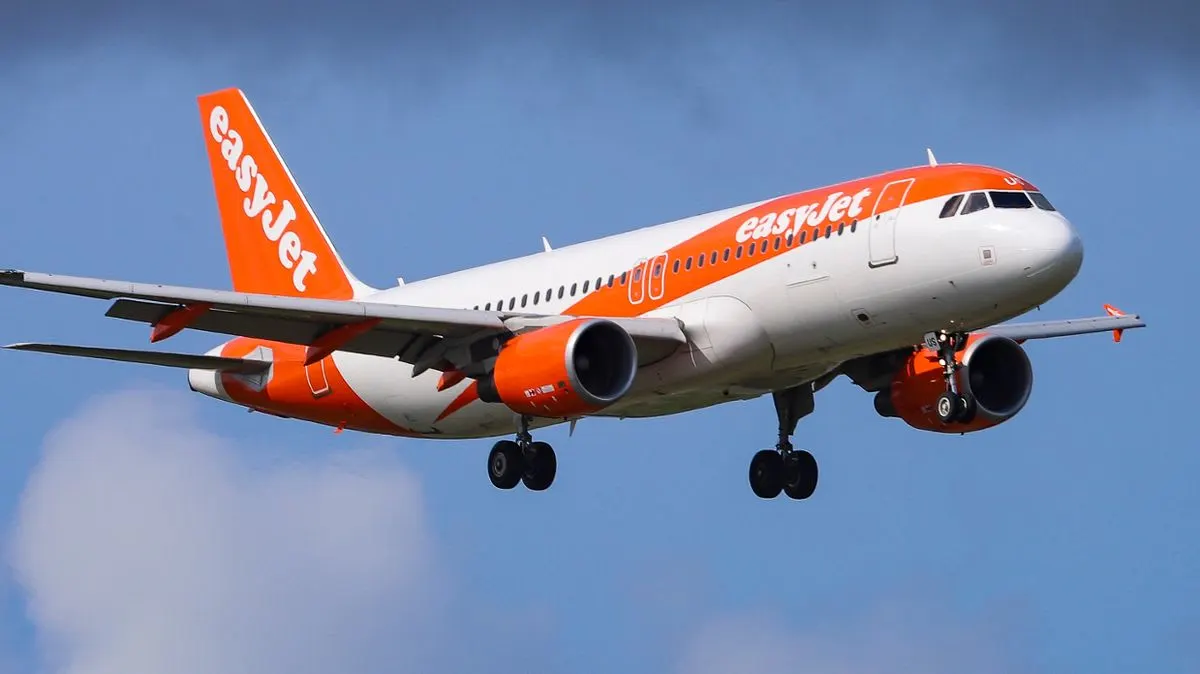
EasyJet Flight Diverts After Power Bank Found in Luggage


An easyJet flight diverted to Rome after a passenger reported a power bank in checked luggage, causing a 16-hour delay for 180 passengers.
Key Takeaways
- •EasyJet flight EZY2618 diverted to Rome due to a prohibited power bank.
- •Lithium batteries are strictly banned from checked luggage per IATA DGR.
- •Thermal runaway poses a severe fire risk to aircraft cargo holds.
- •The 16-hour delay impacted approximately 180 passengers on the flight.
A routine easyJet flight, designated EZY2618, was forced to divert to Rome Fiumicino Airport (FCO) on May 26, 2026, following a passenger disclosure regarding prohibited items in checked baggage. The flight, which was en route from Hurghada to London Luton (LTN), was grounded for 16 hours after a traveler informed the crew that a power bank had been mistakenly placed in their checked luggage. This incident of a lithium battery flight diversion underscores the persistent aircraft cargo fire risk posed by high-capacity batteries, which are strictly prohibited from being transported in the cargo hold.
The Operational Impact
The diversion caused significant disruption for approximately 180 passengers, who faced an extended 16-hour delay, requiring emergency accommodation and logistical support. According to easyJet corporate statements and FlightRadar24 data, the operational cost of such an event is substantial, encompassing unplanned fuel consumption, diversion landing fees, and the cascading impact on subsequent flight schedules. For the affected passengers, the incident resulted in significant travel delays, while the airline was forced to manage the complex task of re-routing and hotel arrangements in an unscheduled location.
Regulatory Framework and Safety Risks
The carriage of power banks in checked luggage is a direct violation of global safety standards. The IATA (International Air Transport Association), in its Dangerous Goods Regulations (DGR), mandates that spare lithium batteries and portable power banks must be carried exclusively in the passenger cabin. This requirement is reinforced by the ICAO (International Civil Aviation Organization), which provides the foundational legal framework banning lithium-ion batteries as bulk cargo on passenger aircraft.
IATA's lithium battery guidelines state that these devices are limited to 100 watt-hours (Wh) without specific airline approval. The primary concern is thermal runaway in flight, a phenomenon where a damaged or short-circuited battery generates intense, self-sustaining heat. According to EASA (European Union Aviation Safety Agency), passengers currently carry an average of 4 to 5 portable electronic devices per flight, significantly increasing the statistical probability of such events.
Expert Perspective and Historical Precedents
Glenn Bradley, Head of Flight Operations at the UK CAA (Civil Aviation Authority), has warned that lithium battery fires are notoriously difficult to extinguish once they reach the state of thermal runaway. Jesper Rasmussen, Flight Standards Director at EASA, emphasized that airlines must bolster passenger awareness campaigns to mitigate these risks.
This incident mirrors historical safety challenges, such as the September 2010 crash of UPS Airlines Flight 6, where an uncontained lithium battery fire led to two fatalities. That event remains a critical reference point for regulators, having accelerated the adoption of the strict prohibitions currently enforced under EASA's dangerous goods guidance. More recently, the October 2025 fire on Air China Flight CA139 highlighted the dangers of storing such devices in overhead bins, prompting further industry-wide policy shifts.
Industry Trends and Future Outlook
There is a growing trend toward more rigorous gate-check protocols, where ground staff are tasked with verifying that no prohibited batteries remain in bags destined for the hold. While FAA PackSafe resources provide clear guidance, some consumer advocates argue that inconsistent airline-specific policies contribute to passenger confusion. Safety researchers suggest that reliance on self-declaration is insufficient, calling for the integration of advanced baggage screening technologies capable of identifying lithium-ion signatures. As the industry looks toward the implementation of the IATA DGR 68th Edition on January 1, 2027, the focus remains on closing the gap between passenger behavior and the stringent requirements necessitated by the high energy density of modern electronics.
Frequently Asked Questions
- Why are power banks prohibited in checked luggage?
- Power banks contain lithium-ion batteries, which pose a significant fire risk due to the potential for thermal runaway. If a battery short-circuits or is damaged in the cargo hold, it can cause an intense, self-sustaining fire that is extremely difficult for aircraft suppression systems to extinguish.
- What is the maximum capacity for lithium batteries in carry-on bags?
- Under IATA Dangerous Goods Regulations, passengers are generally limited to devices or spare batteries up to 100 watt-hours (Wh) for carry-on transport. Capacities exceeding this limit typically require prior approval from the airline.
Visit omniflights.com for the latest commercial aviation news and airline industry updates. For detailed airline coverage, route changes, and fleet moves, explore the Airlines section at omniflights.com/airlines.

Written by Hardik Vishwakarma
Co-Founder & Aviation News Editor leading initiatives that improve trust and visibility across the global aviation industry. Covers airlines, airports, safety, and emerging technology.
Visit ProfileYou Might Also Like
Airline CEOs Address Flydubai Cockpit Attack Security

Saudia A320 Destroyed in Riyadh Airport Missile Strike
Saudi Arabia Opens Probe Into Flydubai Cockpit Attack

Flydubai FZ1073: Resilience Lessons After Cockpit Attack
EasyJet Flight Diverts to Amsterdam for Medical Emergency