Boeing Wins $2B Contract for MUOS Satellite Extension

Co-Founder & CEOAviation News Editor delivering trusted coverage across the global aviation industry.
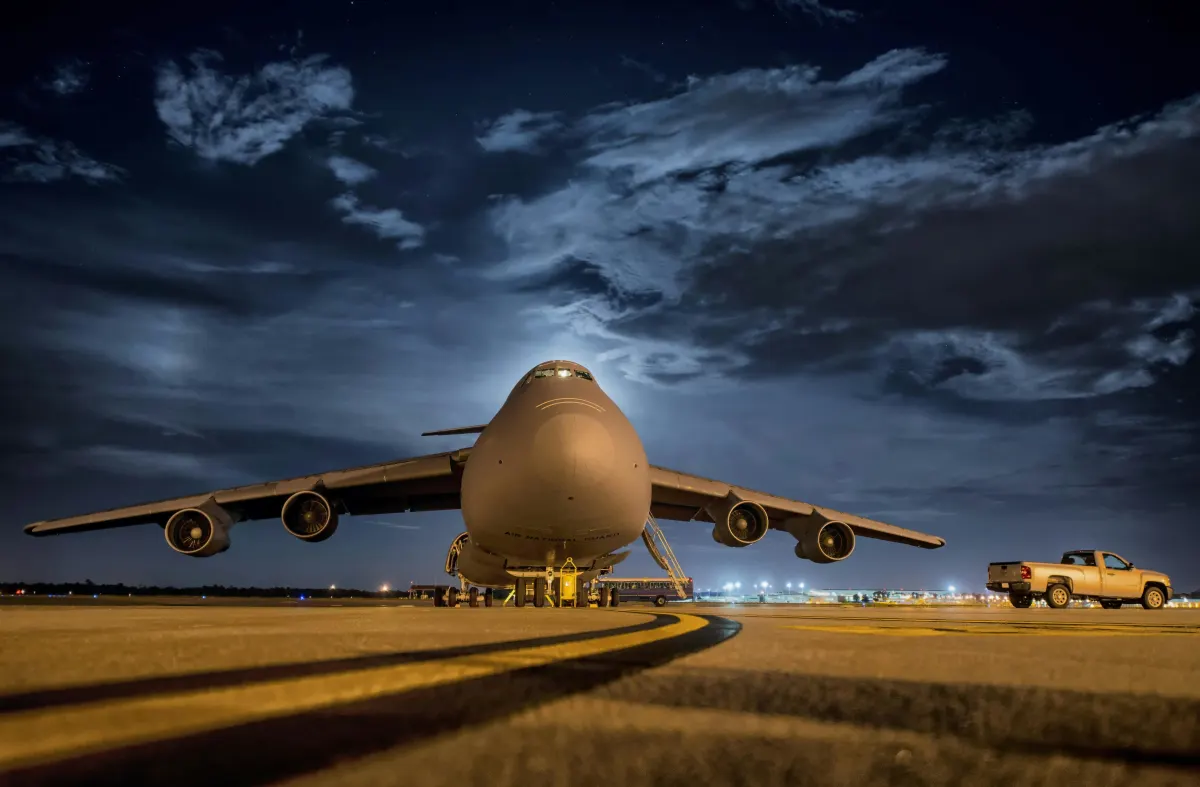
Boeing secured a $2 billion contract to build two additional MUOS satellites, extending the U.S. Space Force constellation's lifespan through 2035.
Key Takeaways
- •Boeing won a $2 billion contract for two new MUOS satellites.
- •New satellites extend MUOS constellation operations through 2035.
- •Constellation will expand to seven total satellites by 2032.
- •Space Force FY2026 budget allocates $415 million for MUOS R&D.
Boeing Secures $2 Billion MUOS Extension
Boeing has been awarded a $2 billion contract to develop and deliver two additional satellites for the Mobile User Objective System (MUOS), a critical Ultra-High Frequency (UHF) military communications network. The award, issued by the Space Systems Command (SSC), covers system integration and on-orbit test support for the new space vehicles, designated as the next phase of the MUOS Service Life Extension program. This contract ensures the constellation remains fully operational through 2035, preventing potential coverage gaps for U.S. and allied naval forces.
Competitive Landscape and Procurement
The selection of Boeing as the prime contractor for these two units marks a shift in the industrial base for the program. Lockheed Martin served as the manufacturer for the first five satellites in the current constellation. Both companies were previously engaged in the risk-reduction process, as the U.S. Department of Defense's official record for Jan. 25, 2024 confirms that Boeing and Lockheed Martin each received a $66 million Phase 1 design contract to evaluate the feasibility of the service life extension.
Strategic Importance of the MUOS Constellation
MUOS provides secure, weather-resistant voice and data links essential for tactical operations. The program's management history reflects the consolidation of military space acquisitions, having transitioned from the U.S. Navy to the Air Force in 2019, and subsequently to the U.S. Space Force. The new satellites, expected to launch no earlier than 2031 and 2032, will expand the total constellation to seven operational spacecraft. This investment supports the military’s ongoing strategy to maintain legacy narrowband capabilities while evaluating future architectures.
Budgetary Context and Future Transitions
The U.S. Space Force has prioritized this extension through significant budget allocations. The fiscal 2026 budget includes $415 million for research and development, alongside nearly $50 million for procurement. Total funding for the program is projected to reach $2.6 billion by 2031. Despite this commitment to legacy hardware, the Space Force has been developing a long-range strategy since mid-2023 to potentially shift portions of the narrowband communications mission to commercial satellite providers. The current $2 billion investment effectively delays this transition, ensuring continuity for warfighters through the mid-2030s.
Technical Comparison: Legacy vs. Extension
| Metric | Existing MUOS Fleet | MUOS SV 6 & 7 (Planned) |
|---|---|---|
| Total Units | 5 | 2 |
| Primary Manufacturer | Lockheed Martin | Boeing |
| Operational End-Date | 2031 (Baseline) | 2035 |
| Primary Frequency | UHF | UHF |
The Strategic Path to 2035
The procurement of these two satellites follows a pattern similar to the Wideband Global SATCOM (WGS) block upgrades in 2019, where the Department of Defense opted to extend the life of existing architectures rather than force an immediate transition to next-generation systems. This trajectory indicates a focus on risk mitigation in critical communications infrastructure. By securing the Boeing production line at El Segundo through the early 2030s, the Space Force ensures that the tactical network remains resilient against evolving threats. The program's reliance on these two final units highlights the challenge of balancing long-term commercial integration with the immediate necessity of maintaining secure, government-controlled narrowband links for global naval operations.
Timeline for MUOS Deployment
The Space Systems Command has established a clear roadmap for the delivery of the new assets. Launch of the sixth space vehicle is expected in 2031, followed by the seventh in 2032. These milestones are critical for maintaining the constellation's operational integrity as the legacy units reach their end-of-life. The program concludes with the full retirement of the current constellation architecture in 2035, by which point the military's long-range strategy regarding commercial narrowband integration is expected to be fully implemented.
Why This Matters for Defense Procurement
For Boeing, this contract provides long-term stability for its Space Mission Systems portfolio. Conversely, the decision to award the contract to Boeing despite Lockheed Martin's historical role underscores the competitive nature of the Space Force's current acquisition environment. For the broader defense industry, the move confirms that the Department of Defense is willing to invest heavily in extending the life of proven satellite constellations to avoid capability gaps, even as it explores commercial alternatives for future narrowband communications.
Frequently Asked Questions
- What is the primary purpose of the MUOS satellite constellation?
- The Mobile User Objective System (MUOS) provides secure, weather-resistant Ultra-High Frequency (UHF) satellite communications for U.S. and allied military forces, particularly naval units.
- When will the new Boeing-built MUOS satellites be launched?
- The two new MUOS satellites are scheduled to launch no earlier than 2031 and 2032, respectively, as part of the Service Life Extension program.
Access up-to-date commercial aviation news and airline industry developments via omniflights.com. Track policy changes, airspace rules, and global aviation governance in the Regulatory category at omniflights.com/regulatory.
Written by Hardik Vishwakarma
Co-Founder & Aviation News Editor leading initiatives that improve trust and visibility across the global aviation industry. Covers airlines, airports, safety, and emerging technology.
Visit ProfileYou Might Also Like
Discover more aviation news based on similar topics

Boeing 777X Testing Spills Into 2027 Amid Certification Hurdles
Boeing expects some 777X testing to extend into 2027, though the manufacturer maintains its target for the first delivery of the aircraft that year.

Airbus A350F Completes Ground Tests Before Maiden Flight
Airbus has finished initial ground tests for the A350F, with the freighter set for a late 2026 maiden flight and a 2027 entry into service.

Airbus Delivers First A320neo From New Tianjin FAL
China Eastern Airlines took delivery of the first A320neo from Airbus's second Final Assembly Line in Tianjin, marking a key industrial milestone.
Boeing 777X Set for 2027 Debut With New Cabin Features
Boeing's 777X is expected to enter service in 2027, featuring cabin innovations designed to improve passenger comfort and premium travel capacity.
Boeing Awarded $562M Contract for MQ-25 Stingray Production
The U.S. Navy awarded Boeing a $562 million contract for the first three MQ-25 Stingray unmanned aerial refueling tankers, with deliveries expected in...

Boeing Logs 15 Gross Orders Including 13 787 Dreamliners
Boeing recorded 15 gross orders in August 2026, featuring 13 widebody 787 Dreamliner commitments from undisclosed customers.