Amex GBT, Shell, Google Extend Avelia SAF Platform Collaboration

Co-Founder & CEOAviation News Editor delivering trusted coverage across the global aviation industry.
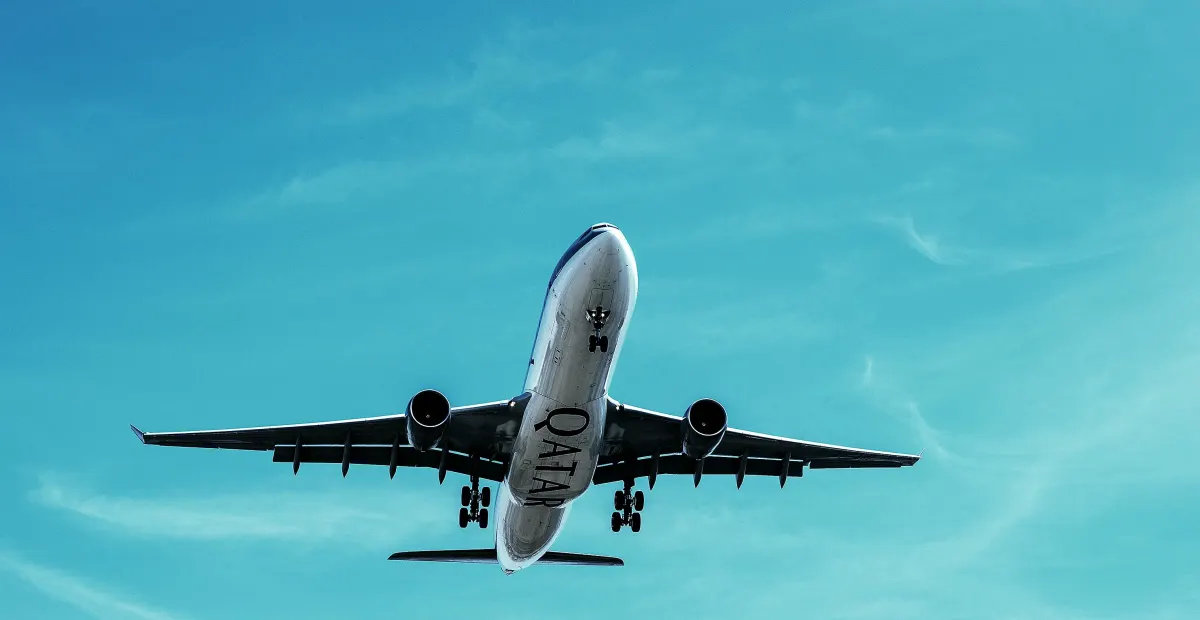
Amex GBT, Shell, and Google extended their agreement for the Avelia platform, scaling corporate Sustainable Aviation Fuel investment via a book and...
Key Takeaways
- •Extends a key collaboration on the Avelia platform involving Amex GBT, Shell, and Google to scale SAF.
- •Abated over 590,000 tonnes of CO2e through its blockchain-verified 'book and claim' model.
- •Connects corporate demand for SAF with supply to reduce Scope 3 travel emissions for 66 participating entities.
- •Integrates over 64 million gallons of SAF into global networks, providing demand signals for producers.
American Express Global Business Travel (Amex GBT), Shell Aviation, and Google have extended their collaboration on the Avelia platform, a blockchain-based solution for corporate investment in Sustainable Aviation Fuel (SAF). The platform, which utilizes a 'book and claim' model, has facilitated the abatement of more than 590,000 tonnes of Carbon Dioxide Equivalent (CO2e) since its launch. This extension signals growing corporate commitment to decarbonizing business travel through verifiable emissions reduction programs.
The collaboration addresses a core challenge in aviation sustainability: the high cost and limited supply of SAF. By allowing companies like Google to purchase the environmental attributes of SAF without taking physical delivery of the fuel, the Avelia platform aggregates demand and provides crucial financial signals to fuel producers. This 'book and claim' system effectively decouples the environmental benefits from the physical fuel molecules, enabling investment to flow where SAF production is most efficient while allowing corporations to claim reductions against their Scope 3 travel emissions.
Avelia's Growth and Impact
Launched in 2022, the Avelia platform has gained significant traction. According to an Amex GBT press release, 66 corporations and airlines had joined the platform as of March 2026. The platform has successfully integrated more than 64 million gallons of SAF into global fuel networks. This growth is critical, as SAF can reduce lifecycle greenhouse gas emissions by up to 80% compared to conventional jet fuel, according to Shell Aviation.
In a statement, Vrushali Gaud, Global Director of Climate Operations at Google, described SAF as a "critical unlock for decarbonizing the hard-to-abate aviation sector." Andrew Crawley, President of Amex GBT, emphasized that corporate demand is essential for the industry's growth. "Building a lower-carbon future for travel requires a joint effort from the entire ecosystem," Crawley stated. Raman Ojha, President of Shell Aviation, added that Google's continued commitment provides "important financial signals for the SAF ecosystem."
The 'Book and Claim' Mechanism
The Avelia platform's foundation is its blockchain-powered registry, co-developed with Accenture and the Energy Web Foundation. This technology ensures that the environmental attributes of each gallon of SAF are tracked transparently and retired permanently, preventing double-counting. For corporate clients, this provides a verifiable and auditable method to account for their investments in decarbonization, a key requirement under emerging regulations.
This model directly impacts corporate sustainability reporting. By purchasing SAF certificates through Avelia, businesses can address their Scope 3 emissions—indirect emissions that occur in a company's value chain, including business travel. This is increasingly important as regulatory bodies demand more rigorous environmental disclosures.
The platform has also evolved to a 'Bring Your Own SAF' (BYOS) model. This multi-supplier approach allows airlines to manage SAF sourced from various producers, moving away from a single-supplier ecosystem and fostering a more competitive and resilient market.
Regulatory and Market Context
The growth of platforms like Avelia is supported by a strengthening regulatory environment. The Corporate Sustainability Reporting Directive (CSRD) from the European Commission requires external assurance of carbon data, driving demand for verified registries. In the United States, the Clean Fuels Production Tax Credit (45Z) provides financial incentives to scale SAF production.
This development follows historical precedents that validated the book-and-claim concept. In November 2023, the launch of the Roundtable on Sustainable Biomaterials (RSB) Book & Claim Registry created a standardized framework. This demonstrated the model's viability and paved the way for corporate-focused platforms. However, the emergence of multiple registries, including the SABA SAF-c Registry, has raised concerns among some market analysts about potential fragmentation and a lack of interoperability.
Technical Analysis
The extension of the Amex GBT, Shell, and Google partnership confirms that the book-and-claim model, underpinned by blockchain, is solidifying its role as the primary financial instrument for scaling SAF. This approach effectively solves a logistical impasse: SAF production is geographically concentrated, while demand for emissions reduction is global. By separating the environmental attribute from the physical product, Avelia creates a liquid market for decarbonization that can operate at a global scale. The shift to a multi-supplier BYOS model further indicates the maturation of this market, moving from closed-loop systems to an open, more competitive framework. This structure is becoming essential for providing the long-term offtake agreements that SAF producers need to secure financing for new production facilities, accelerating the industry's overall growth trajectory.
What Comes Next
The industry anticipates further clarification on how SAF certificates can be used for corporate climate goals. The Science Based Targets initiative (SBTi) is expected to release revisions to its Corporate Net-Zero Standard regarding the use of environmental attribute certificates in late 2026. These revisions will be critical in defining the long-term value and accounting standards for SAF book-and-claim systems.
Meanwhile, global SAF production continues to ramp up. According to the Amex GBT SAF Index, production has increased 24-fold since 2021 and is expected to reach 713 million gallons by the end of 2025.
Why This Matters
This collaboration is significant because it demonstrates a scalable, market-based solution to fund aviation's energy transition. It validates a model where corporate travel budgets directly contribute to decarbonization, providing the crucial demand signal needed to expand SAF production and lower its cost premium over time. For the broader aviation industry, it represents a key pathway to meeting ambitious net-zero targets.
For in-depth airline coverage and commercial aviation news, omniflights.com delivers timely industry insights. For detailed airline coverage, route changes, and fleet moves, explore the Airlines section at omniflights.com/airlines.

Written by Hardik Vishwakarma
Co-Founder & Aviation News Editor leading initiatives that improve trust and visibility across the global aviation industry. Covers airlines, airports, safety, and emerging technology.
Visit ProfileYou Might Also Like
Discover more aviation news based on similar topics

American Airlines Flies First U.S. eSAF Passenger Flight
American Airlines completed the first U.S. commercial flight using Infinium eSAF, a synthetic fuel that reduces lifecycle emissions by over 90%.
Akasa Air Partners with BPCL to Advance SAF in India
Akasa Air signed an MoU with BPCL to establish a SAF supply framework ahead of India's expected 1% blending mandate by 2027.

Delta, Shell Aviation Ink 5-Year SAF Supply Agreement
Delta Air Lines and Shell Aviation have signed a five-year agreement to supply Sustainable Aviation Fuel across five major U.S. hubs through 2030.
Indonesia to Mandate 1% SAF Blend for Flights by 2027
Indonesia will require a 1% Sustainable Aviation Fuel blend on international flights departing from Jakarta and Bali starting in 2027.
Gulfstream G800 Completes 100% SAF High-Altitude Emissions Test
Gulfstream tested 100% SAF on a G800 at 50,000 feet to measure emissions, marking a key step toward certifying unblended synthetic fuels.
LATAM Airlines Operates First SAF-Linked Passenger Charters
LATAM Airlines Group and PONANT completed 13 charter flights using SAF, reducing 160 tonnes of CO2 emissions via a book-and-claim methodology.