VMO Aero Challenger 601-3A Lands on Road Near Asaba

Co-Founder & CEOAviation News Editor delivering trusted coverage across the global aviation industry.

A VMO Aero Bombardier Challenger 601-3A landed on a highway in Ogwashi-Uku after a missed approach at Asaba, prompting an NCAA permit suspension.
Key Takeaways
- •VMO Aero Challenger 601-3A landed on an unfinished road near Asaba on June 10.
- •NCAA suspended VMO Aero's PNCF permit following the unauthorized road landing.
- •NSIB is investigating the incident with a preliminary report expected in Q3 2026.
- •Critics argue the 75-year-old pilot exceeded ICAO's 65-year commercial age limit.
Asaba aircraft road landing incident
The aviation industry remains under scrutiny following the incident involving a Bombardier Challenger 601-3A (N989BC), which executed a missed approach at Asaba Airport (ABB) on June 10, 2026. Instead of returning for a standard landing, the aircraft touched down on an unfinished highway in Ogwashi-Uku, Delta State. The Nigeria Civil Aviation Authority (NCAA) subsequently suspended the Permit for Non-Commercial Flight (PNCF) of the operator, VMO Aero, amid growing concerns regarding regulatory compliance and airspace safety.
The VMO Aero N989BC incident
According to official statements, the 1988-built business jet attempted an approach at 07:43 local time. Following the missed approach, the flight crew opted to land on a 7,000-foot stretch of road under construction. The Nigeria Civil Aviation Authority confirmed that all occupants exited the aircraft safely. However, the pilot's failure to notify Air Traffic Control prior to the final landing and subsequent uncoordinated take-off have fueled industry criticism regarding the professionalism of the flight crew.
ICAO pilot age limit and regulatory friction
The incident has ignited a debate over the ICAO (International Civil Aviation Organization) standards versus local enforcement. The pilot in command is 75 years old, while the co-pilot is 70. While ICAO Annex 1 recommends a 65-year age limit for commercial multi-pilot operations, the aircraft operated under FAA (Federal Aviation Administration) Part 91 and Part 135 rules. Capt. Don Spiff, NCAA Director of Operations, Licensing and Training, noted that the American-registered aircraft and its crew were technically operating within the scope of their home-country regulations, creating a conflict with Nigerian domestic expectations.
Stakeholder impact and regulatory scrutiny
For VMO Aero, the immediate impact is the grounding of its fleet following the suspension of its PNCF. Industry observers, including security expert Group Captain John Ojikutu, have characterized the flight as a breach of national security, noting the absence of security clearance for point-to-point domestic transport. The Nigeria Safety Investigation Bureau (NSIB) is currently analyzing flight data to determine why the crew mistook the narrow 35-foot-wide roadway for a runway.
Historical context and future oversight
This event follows a July 2024 crackdown where the NCAA suspended 10 private jet operators for misusing PNCFs to conduct illegal commercial charter services. The current situation highlights a recurring tension between the economic benefits of hosting foreign-registered aircraft and the risks posed by operators bypassing stricter local airframe age and pilot licensing requirements. If the investigation confirms a failure to follow established safety procedures, the NCAA is expected to overhaul its permit issuance process for all foreign-registered aircraft operating within the country.
What comes next: NSIB investigation
The Nigerian Safety Investigation Bureau is expected to release a preliminary report on the N989BC incident by Q3 2026. This report will likely clarify whether the landing was a necessary emergency maneuver or a result of spatial disorientation. Following the report, the NCAA will determine if permanent revocation of the operator's permit is warranted or if new, more stringent oversight of foreign-registered business aviation is required.
Why this matters for the Nigerian aviation sector
The incident exposes a significant regulatory loophole concerning the operation of foreign-registered aircraft in domestic airspace. For the Nigerian aviation sector, this development signals a shift toward more aggressive enforcement of cabotage laws. The outcome will likely force a reconciliation between international FAA standards and local safety mandates, impacting how private jet operators manage their fleet and crew rosters moving forward.
Frequently Asked Questions
- Why did the VMO Aero Challenger 601-3A land on a road instead of the Asaba runway?
- The aircraft performed a missed approach at Asaba Airport due to unstable approach parameters and subsequently landed on an unfinished highway in Ogwashi-Uku. The Nigerian Safety Investigation Bureau is currently investigating the exact cause, including why the crew misidentified the roadway as a runway.
- Are the pilots of the N989BC flight over the legal age limit for flying in Nigeria?
- While ICAO guidelines recommend a 65-year age limit for commercial multi-pilot operations, the NCAA noted that the crew operated under US FAA regulations. Because the aircraft is American-registered, it was subject to FAA rules, which do not impose a strict upper age limit for these types of non-commercial operations.
omniflights.com is your source for accurate commercial aviation news and global aviation updates. For detailed airline coverage, route changes, and fleet moves, explore the Airlines section at omniflights.com/airlines.
Written by Hardik Vishwakarma
Co-Founder & Aviation News Editor leading initiatives that improve trust and visibility across the global aviation industry. Covers airlines, airports, safety, and emerging technology.
Visit ProfileYou Might Also Like
Discover more aviation news based on similar topics

Families Demand DCA Midair Collision Safety Reforms
Families of 67 victims from the 2025 DCA midair collision are pressing Congress for mandatory ADS-B In technology to prevent future aviation tragedies.

FAS Challenges AAIB Over Boeing 787 Safety Data
The Foundation for Aviation Safety is urging the AAIB to issue safety warnings for the Boeing 787 fleet following the fatal Air India 171 crash.
NTSB Safety Recommendations Lag Amid 6 Monthly Near-Misses
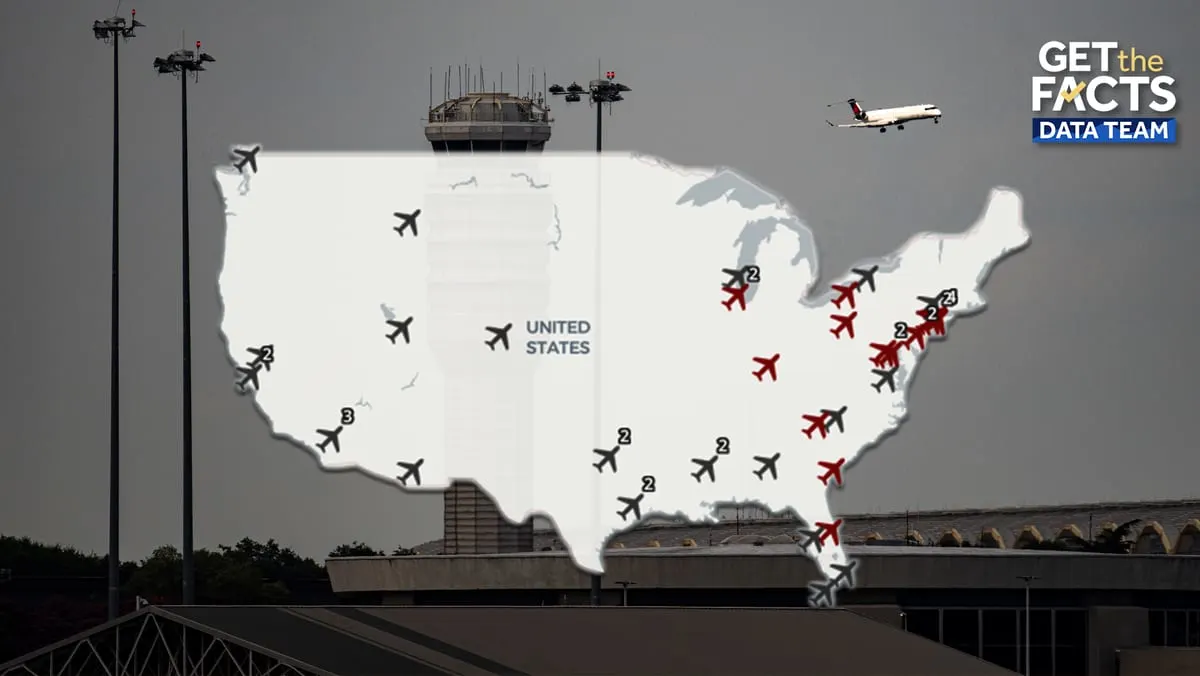
Approximately 6 near-miss incidents occur monthly at U.S. airports as 270 NTSB safety recommendations remain unaddressed by federal regulators.
NTSB Rejects FAA Safety Responses After 67-Fatality Crash
The NTSB labeled 11 FAA responses to 2025 DCA mid-air collision recommendations as unacceptable, citing the lack of a mandatory ADS-B In requirement.
EASA Orders Urgent Airbus A380 Wing Spar Inspections
The EASA ordered urgent inspections on 16 Airbus A380s after discovering wing spar cracks that could compromise structural integrity.
Ryanair Flight RK514 Diverts to Birmingham After Emergency
Ryanair flight RK514 diverted to Birmingham Airport on September 13, 2026, following a medical emergency involving a passenger.