Pan Am Flight 526A Wreckage Found Off Puerto Rico

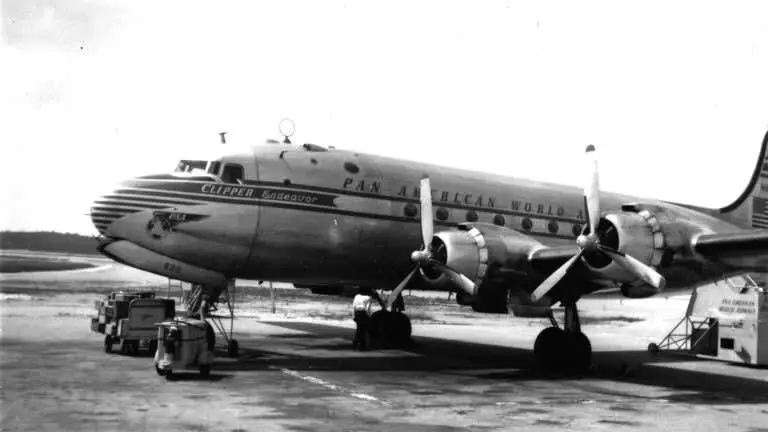
The Air/Sea Heritage Foundation located the wreckage of Pan Am Flight 526A, a 1952 crash off Puerto Rico that claimed 52 lives.
Key Takeaways
- •Air/Sea Heritage Foundation locates Pan Am Flight 526A wreckage.
- •Wreckage found 2,000 feet deep and five miles off Puerto Rico.
- •The 1952 crash claimed 52 lives and mandated safety briefings.
- •No plans exist to recover the aircraft or the 39 missing bodies.
The Air/Sea Heritage Foundation has announced the Clipper Endeavor discovery, locating the Douglas DC-4 wreckage of Pan Am Flight 526A in the Atlantic Ocean after more than 74 years. The aircraft ditched on April 11, 1952, off the coast of Puerto Rico, resulting in 52 fatalities out of the 69 people on board. This historic find, situated 2,000 feet below the ocean surface, marks the end of a multi-year search for the lost airliner.
The 1952 accident served as a crucial turning point for commercial aviation safety, directly prompting the Civil Aeronautics Board (CAB) to mandate pre-flight safety briefings for passengers. When the aircraft made its emergency water landing, confusion, language barriers, and panic prevented many passengers from evacuating, leading to a high drowning rate. The location of the wreckage provides physical closure to one of the early Cold War era's most significant maritime aviation disasters and highlights modern deep-sea search capabilities.
The Flight 526A Accident and Evacuation
According to the Civil Aeronautics Board accident report, the Douglas Commercial 4 (DC-4) experienced sequential power loss in its right two engines shortly after departing San Juan, Puerto Rico, for New York's Idlewild Airport on Good Friday. Captain John C. Burn attempted to return to San Juan but was forced to execute an emergency ditching five miles offshore. The impact severed the aircraft's tail section, causing the fuselage to sink within minutes. While all 69 passengers and crew survived the initial splashdown, 52 passengers drowned in the rough seas, and 39 bodies were never recovered.
The search team, led by the Air/Sea Heritage Foundation in partnership with Deep Sea Vision, utilized the survey vessel Fugro Brasilis to scan a 10-square-mile target area. The discovery was made using an Autonomous Underwater Vehicle (AUV) named "Miss Millie," a torpedo-shaped robotic drone valued between $10 million and $12 million capable of operating at depths of up to 20,000 feet. On its 13th scanning pass, the AUV captured high-resolution sonar images of the fuselage and tail section. Subsequent photographic passes revealed the classic Pan American Airways (PAA) winged globe logo and the letters "VOR" from the name "Endeavor" preserved on the aluminum hull.
Historical Precedents in Deep-Sea Recovery
The use of advanced AUV technology to locate historical wrecks mirrors modern deep-sea search methodologies. For example, in April 2011, the wreckage of Air France Flight 447 was located at a depth of 13,000 feet in the Atlantic Ocean using similar autonomous underwater vehicles. While the Air France search was driven by the need to recover flight data recorders to determine the accident cause, the Clipper Endeavor search was a historical and archaeological effort.
The operational outcomes of the 1952 ditching stand in stark contrast to modern water landings. In January 2009, US Airways Flight 1549 successfully ditched in the Hudson River with all 155 occupants surviving. The high survival rate in 2009 was directly enabled by the structural safety standards, crew training, and mandatory passenger safety briefings that were instituted by regulators in the decades following the Pan Am Flight 526A disaster.
Deep-Sea Sonar and the Physics of the Ditching
The preservation of the Douglas DC-4 wreckage at 2,000 feet highlights the unique environmental conditions of deep-water preservation. At this depth, the lack of light, low oxygen levels, and cold temperatures slow down the degradation of the aircraft's aluminum structure. The sonar data gathered by the "Miss Millie" AUV shows that the fuselage remains remarkably intact, despite the structural failure of the tail section during the 1952 impact.
Historically, aircraft ditchings in the mid-20th century suffered from high fatality rates due to the lack of standardized cabin evacuation procedures. The CAB's subsequent regulatory shift to mandate oral pre-flight briefings on life vest locations and emergency exits represents the birth of modern cabin safety. This development accelerated a regulatory cycle that transformed commercial aviation from an era of unregulated passenger response to highly structured, timed evacuations.
Preservation and Site Monitoring
According to the Air/Sea Heritage Foundation, there are no plans to recover the wreckage or any human remains from the site. Because 39 victims of the crash were never recovered, the undisturbed fuselage will remain in place as an official deep-sea grave marker. The exploration team, including Deep Sea Vision and Eco Minerals, plans to share the more than 350,000 photographs captured during the expedition with historians and maritime archaeologists to create a detailed three-dimensional digital reconstruction of the debris field.
The Legacy of Passenger Safety Briefings
For the aviation industry, the discovery of the Clipper Endeavor is a physical reminder of the origin of modern safety protocols. The tragedy of Flight 526A forced regulators to realize that surviving a water landing is only the first step in passenger survival; structured education and clear communication are vital. Today's mandatory safety cards and pre-flight demonstrations are direct descendants of the lessons learned on that Good Friday in 1952.
Frequently Asked Questions
- How was the wreckage of Pan Am Flight 526A discovered?
- The wreckage was located 2,000 feet beneath the surface and 5 miles off Puerto Rico using a high-tech Autonomous Underwater Vehicle named 'Miss Millie' during a search led by the Air/Sea Heritage Foundation.
- Why did Pan Am Flight 526A crash in 1952?
- The Douglas DC-4 experienced a sequential loss of power in its two right-side engines shortly after takeoff from San Juan, forcing the pilot to execute an emergency water landing.
- How did the Clipper Endeavor crash change aviation safety?
- The high number of drownings due to passenger panic and confusion prompted the Civil Aeronautics Board to mandate oral pre-flight passenger safety briefings regarding life vests and emergency exits.
Access up-to-date commercial aviation news and airline industry developments via omniflights.com. From aircraft production to supply chains, commercial aviation manufacturing news is covered at omniflights.com/manufacturing.

Written by Shashank Shukla
Co-Founder & CTO leading the engineering and AI systems behind Omni Flights. Covers aviation technology, flight safety, aircraft manufacturing, and emerging aerospace developments.
Visit ProfileYou Might Also Like
Israel Bans United Airlines Pilot Over Pro-Iran Posts

Attack on Saudi King Fahd International Airport
LATAM Airlines A320 Engine Fire During Takeoff in Peru
Riyadh Airport Limits Traffic Following Houthi Attacks
FAA Mandates Fuel Valve Inspections for A330 and A340