JetBlue A320 Pitch-Down Prompts 6,000 Software Rollbacks

Co-Founder & CTOCo-Founder & CTO driving the technology and data systems behind Omni Flights.
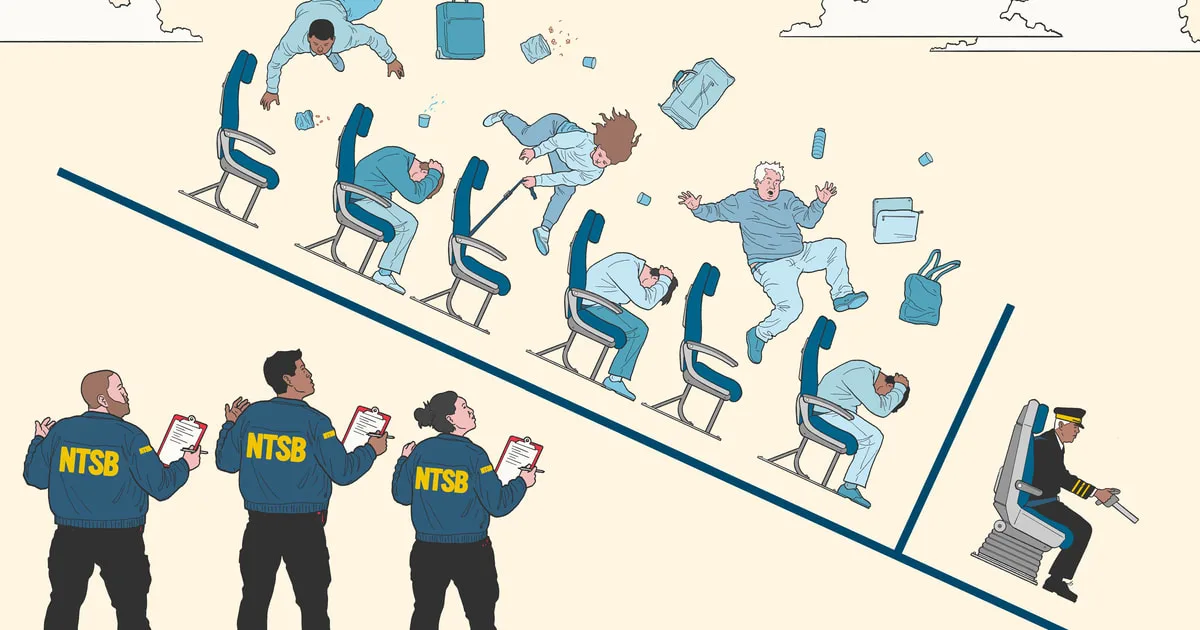
A JetBlue A320 uncommanded pitch-down injuring 22 people triggered safety directives mandating software rollbacks on 6,000 aircraft worldwide.
Key Takeaways
- •JetBlue Flight 1230 suffered an uncommanded pitch-down injuring 22 people.
- •Regulators mandated software rollbacks on 6,000 Airbus A320 aircraft.
- •Thales-manufactured ELAC software malfunctioned due to a suspected bit-flip.
- •NTSB expects to publish its final accident report by late 2027.
On October 30, 2025, JetBlue Flight 1230 experienced a sudden uncommanded pitch down over the Gulf of Mexico, injuring 22 occupants. Subsequent investigations into the Airbus A320 ELAC malfunction prompted global regulators to mandate immediate software rollbacks on thousands of aircraft.
The incident, which occurred during a routine flight to Cancún, forced an emergency diversion and exposed a critical vulnerability in the flight control systems of the world’s most widely used narrowbody aircraft family. The sudden altitude loss of approximately 100 feet in a matter of seconds highlighted how a localized microelectronic anomaly can rapidly escalate into a fleet-wide safety crisis.
According to the National Transportation Safety Board (NTSB) Preliminary Report ENG26LA004, the Airbus A320-200 was cruising over the Gulf of Mexico when the uncommanded pitch excursion occurred. The sudden maneuver resulted in minor injuries to 22 occupants, including 18 passengers and 4 flight attendants.
The technical investigation quickly centered on the aircraft's Elevator and Aileron Computer (ELAC), which interprets pilot inputs and manages pitch and roll. Airbus identified a critical concern with the ELAC software design as a possible contributing factor to the incident. Specifically, the malfunction occurred in software version L104, which is manufactured by Thales. Investigators suspect the system experienced a Single-Event Upset (SEU)—a "bit-flip" in the computer's microelectronic components caused by high-energy cosmic or solar radiation.
In response to the findings, the European Union Aviation Safety Agency (EASA) issued EASA Emergency Airworthiness Directive 2025-0268-E, mandating the immediate replacement or software rollback of affected ELAC B units. The Federal Aviation Administration (FAA) mirrored this action for United States operators by issuing Emergency Airworthiness Directive 2025-24-51. These combined regulatory actions legally enforced software rollbacks or hardware replacements on approximately 6,000 Airbus A320-family aircraft globally.
The regulatory directives created immediate operational and financial challenges across the aviation sector. For Airbus, the forced issuance of an urgent technical bulletin, known as an Alert Operators Transmission (AOT), represents a highly disruptive global safety campaign. Thales, as the component manufacturer, faces intense regulatory scrutiny and potential financial liability over the L104 software's vulnerability to radiation. Global A320-family operators must perform immediate software rollbacks or hardware replacements on short notice, incurring significant maintenance burdens. Meanwhile, JetBlue Airways faces immediate operational diversion costs, passenger injury claims, and is named in passenger lawsuits under the Montreal Convention despite the root cause being an original equipment manufacturer (OEM) defect.
While regulators and manufacturers point to atmospheric radiation as the likely trigger, some stakeholders dispute this explanation. In a federal lawsuit filed in Tampa, Florida, injured passengers argued that Airbus and Thales failed to adequately test the flight control software, rendering the ELAC system fundamentally defective. The plaintiffs contend that attributing the failure to a solar flare downplays design and testing omissions by the manufacturers.
The JetBlue incident draws strong parallels to historical flight control anomalies. In October 2008, Qantas Flight 72, an Airbus A330, experienced a series of sudden, uncommanded pitch-downs that resulted in severe injuries to passengers and crew. In that precedent, Airbus modified the Air Data Inertial Reference Unit (ADIRU) algorithms to reject erroneous data spikes and prevent uncommanded elevator movements. The recent ELAC software issue represents a modern variation of this hazard, focusing on the software's resilience to external atmospheric interference rather than sensor data corruption.
The Vulnerability of Fly-by-Wire Systems to Cosmic Radiation
This development highlights an emerging industry trend: the vulnerability of highly miniaturized, software-dependent fly-by-wire avionics to atmospheric radiation. As microchips become smaller and operate at lower voltages, they become increasingly susceptible to single-event upsets caused by solar flares or cosmic rays. This vulnerability poses a systemic, common-cause failure risk across massive, standardized aircraft fleets. Historically, safety-critical systems relied on hardware redundancy, but when a software-level vulnerability exists uniformly across thousands of operational aircraft, physical redundancy fails to mitigate the risk. The rapid regulatory response by EASA and the FAA underscores a shift toward treating atmospheric radiation not as an unavoidable act of nature, but as a predictable design constraint that modern flight control computers must be engineered to withstand.
Regulatory Milestones and Software Certification Timelines
The aviation industry is tracking several key milestones as regulators and manufacturers work toward a permanent resolution. The NTSB is expected to publish its Final Accident Investigation Report between late 2026 and 2027, which will provide a definitive analysis of the physical and digital sequence of events. Concurrently, Airbus and Thales are developing a permanent ELAC software patch. EASA and the FAA are expected to certify and mandate this permanent software update between 2026 and 2027, superseding the current emergency rollback directives. Until then, operators must remain compliant with the L104 software restrictions to prevent further uncommanded pitch excursions.
Why Fleet-Wide Software Resilience Matters
For aviation professionals, this event serves as a stark reminder of the hidden complexities within highly integrated, modern aircraft systems. A single microelectronic bit-flip can trigger a chain of events that grounds thousands of aircraft, demonstrating how software integrity directly impacts global airline capacity and operational reliability. As airlines continue to transition toward fully digital, next-generation fleets, ensuring that flight control systems are resilient against cosmic phenomena will remain a critical priority for manufacturers, regulators, and operators alike.
Frequently Asked Questions
- What caused the JetBlue Flight 1230 uncommanded pitch-down?
- The pitch-down was caused by a malfunction in the Airbus A320's Elevator and Aileron Computer (ELAC), specifically software version L104 manufactured by Thales. Investigators suspect the malfunction was triggered by a cosmic radiation-induced single-event upset.
- How many aircraft were affected by the safety directives?
- Approximately 6,000 Airbus A320-family aircraft worldwide were affected by emergency airworthiness directives issued by EASA and the FAA, which mandated immediate software rollbacks or hardware replacements.
- How does this incident compare to Qantas Flight 72?
- Like Qantas Flight 72 in 2008, the JetBlue incident involved an Airbus fly-by-wire aircraft experiencing an uncommanded pitch-down due to corrupted computer data, though the JetBlue event was linked to a software vulnerability to atmospheric radiation rather than sensor data spikes.
For global airline trends and commercial aviation news, turn to omniflights.com. Track policy changes, airspace rules, and global aviation governance in the Regulatory category at omniflights.com/regulatory.
Written by Shashank Shukla
Co-Founder & CTO leading the engineering and AI systems behind Omni Flights. Covers aviation technology, flight safety, aircraft manufacturing, and emerging aerospace developments.
Visit ProfileYou Might Also Like
Discover more aviation news based on similar topics

Families Demand DCA Midair Collision Safety Reforms
Families of 67 victims from the 2025 DCA midair collision are pressing Congress for mandatory ADS-B In technology to prevent future aviation tragedies.
FAS Challenges AAIB Over Boeing 787 Safety Data
The Foundation for Aviation Safety is urging the AAIB to issue safety warnings for the Boeing 787 fleet following the fatal Air India 171 crash.
NTSB Safety Recommendations Lag Amid 6 Monthly Near-Misses
Approximately 6 near-miss incidents occur monthly at U.S. airports as 270 NTSB safety recommendations remain unaddressed by federal regulators.
NTSB Rejects FAA Safety Responses After 67-Fatality Crash
The NTSB labeled 11 FAA responses to 2025 DCA mid-air collision recommendations as unacceptable, citing the lack of a mandatory ADS-B In requirement.
EASA Orders Urgent Airbus A380 Wing Spar Inspections
The EASA ordered urgent inspections on 16 Airbus A380s after discovering wing spar cracks that could compromise structural integrity.
Ryanair Flight RK514 Diverts to Birmingham After Emergency
Ryanair flight RK514 diverted to Birmingham Airport on September 13, 2026, following a medical emergency involving a passenger.