Aerodiana Cessna 208B Crashes in Peru, Killing 13

Co-Founder & CTOCo-Founder & CTO driving the technology and data systems behind Omni Flights.
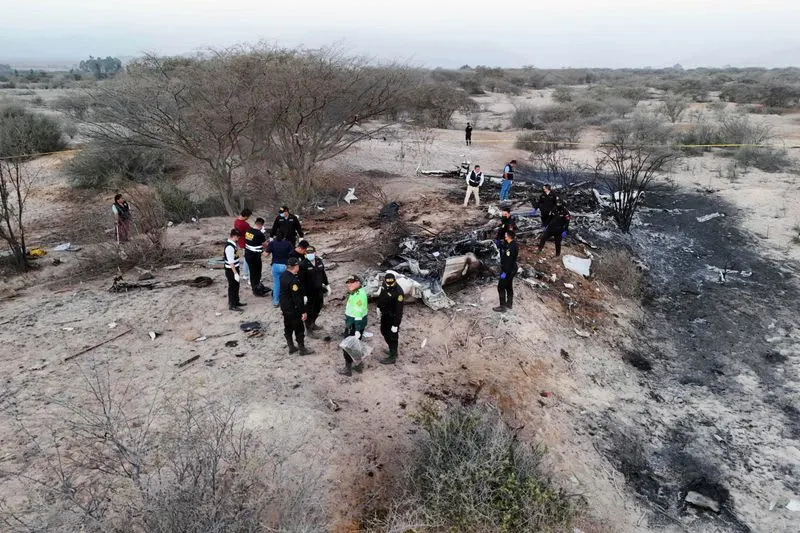
An Aerodiana Cessna 208B crashed during a Peru sightseeing flight, killing 13 people and triggering an aviation safety investigation.
Key Takeaways
- •Aerodiana Cessna 208B crash in Peru kills 13 people, including 11 tourists.
- •MTC suspends Aerodiana operations preventively following the fatal accident.
- •Flight crew reported a mechanical failure prior to the crash near Nazca.
- •CIAA launches safety investigation with a final report expected in 2027.
The Aerodiana Nazca Lines crash involving a Cessna Grand Caravan accident on August 1, 2026, has resulted in Peru sightseeing flight fatalities totaling 13 people. The aircraft, a single-engine turboprop registered as OB-2001, went down in a field outside the city of Nazca shortly after departure. This OB-2001 aircraft crash has immediately drawn intense scrutiny toward the regulatory oversight of low-altitude aerial tourism in the region.
The accident represents a severe blow to Peru's regional tourism sector, which relies heavily on scenic flights to showcase the historic Nazca Lines geoglyphs. With all 13 occupants deceased—including 11 foreign tourists—the incident has prompted immediate government intervention, including the preventive suspension of the operator's flights and discussions regarding airport operational restrictions.
According to the Ministerio de Transportes y Comunicaciones (MTC) and the Centro de Operaciones de Emergencia Nacional (COEN INDECI), the flight departed from Capitán FAP Renán Elías Olivera Airport in Pisco, representing a Pisco Airport departure rather than a direct departure from the city of Ica. The aircraft was carrying seven Italian citizens between the ages of 18 and 54, two 52-year-old Spanish citizens, and two German citizens aged 77 and 78. Both crew members, pilot Americo Salazar and copilot Irenka Guanilo del Carpio, also died in the crash.
The MTC and the Dirección General de Aeronáutica Civil (DGAC) have initiated a MTC Peru aviation investigation into the operator, Aerodiana. The airline has operated scenic tours over the Nazca desert for 14 years using Cessna Grand Caravan aircraft. Following the accident, the MTC issued a preventive suspension of Aerodiana's operations while the DGAC verifies the carrier's compliance with safety regulations.
Prior to the impact, the flight crew transmitted an emergency message. According to Rogers Valencia, the Minister of Foreign Trade and Tourism, "There was a call from the aircraft to indicate that it had a mechanical failure." The Comisión de Investigación de Accidentes de Aviación (CIAA) has activated its technical investigation protocols to analyze the wreckage and recover data devices for the official CIAA accident report.
For Aerodiana, the operational suspension represents an immediate and high-severity disruption, causing revenue loss and significant legal liability. Capitán FAP Renán Elías Olivera Airport in Pisco also faces potential temporary closure. President Keiko Fujimori expressed regret over the accident and confirmed that a temporary suspension of the airport is under consideration, pending reports from relevant ministries.
Regional tourism operators fear a sharp decline in demand among the estimated 100,000 annual visitors who take Nazca aerial tours. Additionally, local community members and agricultural workers noted that flying in adverse wind conditions is highly risky, a factor that frequently causes flight suspensions at the nearby Nazca aerodrome.
Scenic flights over the Nazca Lines have historically carried elevated operational risks. In February 2022, a similar sightseeing flight crash resulted in seven fatalities, including Dutch and Chilean tourists, which triggered brief regulatory reforms. Furthermore, Aerodiana has faced past operational challenges; in June 2010, an Aerodiana Cessna 208 was hijacked and stolen by suspected cartel members, though the crew survived.
The Cessna 208B Grand Caravan is a widely used platform for utility and sightseeing operations, but its single-engine configuration presents different operational parameters compared to twin-engine or larger turboprop aircraft.
Cessna 208B Grand Caravan vs. Pilatus PC-12: Key Specifications
| Metric | Cessna 208B Grand Caravan | Pilatus PC-12 |
|---|---|---|
| Maximum Passenger Capacity | 14 | 10 |
| Max Cruise Speed | ~186 KTAS | ~285 KTAS |
| Maximum Range | ~964 nm | ~1,568 nm |
| Engine Power | 675 shp (PT6A-114A) | 1,200 shp (PT6E-67XP) |
Operational Risks of Nazca Aerial Tours
The loss of OB-2001 underscores the persistent hazards of low-altitude, single-engine operations in regions characterized by high thermal activity and strong desert winds. The Cessna 208B Grand Caravan relies on a single Pratt & Whitney Canada PT6A turboprop engine. While the engine family is historically reliable, any mechanical failure at low altitude leaves flight crews with extremely limited glide options and minimal time to react, especially when maneuvering to view ground-level geoglyphs. This accident follows a historical pattern of Nazca sightseeing accidents, such as the 2022 crash, indicating that despite periodic regulatory interventions, the structural safety margins of low-altitude aerial tourism in Peru remain highly vulnerable to environmental and mechanical variables.
Investigation Timeline and Airport Restrictions
The CIAA is expected to release its final accident investigation report in 2027, detailing the precise mechanical or operational failures that led to the crash. In the near term, the MTC is rumored to decide on the potential temporary suspension of operations at Capitán FAP Renán Elías Olivera Airport in Pisco by late August 2026. Meanwhile, Aerodiana's fleet will remain grounded under the MTC's preventive suspension order until the DGAC completes its comprehensive audit of the carrier's maintenance and operational standards.
Safety Scrutiny for Peru's Tourist Sector
This development signals a critical juncture for Peru's transport regulators, who must balance the economic benefits of a high-profile tourist attraction against international safety standards. For global travelers and tour operators, the crash highlights the ongoing safety risks associated with unregulated or loosely monitored regional sightseeing flights. Ultimately, the regulatory response will determine whether Peru can restore international confidence in its aerial tourism sector.
Frequently Asked Questions
- What caused the Aerodiana Cessna Grand Caravan crash in Peru?
- The flight crew transmitted a distress call reporting a mechanical failure prior to the crash. The Comisión de Investigación de Accidentes de Aviación (CIAA) is currently conducting a technical safety investigation to determine the official cause.
- Which airport did the fatal Nazca Lines sightseeing flight depart from?
- The aircraft departed from Capitán FAP Renán Elías Olivera Airport in Pisco, located in the Ica region of Peru, rather than departing directly from the city of Ica.
- What regulatory actions were taken after the Nazca Lines crash?
- Peru's Ministry of Transport and Communications (MTC) preventively suspended all flight operations of the airline Aerodiana while safety compliance is verified.
From airline operations to fleet updates, commercial aviation news lives at omniflights.com. Follow aviation sustainability efforts, emissions research, and green initiatives in the Environmental section at omniflights.com/environmental.
Written by Shashank Shukla
Co-Founder & CTO leading the engineering and AI systems behind Omni Flights. Covers aviation technology, flight safety, aircraft manufacturing, and emerging aerospace developments.
Visit ProfileYou Might Also Like
Discover more aviation news based on similar topics

Families Demand DCA Midair Collision Safety Reforms
Families of 67 victims from the 2025 DCA midair collision are pressing Congress for mandatory ADS-B In technology to prevent future aviation tragedies.
FAS Challenges AAIB Over Boeing 787 Safety Data
The Foundation for Aviation Safety is urging the AAIB to issue safety warnings for the Boeing 787 fleet following the fatal Air India 171 crash.
NTSB Safety Recommendations Lag Amid 6 Monthly Near-Misses
Approximately 6 near-miss incidents occur monthly at U.S. airports as 270 NTSB safety recommendations remain unaddressed by federal regulators.
NTSB Rejects FAA Safety Responses After 67-Fatality Crash
The NTSB labeled 11 FAA responses to 2025 DCA mid-air collision recommendations as unacceptable, citing the lack of a mandatory ADS-B In requirement.
EASA Orders Urgent Airbus A380 Wing Spar Inspections
The EASA ordered urgent inspections on 16 Airbus A380s after discovering wing spar cracks that could compromise structural integrity.
Ryanair Flight RK514 Diverts to Birmingham After Emergency
Ryanair flight RK514 diverted to Birmingham Airport on September 13, 2026, following a medical emergency involving a passenger.