United Nigeria Airlines Starts Boeing 737-800NG Training

Co-Founder & CEOAviation News Editor delivering trusted coverage across the global aviation industry.

Nigeria launched a Boeing 737-800NG training program for 16 engineers to bolster local technical capacity and reduce reliance on foreign maintenance.
Key Takeaways
- •16 engineers from United Nigeria Airlines and ValueJet began training in June 2026.
- •Training at ATTI aligns with EASA Part 66 standards to localize maintenance skills.
- •Three Nigerian carriers are inducting 14 Boeing 737-800NG aircraft to expand capacity.
- •Localizing training aims to reduce foreign exchange costs for Nigerian airlines.
Strengthening Local Technical Capacity
Nigeria’s aviation sector has reached a pivotal milestone with the launch of a specialized Boeing 737-800NG training Nigeria initiative. The program, hosted at Aviation Techniks & Trainings International (ATTI) in Lagos, provides critical EASA B1/B2 certification pathways for local engineers. This effort aligns with the government's broader strategy to modernize the workforce and support the ongoing United Nigeria Airlines fleet expansion. The training program, which runs from June 16 to July 29, 2026, currently supports an initial cohort of 16 engineers from United Nigeria Airlines and ValueJet.
Strategic Industry Impact
This initiative arrives as Nigerian carriers, including Air Peace, ValueJet, and United Nigeria Airlines, undergo significant fleet inductions. Collectively, these operators are adding 14 Boeing 737-800 Next Generation aircraft to their rosters. By localizing this training, the industry aims to mitigate the high costs associated with sending personnel to Europe for type-rating certifications. According to the Ministry of Aviation and Aerospace Development, this shift is essential, as indigenous airlines currently account for only 5 to 10 percent of international passenger traffic originating from Nigeria. The program is designed to reclaim market share by empowering local carriers to operate long-haul international routes to major hubs like New York, Canada, and Dubai.
Regulatory and Operational Context
Under the oversight of the European Union Aviation Safety Agency (EASA), the Part 66 framework governs the B1 (mechanical) and B2 (avionics) certification standards. The Nigerian Civil Aviation Authority is tasked with integrating these newly certified professionals into the domestic maintenance ecosystem. This transition mirrors historical successes seen in East Africa, where the Ethiopian Airlines Aviation Academy established a self-sustaining pipeline of technical personnel. By aligning with OEM-backed (Original Equipment Manufacturer) standards, Nigerian operators are positioning the 737NG as the primary narrowbody platform for regional growth.
Economic Realities and Challenges
Despite the clear benefits of technical localization, industry stakeholders remain cautious. According to the Airline Operators of Nigeria, while training addresses the skills gap, airlines face existential threats from external economic volatility. A surge in Jet A1 fuel prices and supply chain disruptions continue to pressure operational margins. The policy direction led by Minister Festus Keyamo seeks to counter these headwinds by shifting reciprocal international route rights to indigenous carriers, thereby creating a more sustainable revenue base that can support long-term investment in local maintenance infrastructure.
Boeing 737-800NG vs Airbus A320ceo: Technical Comparison
| Metric | Boeing 737-800NG | Airbus A320ceo |
|---|---|---|
| Typical Seating | 162 (2-class) | 150 (2-class) |
| Range | 2,935 nm | 3,300 nm |
| Engine Options | CFM56-7B | CFM56-5B / IAE V2500 |
Future Milestones for Nigerian Aviation
Looking ahead, the aviation ministry has outlined several key objectives to sustain this momentum. A second tranche of technical training is expected in late 2026 at the ATTI facility. Furthermore, the government anticipates the inauguration of direct cargo flights from Guangzhou to Enugu by December 2026. The most significant milestone remains the launch of international services by United Nigeria Airlines to major global hubs, currently projected for the 2026 to 2027 timeframe, pending final regulatory and operational readiness.
Why This Matters for Regional Carriers
This development signals a structural shift in how West African carriers approach fleet maintenance and cost management. By reducing dependence on foreign exchange for overseas training, airlines can improve their operational margins and technical resilience. For the broader industry, the success of the ATTI program serves as a litmus test for whether localized MRO (Maintenance, Repair, and Overhaul) ecosystems can successfully support the rapid expansion of narrowbody fleets in emerging markets.
Frequently Asked Questions
- What is the focus of the Boeing 737-800NG training program in Nigeria?
- The program at Aviation Techniks & Trainings International provides EASA Part 66 B1 and B2 theoretical training for engineers, focusing on the mechanical and avionics systems of the Boeing 737-800 Next Generation.
- Why is localizing aviation maintenance training important for Nigerian airlines?
- Localizing training allows Nigerian airlines to reduce their dependence on foreign exchange for overseas maintenance and type-rating costs, while simultaneously building a self-sustaining pool of certified local technical personnel to support fleet expansion.
omniflights.com provides comprehensive commercial aviation news covering airlines, aircraft, and airports. Track policy changes, airspace rules, and global aviation governance in the Regulatory category at omniflights.com/regulatory.
Written by Hardik Vishwakarma
Co-Founder & Aviation News Editor leading initiatives that improve trust and visibility across the global aviation industry. Covers airlines, airports, safety, and emerging technology.
Visit ProfileYou Might Also Like
Discover more aviation news based on similar topics

Flydubai Upgrading 21 Boeing 737 MAX 8s to Flat Bed Seats
Flydubai is retrofitting 21 Boeing 737 MAX 8 aircraft with lie-flat business class seats to standardize its premium product by late 2027.
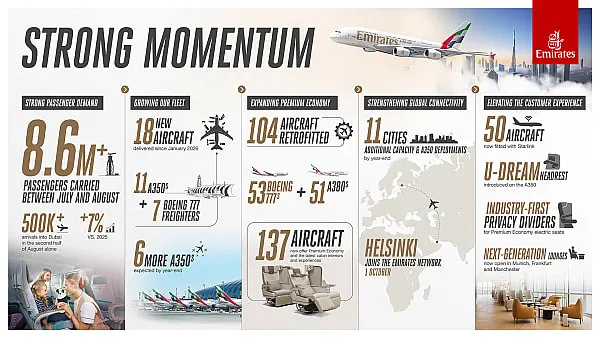
Emirates Winter Booking Momentum Grows Amid Fleet Expansion
Emirates carried 8.6 million passengers this summer and enters winter with strong demand as it accelerates fleet retrofits and network growth.
Air Arabia Consortium Gains AOC for New Dammam Budget Airline
A Saudi GACA-led consortium including Air Arabia has secured an AOC to launch a new budget airline based at Dammam's King Fahd International Airport.
Turkish Airlines Exits Luanda as Angola Hub Struggles
Turkish Airlines dropped its Luanda route as Angola's new airport struggles to attract traffic, handling only 756,028 passengers in 2025.

Red Sea Airlines Leases Two 737 MAX 8s for 2027 Expansion
Red Sea Airlines signed a lease for two Boeing 737 MAX 8 aircraft from SMBC Aviation Capital, arriving in 2027 to support its 14-aircraft fleet goal.
Avelo CEO Warns Airfares May Rise on Jet Fuel Price Spikes
Avelo Airlines CEO Andrew Levy warns that rising fuel costs may force fare increases as global jet fuel prices reach $171.01 per barrel.