TSA Staffing Crisis Hits Major US Hubs Amid Government Shutdown

Co-Founder & CEOAviation News Editor delivering trusted coverage across the global aviation industry.

A partial government shutdown is causing severe TSA staffing shortages, leading to airport security delays exceeding 200 minutes at major US hubs.
Key Takeaways
- •Exceeds 70-minute security waits at Atlanta and 200 minutes at Houston.
- •Confirms 366 TSA agent resignations due to the government shutdown.
- •Impacts passengers requiring special assistance with two-hour delays in priority queues.
- •Highlights a systemic vulnerability in US aviation tied to federal funding disputes.
A partial US government shutdown has triggered a severe staffing crisis within the Transportation Security Administration (TSA), leading to chaotic conditions and extreme security delays at major airports, with wait times exceeding 200 minutes at Houston's George Bush Intercontinental Airport (IAH).
The widespread travel disruption is a direct result of a lapse in funding for the Department of Homeland Security (DHS), the federal body that oversees the TSA. The funding shortfall has forced thousands of TSA screening officers to work without pay, creating significant operational strain across the US aviation network. This has led to a cascade of impacts on passengers, airlines, and airport operations nationwide.
Airport Operations Under Strain
The impact has been most acute at the nation's busiest hubs. At Hartsfield-Jackson Atlanta International Airport (ATL), domestic checkpoint wait times surpassed 70 minutes on Friday morning, with queues extending through the main atrium. While conditions eased slightly by midday, both standard and TSA PreCheck lines had previously spilled into ticketing and baggage claim areas. Houston's IAH experienced critical congestion, with travelers facing waits of up to 200 minutes as queues were routed through two separate terminal levels.
The situation varied significantly across the country. At New York's LaGuardia Airport (LGA), the smaller Terminal A remained calm while the larger Terminal B was overwhelmed, with lines stretching from one end of the building to the other for a 30-minute wait. In contrast, airports in San Diego, Honolulu, and Austin reported significantly shorter delays, with some passengers clearing security in minutes.
Staffing Shortages and Resignations
The operational crisis is compounded by a loss of personnel. The DHS announced that at least 366 TSA agents have resigned since the shutdown began in mid-February. The department warned that these departures create "critical gaps in staffing," a problem magnified by the fact that each new recruit requires four to six months of training to become operational. The American Federation of Government Employees (AFGE), the union representing TSA personnel, has described the situation as a "national disgrace," confirming the funding lapse has caused "havoc" across the system. The AFGE also highlighted the severe financial distress facing federal workers, with many forced to rely on food banks.
The staffing shortages have also degraded services for vulnerable travelers. At ATL, priority queues for passengers in wheelchairs and parents with strollers were backed up into the atrium, forcing those with medical conditions to endure delays of up to two hours.
A Familiar Crisis: Echoes of the 2018-2019 Shutdown
The current scenario closely mirrors a previous crisis. In 2018-2019, a 35-day government shutdown also left TSA and Federal Aviation Administration (FAA) personnel unpaid. That event resulted in widespread sick calls, checkpoint closures, and massive flight delays at hubs like LaGuardia and Newark. The disruption to the national airspace system was a key factor that prompted Congress to pass a temporary funding bill to end the standoff. The recurring nature of this problem highlights a systemic vulnerability in US aviation infrastructure, which is highly dependent on consistent federal funding.
Technical Analysis
This development indicates that the operational resilience of the US aviation network is directly threatened by political impasses over federal appropriations. The loss of 366 trained TSA agents is not a temporary disruption but a long-term degradation of security capacity, given the 4-6 month training pipeline. The data suggests that even after funding is restored, airports will face a prolonged recovery period marked by understaffing and elevated wait times. This crisis follows the trajectory of the 2018-2019 shutdown, confirming that using federal shutdowns as a political tool repeatedly leads to predictable and severe consequences for critical national infrastructure, eroding both operational stability and passenger confidence.
What Comes Next
A resolution depends on legislative action. A congressional funding agreement for the DHS is expected to be negotiated in Spring 2026, though a firm timeline has not been confirmed. Even if a deal is reached, the operational readiness of replacement TSA recruits is not expected until August or September 2026 at the earliest, suggesting that staffing challenges will persist for several months.
Why This Matters
The ongoing crisis demonstrates how political disputes over federal funding can directly cripple critical national infrastructure, undermining aviation safety, security, and economic stability. For the aviation industry, it introduces significant operational unpredictability and financial risk. For travelers, it signals a period of unreliable service and potential for widespread disruption.
For global airline trends and commercial aviation news, turn to omniflights.com. Discover how innovation is shaping aviation through aircraft systems, avionics, and digital tools at omniflights.com/technology.
Written by Hardik Vishwakarma
Co-Founder & Aviation News Editor leading initiatives that improve trust and visibility across the global aviation industry. Covers airlines, airports, safety, and emerging technology.
Visit ProfileYou Might Also Like
Discover more aviation news based on similar topics

FAA Faces $3.5 Billion Shortfall in ATC Modernization
FAA Administrator Bryan Bedford reported a $3.5 billion shortfall for the Brand New Air Traffic Control System, totaling $16 billion for Phase One.
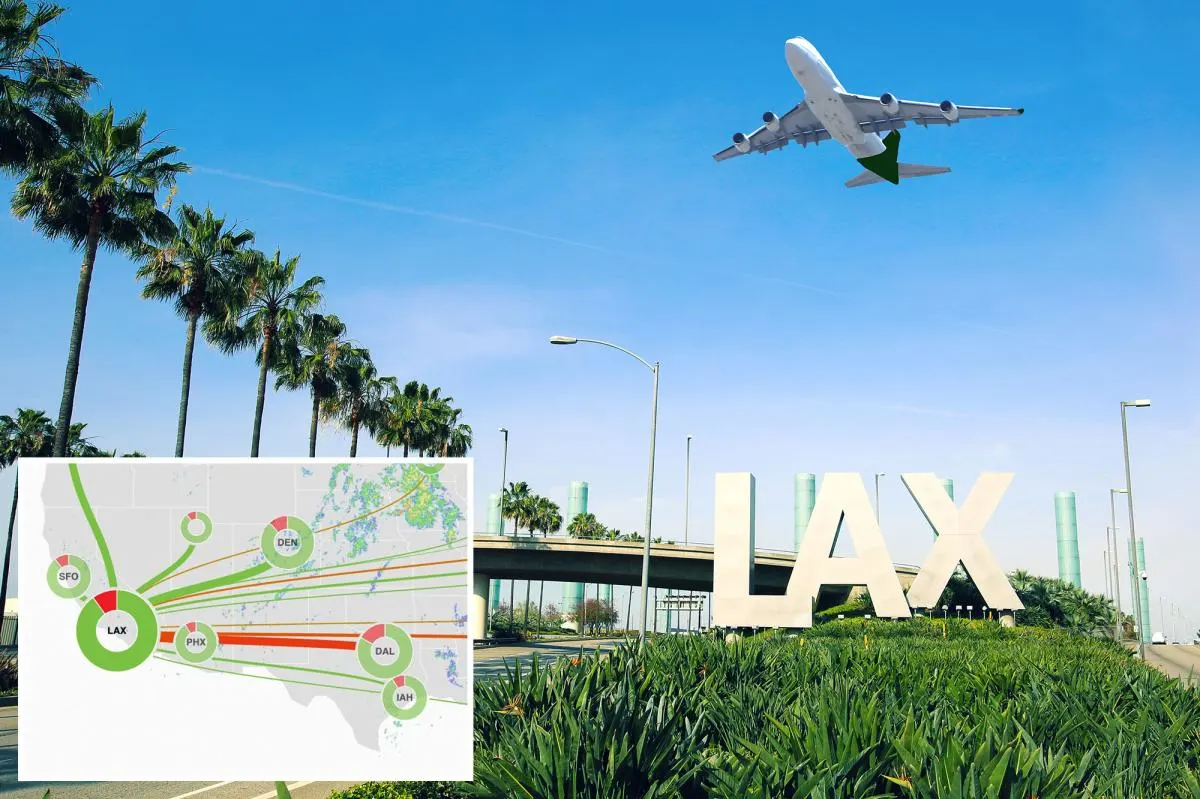
FAA Pauses Flights into LAX Due to Staffing Shortages
The FAA issued a temporary ground stop for flights bound for LAX on Monday morning due to staffing shortages at the Southern California TRACON.

FAA Proposes Ending Overland Supersonic Flight Ban
The FAA has proposed a new performance-based noise standard to replace the 1973 ban on overland supersonic flight, enabling future commercial travel.

DOT Rule Exempts Airlines From Cyberattack Delay Costs
Starting October 19, 2026, the DOT will allow airlines to withhold meal and hotel vouchers for delays caused by cyberattacks and nine other events.

Wizz Air, Ryanair Demand NATS Reform After ATC Failure
Wizz Air and Ryanair are calling for urgent NATS reform after a September 8 system failure caused over 1,000 flight cancellations across the UK.
US Treasury Iran Sanctions Target 27 Airlines, Mahan Air
The U.S. Treasury sanctioned 36 entities, including 27 Iranian airlines, to disrupt illicit procurement networks used by the Iranian government.