Setna iO Begins First U.S. A320neo Teardown in Arizona

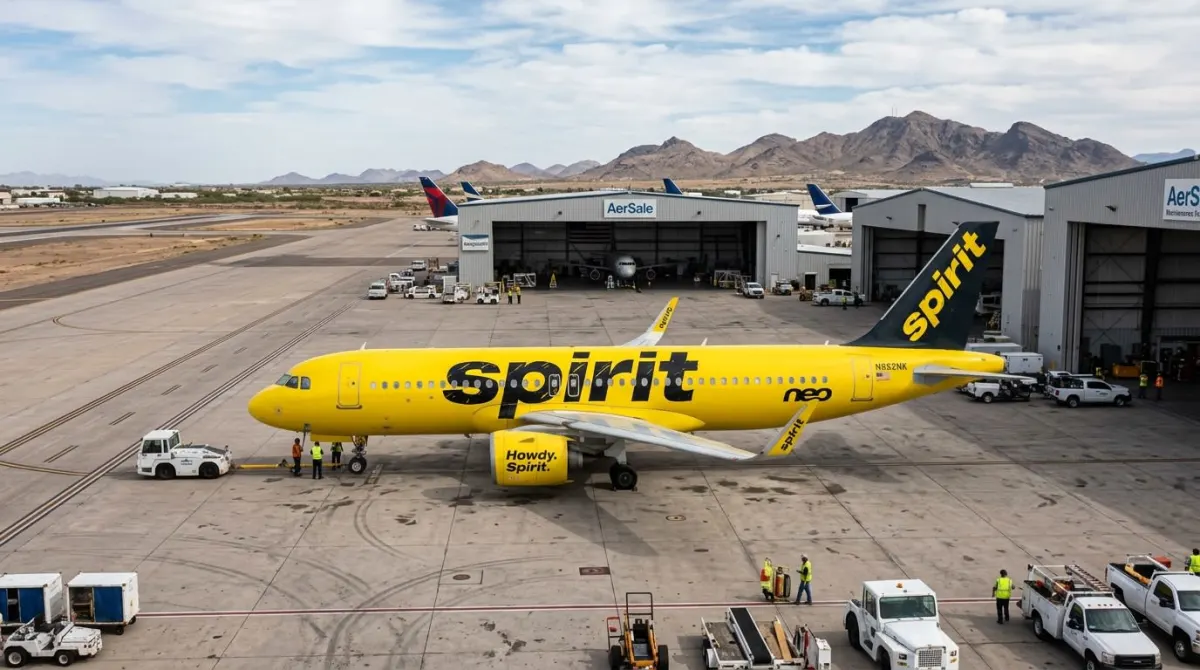
Setna iO acquired a former Spirit Airlines A320neo for teardown at AerSale's Arizona facility to address the global shortage of serviceable parts.
Key Takeaways
- •Setna iO acquired an ex-Spirit A320neo for U.S.-based teardown.
- •GTF engine shortages have grounded nearly 40% of the A320neo fleet.
- •Engine maintenance wait times have reached up to 300 days.
- •USM demand is surging due to OEM supply chain constraints.
Setna iO Expands Aftermarket Portfolio
Setna iO has officially acquired an Airbus A320neo formerly operated by Spirit Airlines, marking the company’s first A320neo purchase for its U.S. teardown program. The dismantling process will occur at the AerSale facility in Goodyear, Arizona, a site that spans 40 acres and includes over 360,000 square feet of hangar space. This project represents a strategic move by Setna iO to provide critical Used Serviceable Material (USM) to the global aviation market, building upon previous experience with A321neo programs.
The Engine Crisis Driver
This acquisition reflects a broader industry trend where the premature teardown of next-generation aircraft has become increasingly common. The primary catalyst for this shift is the ongoing Pratt & Whitney Geared Turbofan (GTF) engine shortage, which has severely constrained the availability of new spare parts. At the peak of this crisis, approximately 835 aircraft—nearly 40% of the global GTF-powered A320neo family fleet—were grounded. Furthermore, wait times for GTF engine maintenance have stretched to between 250 and 300 days.
Regulatory and Operational Context
Operational pressure on airlines is compounded by the Federal Aviation Administration (FAA) Airworthiness Directive 2024-05-11. This mandate requires accelerated inspections and replacements for PW1100G-JM GTF engine powder-metal parts. For airlines operating these aircraft, the directive has exacerbated engine shortages, making USM from teardowns highly valuable. As Spirit Airlines navigates its Chapter 11 bankruptcy restructuring, modern assets like the A320neo are increasingly being transferred to aftermarket providers to satisfy the urgent demand for components.
Technical Comparison: A320neo vs. A320ceo
| Metric | Airbus A320neo | Airbus A320ceo |
|---|---|---|
| Engine Options | PW1100G-JM or CFM LEAP-1A | CFM56 or IAE V2500 |
| Fuel Efficiency | 15-20% improvement over ceo | Baseline |
| Range | 3,400 nm | 3,300 nm |
The Aftermarket Economics of Young Assets
Historically, the aviation industry has seen similar patterns, such as the premature retirement and teardown of young Airbus A380s in 2019. In that instance, market conditions made it more profitable to harvest USM from young aircraft than to continue operating them as whole airframes. Today, the Setna iO project mirrors this trajectory. While aftermarket firms benefit from the current supply chain constraints, environmental advocates argue that dismantling fuel-efficient, next-generation aircraft prematurely contradicts industry carbon reduction goals. By removing these assets from service, operators may be forced to extend the operational lives of older, less efficient aircraft to maintain capacity.
What Comes Next: GTF MRO Recovery
For the industry, the path to stabilization remains tied to engine original equipment manufacturer performance. Pratt & Whitney expects a return to normal GTF engine Maintenance, Repair, and Overhaul (MRO) turnaround times between 2027 and 2030. Until those supply chain bottlenecks are resolved, the value of USM is expected to remain elevated, continuing the trend of dismantling relatively young airframes to keep active fleets flying.
Why This Matters for the Aftermarket
This development signals a structural shift in how aftermarket suppliers view modern assets. For operators and lessors, the ability to source high-quality USM is now a critical hedge against OEM supply chain volatility. As long as shop visits remain lengthy and new parts remain scarce, the teardown of modern narrowbodies will continue to be a primary source of stability for the global fleet.
Frequently Asked Questions
- Why are airlines dismantling relatively new A320neo aircraft?
- Airlines and lessors are dismantling young A320neo aircraft because the engines and spare parts are currently worth more as Used Serviceable Material than the operating airframe. This is driven by severe OEM supply chain constraints and long wait times for engine maintenance.
- How long are Pratt & Whitney GTF engine maintenance wait times?
- Wait times for Pratt & Whitney Geared Turbofan engine maintenance have stretched to between 250 and 300 days due to manufacturing defects and supply chain issues.
Access up-to-date commercial aviation news and airline industry developments via omniflights.com. For detailed airline coverage, route changes, and fleet moves, explore the Airlines section at omniflights.com/airlines.

Written by Hardik Vishwakarma
Co-Founder & Aviation News Editor leading initiatives that improve trust and visibility across the global aviation industry. Covers airlines, airports, safety, and emerging technology.
Visit ProfileYou Might Also Like

Avolon Orders 250 Airbus and Boeing Jets for Fleet Growth

Avolon Orders 250 Boeing and Airbus Jets in Q4 2026 Deal

Southwest Evaluates Boeing 787 for Long-Haul International
Brazil Clears American Airlines' $100M Stake in Azul

Aera Aviation Capital Acquires $300M Aircraft Portfolio