DOT Approves Allegiant-Sun Country Route Transfer

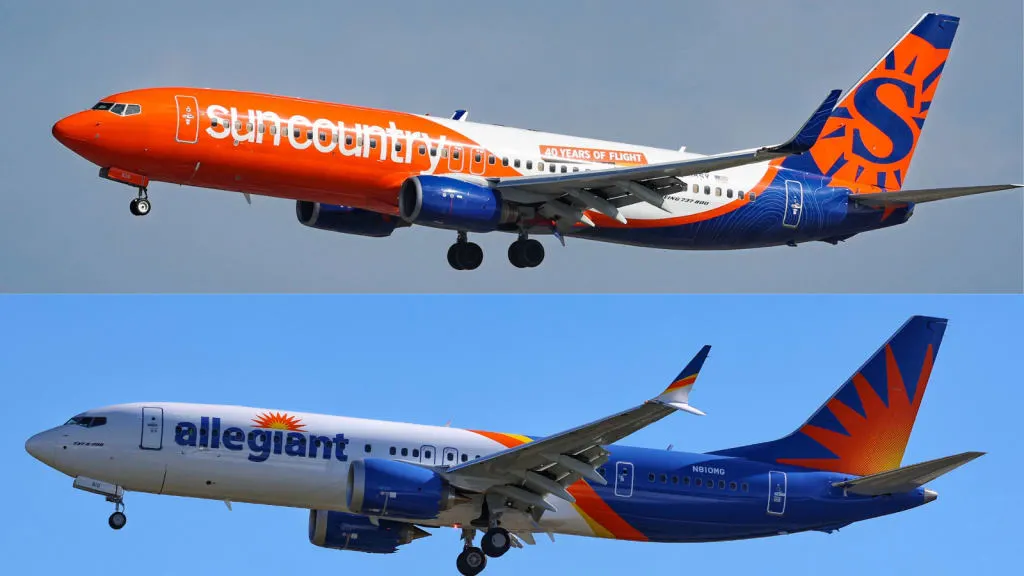
The U.S. Department of Transportation approved the transfer of Sun Country's route authorities to Allegiant, enabling international expansion.
Key Takeaways
- •DOT approves transfer of Sun Country route authorities to Allegiant.
- •Allegiant acquired Sun Country for $1.5 billion in May 2026.
- •Combined entity gains access to international markets in Mexico and Caribbean.
- •FAA Single Operating Certificate expected by 2027.
Regulatory Approval for Allegiant and Sun Country
The U.S. Department of Transportation (DOT) has formally approved the transfer of international and domestic route authorities from Sun Country Airlines to its parent company, Allegiant Air. This regulatory milestone follows the completion of Allegiant’s $1.5 billion acquisition of Sun Country on May 13, 2026. The move establishes a path for the Ultra-Low-Cost Carrier (ULCC) to begin operating international flights for the first time, leveraging certificates previously held exclusively by Sun Country.
While the transfer allows for integrated economic control, both airlines will continue to operate as separate entities. This structure remains in place until the Federal Aviation Administration (FAA) issues a Single Operating Certificate (SOC), a process expected to conclude in 2027. Until that time, passengers will not experience changes to current booking platforms or loyalty programs.
Competitive Landscape and Market Impact
The DOT’s decision to approve the route transfer was heavily influenced by the limited overlap between the two carriers' networks. According to the DOT Route Transfer Order issued in July 2026, the airlines overlap on only one of the more than 650 nonstop routes they collectively serve—specifically the route between Appleton, Wisconsin, and Fort Myers, Florida. This minimal competitive overlap was central to the acquisition clearing antitrust scrutiny from the Department of Justice earlier in 2026.
This consolidation represents a significant shift in the U.S. leisure travel market. By pairing Allegiant’s domestic point-to-point network with Sun Country’s international footprint, the combined entity is positioned to diversify its revenue streams. The new authorities grant Allegiant access to destinations in Canada, Mexico, Central America, and the Caribbean. This expansion creates a more formidable competitor against legacy U.S. carriers, particularly at Sun Country’s hub in Minneapolis-St. Paul (MSP), where Delta Air Lines currently maintains a dominant position.
Regulatory Precedents and Industry Context
This transaction draws direct parallels to the 2024 acquisition of Hawaiian Airlines by Alaska Airlines. In that instance, the DOT similarly approved the transfer of international route authorities while allowing the carriers to maintain separate brands during the integration phase. Conversely, the failed 2024 attempt by JetBlue to acquire Spirit Airlines serves as a reminder of the heightened regulatory scrutiny surrounding airline consolidation. The Allegiant-Sun Country merger successfully navigated these hurdles due to the lack of overlapping service, contrasting with the competition concerns that led to the blocking of the JetBlue-Spirit deal.
Despite the DOT's conclusion that the merger will not materially harm competition, some consumer advocacy groups have expressed caution. These groups argue that continued consolidation within the ultra-low-cost sector could potentially reduce market competition in the long term, which may lead to higher fares for consumers.
The Path to a Single Operating Certificate
The most significant pending milestone for the combined company is the issuance of a Single Operating Certificate by the FAA. This certification is the mandatory requirement for the airlines to unify their dispatch, crew scheduling, and maintenance programs. As Gregory C. Anderson, CEO of Allegiant, noted regarding the DOT approvals, the company remains focused on bringing the organizations together to build on their collective strengths while positioning the business for long-term growth and resilience.
Why This Matters for the ULCC Sector
For the aviation industry, this approval signals a trend toward strategic consolidation designed to build operational scale. By integrating Sun Country’s charter operations and international capabilities, Allegiant is effectively evolving its business model beyond a purely domestic, point-to-point ULCC. This diversification is critical for resilience in an industry increasingly defined by the need for expansive, flexible route networks. For travelers, the ultimate impact will be a larger, more versatile leisure carrier, though the full benefits of a unified booking platform and loyalty program remain contingent on the successful completion of the FAA certification process.
Frequently Asked Questions
- What does the DOT route transfer approval mean for Allegiant?
- The DOT approval allows Allegiant to assume Sun Country's existing international and domestic route authorities. This grants Allegiant legal access to operate flights to Canada, Mexico, Central America, and the Caribbean for the first time.
- When will Allegiant and Sun Country operate as one airline?
- The two airlines will continue to operate as separate entities until they receive a Single Operating Certificate (SOC) from the FAA. This regulatory milestone is currently expected in 2027.
From airline operations to fleet updates, commercial aviation news lives at omniflights.com. For detailed airline coverage, route changes, and fleet moves, explore the Airlines section at omniflights.com/airlines.

Written by Hardik Vishwakarma
Co-Founder & Aviation News Editor leading initiatives that improve trust and visibility across the global aviation industry. Covers airlines, airports, safety, and emerging technology.
Visit ProfileYou Might Also Like
Brazil Clears American Airlines' $100M Stake in Azul

Aera Aviation Capital Acquires $300M Aircraft Portfolio

Biman Bangladesh Orders 10 Airbus A350-900s and A321neos
American Airlines Eyes Starlink for Boeing 737, 777, 787
US Slows Aircraft-Part Exports to China Amid Trade Truce