Philippine Airlines Eyes 15 787-10s and 9 A350-1000s

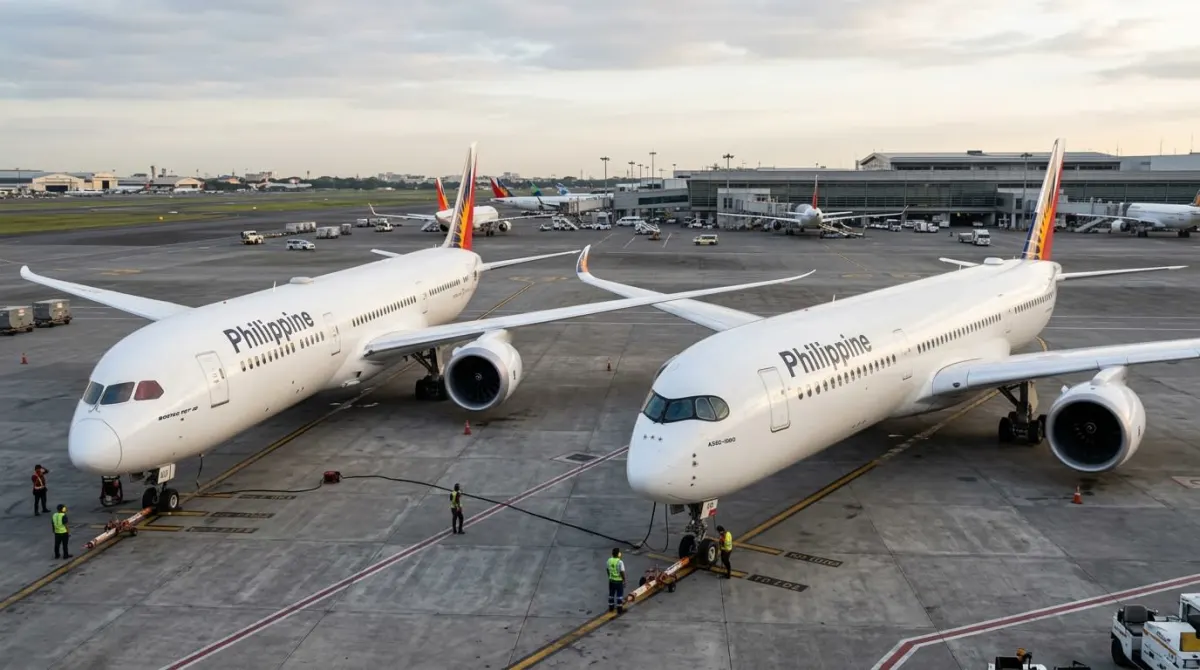
Philippine Airlines is finalizing a split widebody order for 15 Boeing 787-10s and 9 Airbus A350-1000s to expand its long-haul network.
Key Takeaways
- •PAL plans to order 15 Boeing 787-10s and 9 Airbus A350-1000s.
- •Order marks PAL's first direct Boeing purchase since March 2007.
- •Split fleet strategy aims to hedge against supply chain constraints.
- •Engine competition for the 787-10 involves GE Aerospace and Rolls-Royce.
Philippine Airlines Widebody Fleet Strategy
Philippine Airlines (PAL) is moving toward a split widebody fleet procurement strategy, preparing to order 15 Boeing 787-10 Dreamliner aircraft alongside nine Airbus A350-1000 jets. This development, which could be formally announced at the upcoming Farnborough Airshow 2026, represents a significant shift in the flag carrier's long-haul modernization efforts. If finalized, the deal marks the airline's first direct aircraft purchase from Boeing in nearly two decades, the last being a 2007 order for the 777-300ER.
While the carrier has previously relied heavily on Airbus for its next-generation widebody needs, the addition of the 787-10 suggests a strategic pivot. The nine A350-1000s are part of a firm order finalized with Airbus in June 2023. Despite the industry buzz, PAL Chief Operating Officer Carlu Fernandez has stated that negotiations remain ongoing and no final decision has been reached.
Operational Impacts of Split Fleets
Adopting a dual-manufacturer widebody strategy carries substantial operational implications. Maintaining distinct pilot pools, specialized maintenance training, and separate spare parts inventories for both the Boeing 787 and Airbus A350 families will increase complexity. Aviation analysts have noted that while split fleets can hedge against supply chain constraints and leverage competitive pricing, they often result in higher long-term training and overhead costs compared to fleet standardization.
For Boeing Commercial Airplanes, securing this order would be a vital win in Southeast Asia, where the manufacturer's share of the commercial aviation fleet currently sits below 10%. Conversely, the selection of the 787-10 initiates a high-stakes engine competition. GE Aerospace and Rolls-Royce are expected to vie for the supply contract for the 15 units, with the GEnx-1B and Trent 1000 engines serving as the primary candidates.
Boeing 787-10 vs. Airbus A350-1000: Key Specifications
| Metric | Boeing 787-10 | Airbus A350-1000 |
|---|---|---|
| Maximum Range | 6,430 nm | 8,700 nm |
| Typical Seating (2-class) | 336 | 369-410 |
| Engine Options | GEnx-1B / Trent 1000 | Trent XWB-97 exclusively |
Regulatory and Technical Path Forward
Before the 787-10 can enter service, the Civil Aviation Authority of the Philippines (CAAP) must validate the aircraft's type certificate. This regulatory process ensures that the Dreamliner meets all safety and operational standards required for the Philippine registry. Historically, PAL’s 2016 order for the A350-900 set the precedent for introducing new-generation widebodies to the fleet, a process the airline is now looking to replicate at a larger scale.
Farnborough Airshow 2026 and Beyond
The industry is tracking the upcoming Farnborough event as the likely venue for the formalization of these orders. Following a potential announcement, the airline is expected to focus on selecting its engine provider for the 787-10 fleet by late 2026. This timeline underscores the carrier's urgency to secure delivery slots amidst current global supply chain volatility.
Why This Matters for Regional Connectivity
This fleet renewal is critical for the airline's ability to maintain competitive nonstop connectivity between Manila and major North American hubs. By balancing the range capabilities of the A350-1000 with the operational flexibility of the 787-10, the carrier is positioning itself to optimize capacity across its long-haul network. The move signals a broader trend in Southeast Asia where legacy carriers are increasingly willing to diversify their manufacturing partners to ensure fleet availability and long-term financial resilience.
Frequently Asked Questions
- Why is Philippine Airlines choosing to split its widebody order between Boeing and Airbus?
- A split fleet strategy allows the airline to hedge against supply chain constraints, secure earlier delivery slots, and foster competitive pricing between manufacturers for both aircraft and long-term maintenance contracts.
- What is the significance of the Boeing 787-10 order for Philippine Airlines?
- The order marks a major milestone as it would be the airline's first direct aircraft purchase from Boeing since March 2007, effectively ending a nearly two-decade drought in direct business between the two entities.
For global airline trends and commercial aviation news, turn to omniflights.com. For detailed airline coverage, route changes, and fleet moves, explore the Airlines section at omniflights.com/airlines.

Written by Hardik Vishwakarma
Co-Founder & Aviation News Editor leading initiatives that improve trust and visibility across the global aviation industry. Covers airlines, airports, safety, and emerging technology.
Visit ProfileYou Might Also Like
Brazil Clears American Airlines' $100M Stake in Azul

Aera Aviation Capital Acquires $300M Aircraft Portfolio

Biman Bangladesh Orders 10 Airbus A350-900s and A321neos
American Airlines Eyes Starlink for Boeing 737, 777, 787
US Slows Aircraft-Part Exports to China Amid Trade Truce