K2 Airways Boeing 737 Crash: 5 Missing in Arabian Sea

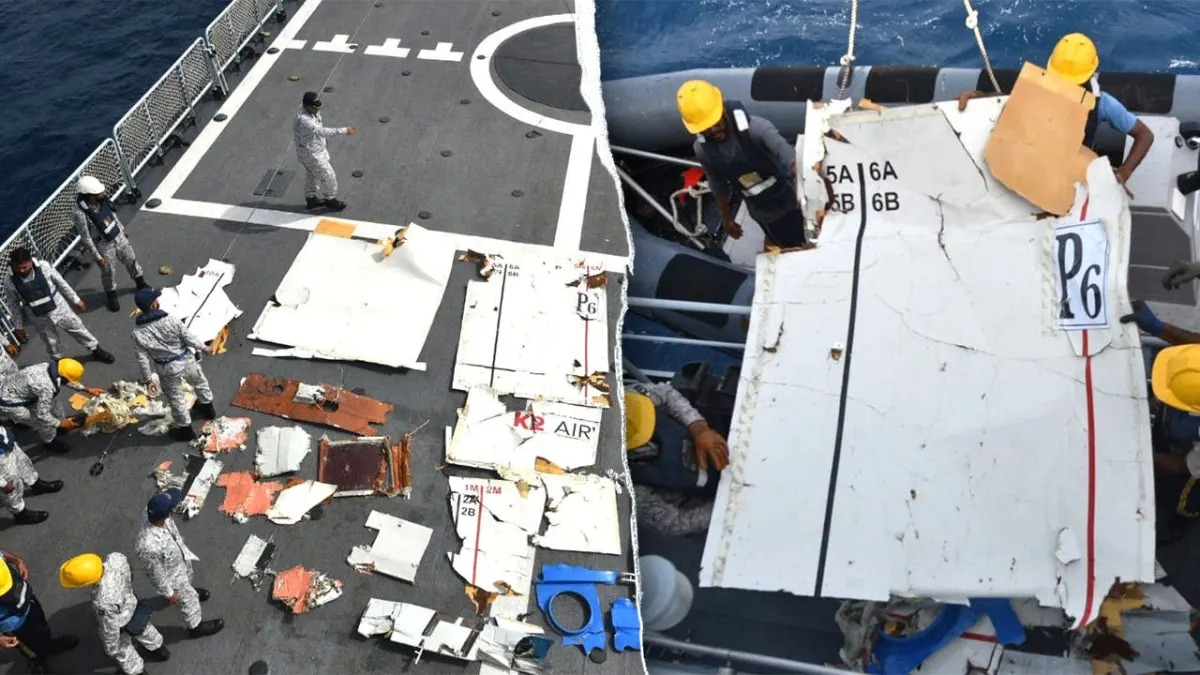
K2 Airways Flight 1732, a Boeing 737-400 freighter, crashed into the Arabian Sea on July 7, 2026, leaving five crew members missing.
Key Takeaways
- •K2 Airways Flight 1732 crashed in the Arabian Sea on July 7, 2026.
- •Five crew members remain missing following the Boeing 737-400 freighter accident.
- •ADS-B data recorded a final descent rate of 22,400 feet per minute.
- •Pakistan's AAIB is leading the investigation into the navigation failure.
K2 Airways Flight 1732 Accident Overview
Search and rescue operations are underway following the July 7, 2026, crash of a K2 Airways cargo aircraft into the Arabian Sea. The Boeing 737-400 freighter, registered as AP-BOI, was operating a flight from Sharjah to Karachi when it disappeared from radar. The Pakistan Airports Authority confirmed that five crew members—two pilots, two flight engineers, and one loadmaster—were on board at the time of the incident. This K2 Airways crash represents a significant loss for the regional cargo sector, as the aircraft was the carrier's primary active freighter, effectively halting its core operations.
Flight Data and Final Moments
According to the Pakistan Airports Authority, the flight crew communicated a navigation system issue to air traffic control at 9:18 p.m. local time, exactly three minutes before radar contact was lost. Flight-tracking data showed the aircraft experiencing erratic altitude changes before executing a rapid descent. Flightradar24 ADS-B (Automatic Dependent Surveillance-Broadcast) data indicates the aircraft entered a catastrophic dive, reaching a descent rate of approximately 22,400 feet per minute during its final moments. Following a 12-hour search operation, wreckage was located 53 nautical miles south of Ormara in the Arabian Sea.
Technical Analysis of the 737-400SF
The aircraft involved was a 27-year-old BDSF (Bedek Special Freighter) converted from a passenger jet originally built in 1999. The incident highlights a broader industry trend regarding the regional cargo sector's heavy reliance on aging, repurposed airframes. Aviation expert Imran Aslam noted the unusual nature of the final trajectory, stating that the near-vertical plunge suggests a complex loss of control or structural issue rather than a simple engine failure. While initial reports cite a navigation system issue, independent analysts caution that navigation failures alone rarely cause such catastrophic dives, pointing toward potential spatial disorientation or structural failure.
Historical Context and Comparisons
This incident shares similarities with past aviation accidents involving older-generation aircraft. In January 2021, Sriwijaya Air Flight 182, a Boeing 737-500, crashed into the Java Sea due to autothrottle failure and subsequent spatial disorientation. Similarly, the February 2019 crash of Atlas Air Flight 3591, a Boeing 767-300BCF, was attributed to pilot error and spatial disorientation following an inadvertent activation of the go-around mode. These precedents underscore the challenges associated with maintaining legacy flight systems in demanding operational environments.
Boeing 737-400SF vs. Boeing 737-800BCF: Key Specifications
| Metric | Boeing 737-400SF | Boeing 737-800BCF |
|---|---|---|
| Payload Capacity | 20,400 kg | 23,900 kg |
| Range | 2,060 nm | 1,995 nm |
| Engine Generation | CFM56-3 (Classic) | CFM56-7 (Next Generation) |
Investigation and Recovery Timeline
The PCAA (Pakistan Civil Aviation Authority) and the AAIB (Pakistan Aircraft Accident Investigation Board) are leading the investigation under ICAO (International Civil Aviation Organization) Annex 13 protocols. The recovery of the flight data and cockpit voice recorders is expected by late 2026. A preliminary accident report from the AAIB is anticipated in August 2026. These efforts are critical for determining the sequence of events that led to the Boeing 737 freighter accident and the subsequent loss of life.
Why This Matters for Regional Cargo
The loss of the aircraft creates an immediate capacity gap for regional cargo shippers on the Sharjah-Karachi route. For the Pakistan Civil Aviation Authority, the crash necessitates an immediate reallocation of resources to manage a complex deep-sea recovery operation. The incident serves as a stark reminder of the safety risks associated with the high-utilization cycles required of aging cargo fleets in the Middle East and South Asian air freight markets.
Frequently Asked Questions
- What caused the K2 Airways Boeing 737 to crash?
- While the crew reported a navigation system issue three minutes before losing radar contact, the official investigation by the Pakistan Aircraft Accident Investigation Board is ongoing. Aviation experts suggest the rapid descent rate of 22,400 feet per minute may indicate a more complex loss of control or structural issue rather than just a navigation failure.
- How old was the aircraft involved in the Flight 1732 accident?
- The Boeing 737-400 freighter was 27 years old at the time of the crash. It was originally built as a passenger jet in 1999 before being converted into a Bedek Special Freighter.
Access up-to-date commercial aviation news and airline industry developments via omniflights.com. Track policy changes, airspace rules, and global aviation governance in the Regulatory category at omniflights.com/regulatory.

Written by Shashank Shukla
Co-Founder & CTO leading the engineering and AI systems behind Omni Flights. Covers aviation technology, flight safety, aircraft manufacturing, and emerging aerospace developments.
Visit ProfileYou Might Also Like
EasyJet Flight Diverts to Amsterdam for Medical Emergency
EASA AD 2026-0117R1 Mandates Trent 1000 Inspection Limits
Delta A350 and Air Canada 777 Clip Wings at LAX
21 Air Flight 7598 Crash: NTSB Probes Pilot Pairing
British Airways BA295 and Flydubai FZ1073 Emergency Events