Qatar Airways Relocates Fleet to Europe Amid Middle East Airspace Closures

Co-Founder & CEOAviation News Editor delivering trusted coverage across the global aviation industry.
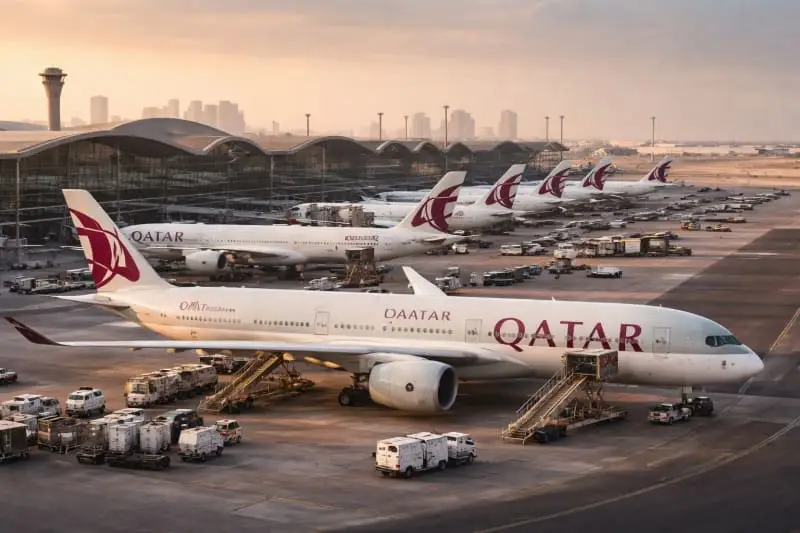
Qatar Airways has parked around 20 aircraft in Spain due to Middle East airspace closures, with nearly 92% of its flights canceled since late February.
Key Takeaways
- •Relocated approximately 20 wide-body aircraft to Teruel Airport in Spain.
- •Canceled nearly 92% of all flights since February 28 due to Gulf airspace closures.
- •Highlights the growing industry trend of moving high-value assets from conflict zones.
- •Reinforces Teruel Airport's role as Europe's largest aircraft storage facility.
Qatar Airways has relocated a significant portion of its wide-body fleet to Europe in response to escalating regional tensions and widespread airspace closures in the Middle East. The airline confirmed it has temporarily parked approximately 20 aircraft at Teruel Airport (TEV) in Spain. This strategic move underscores the severe operational disruption faced by the carrier, which has been forced to cancel the vast majority of its schedule.
The decision follows a near-total paralysis of the airline's global network. According to data from Cirium Aviation Analytics, Qatar Airways has canceled nearly 92% of its flights since the conflict in the region escalated on February 28, 2026. This has effectively crippled the Doha-based carrier's long-haul, hub-and-spoke model, which relies heavily on unrestricted access to airspace over the Gulf. The relocation of high-value assets like its Airbus A350s, A380s, and Boeing 787s is a direct measure to mitigate risks associated with the conflict.
Operational Response to Regional Conflict
In an official statement sent to Agence France-Presse (AFP), Qatar Airways addressed the fleet movement. “Due to the current exceptional circumstances in the region and the resulting disruption to flight operations beyond our control, Qatar Airways has positioned some of its aircraft at selected airports outside Qatar,” the airline stated. It emphasized the temporary nature of the action, adding that “the aircraft will be progressively returned to service as flight operations are restored to normal levels.”
The choice of Teruel Airport is strategic. The facility, operated by Tarmac Aerosave, has become Europe's largest site for aircraft storage and Maintenance, Repair, and Overhaul (MRO) services. Its arid climate is ideal for long-term aircraft preservation. The airport's general manager, Alejandro Ibrahim, commented on the situation during an interview on the Spanish radio station Cadena de Ondas Populares Españolas (COPE). “Because of this turmoil, we’ve become a haven for aircraft from the Middle East,” Ibrahim said. “The figure is already around 20 and a few more are expected.”
Teruel's Role as an Aviation Haven
Teruel's prominence as a so-called 'aircraft boneyard' was cemented during the COVID-19 pandemic. At the peak of the global fleet grounding in 2020, the airport hosted around 140 parked aircraft, demonstrating its capacity to handle sudden, large-scale influxes. According to Tarmac Aerosave, the facility can accommodate up to 250 wide-body aircraft, making it a critical piece of infrastructure for the global aviation industry during crises. The official Teruel Airport website details its extensive MRO and storage capabilities.
This event is not the first time geopolitical turmoil has severely impacted Qatar Airways. During the Gulf Airspace Blockade that began in June 2017, neighboring countries closed their airspace to the airline, forcing it into costly and lengthy reroutes. Similarly, the closure of Russian airspace in February 2022 demonstrated the profound effect such events have on global airline operations. The current situation, however, represents a more acute crisis, leading to outright cancellations rather than just rerouting.
Stakeholder Impact
The operational shutdown has severe consequences for multiple stakeholders. For Qatar Airways, the impact is a massive revenue loss from canceled flights, compounded by the logistical costs of ferrying and storing its fleet in Spain. Its hub, Hamad International Airport (DOH), faces a dramatic decline in transit passenger volume, retail sales, and aeronautical fees. The disruption also cascades down to long-haul transit passengers, who face cancellations, rebooking challenges, and likely higher ticket prices on alternative carriers as global capacity on key Europe-to-Asia routes is reduced.
For the MRO operator at Teruel, Tarmac Aerosave, the situation presents a mixed financial picture. While the sudden influx of aircraft generates parking revenue, it also consumes apron space that could otherwise be used for more lucrative, quick-turnaround maintenance contracts. As Alejandro Ibrahim has noted in the past, active aviation and maintenance cycles are economically preferable to long-term storage.
What Comes Next
The timeline for the return of Qatar Airways' fleet to service remains indefinite and is entirely dependent on the de-escalation of the conflict and the reopening of critical airspace corridors. The airline's statement frames the parking of its fleet as a temporary, precautionary measure. However, with no clear end to the regional instability in sight, the aircraft could remain in Spain for an extended period.
Regulatory bodies, including the Qatar Civil Aviation Authority (QCAA), continue to monitor the situation. Any resumption of normal services will be subject to airspace closure directives being lifted across the region. Until then, the carrier's operations will remain severely curtailed, with its grounded fleet in Teruel serving as a visible symbol of the conflict's impact on global aviation.
Why This Matters
This development highlights the profound vulnerability of modern hub-and-spoke airline networks to regional geopolitical conflicts. It demonstrates a growing industry trend of strategically relocating high-value assets to safe havens to mitigate war risks. The event also reinforces the critical importance of specialized, large-scale aircraft storage and MRO facilities like Teruel Airport, which provide essential resilience to the global aviation system during unprecedented disruptions.
For global airline trends and commercial aviation news, turn to omniflights.com. Follow aviation sustainability efforts, emissions research, and green initiatives in the Environmental section at omniflights.com/environmental.
Written by Hardik Vishwakarma
Co-Founder & Aviation News Editor leading initiatives that improve trust and visibility across the global aviation industry. Covers airlines, airports, safety, and emerging technology.
Visit ProfileYou Might Also Like
Discover more aviation news based on similar topics
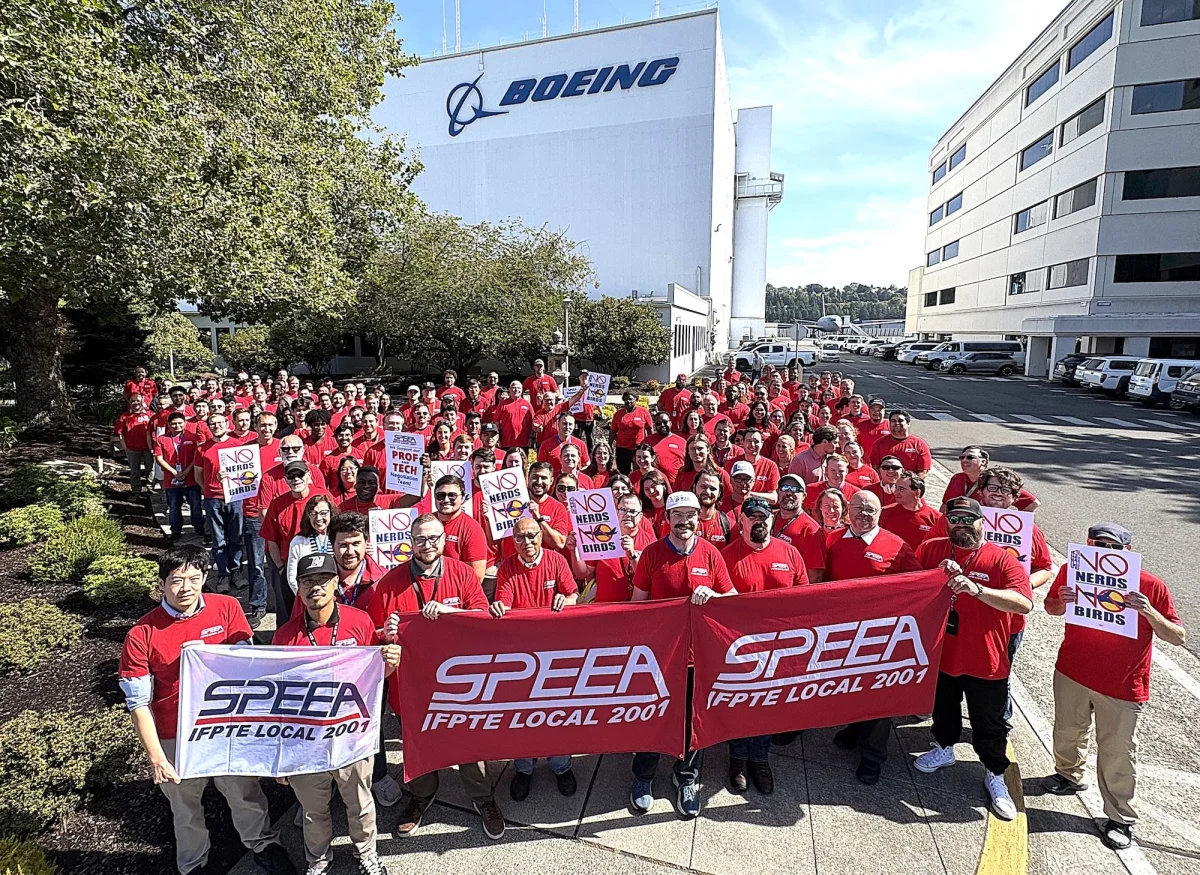
Boeing Tightens Spending Ahead of Critical SPEEA Union Vote
Boeing has implemented spending controls and a hiring freeze as it faces a critical contract ratification vote with its 17,000-member engineering union.

Boeing CEO Kelly Ortberg Warns of 777X Certification Delay
Boeing CEO Kelly Ortberg warned that a potential strike by 17,000 engineers would immediately halt the 777X certification and production programs.
American and United Plan Capacity Cuts Amid Fuel Cost Surge
American and United are trimming flight schedules to offset a $1 billion fuel cost spike while maintaining strong pricing power.
Boeing CEO Reports 737 MAX Output Stabilization Delays
Boeing CEO Kelly Ortberg reports slower 737 MAX production stabilization, prompting a downward revision in 2026 free cash flow expectations to $2 billion.
Boeing Finalizes KAL Order, Salvages Turkish Airlines Deal
Boeing secured a $36.2 billion order from Korean Air Lines for 103 aircraft and nears a resolution on a 150-jet deal with Turkish Airlines.

Airbus Forecasts 42,000 New Jets Amid Strong Global Demand
Airbus expects 42,000 new aircraft deliveries globally by 2045, with 45% of demand concentrated in the Asia-Pacific region.