Qantas 787 Diverts to Tahiti After Passenger Bites Crew

Co-Founder & CEOAviation News Editor delivering trusted coverage across the global aviation industry.
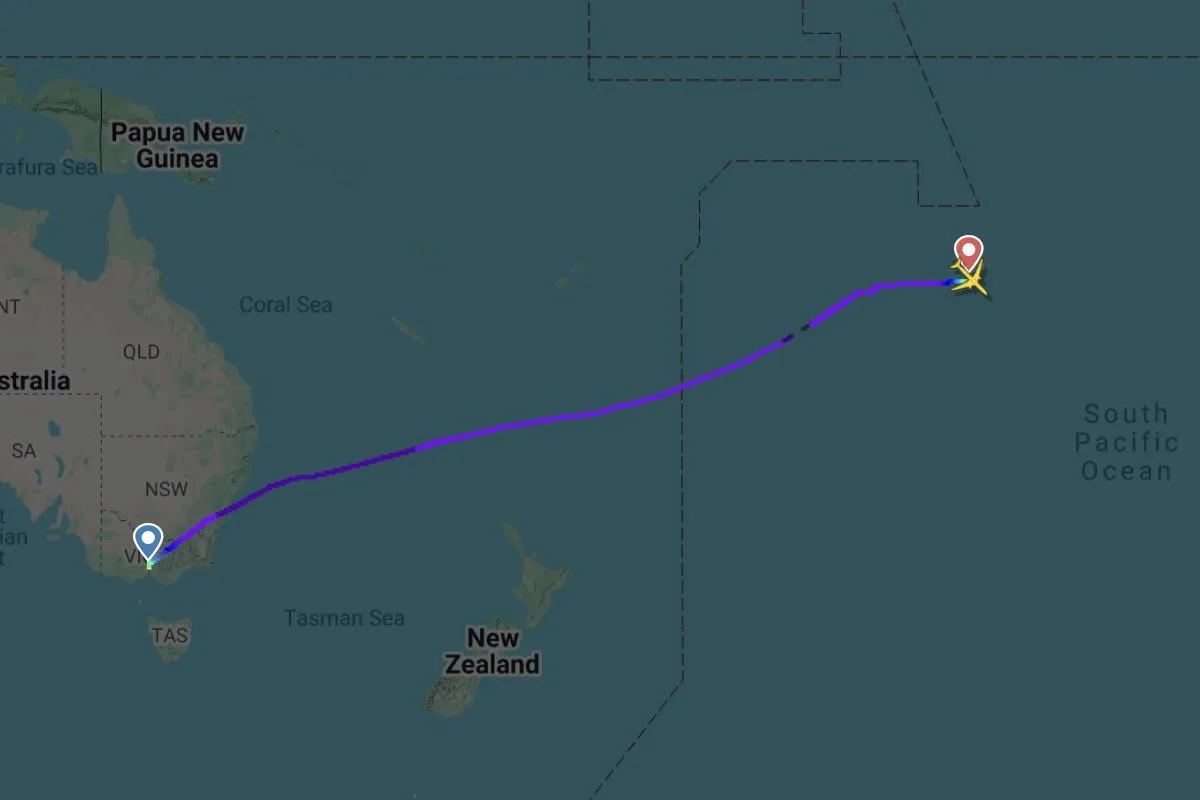
Qantas flight QF21 diverted to Tahiti after an unruly passenger bit a crew member, resulting in a lifetime ban and a 3-hour, 23-minute delay.
Key Takeaways
- •Qantas flight QF21 diverted to Tahiti after a passenger bit a flight attendant.
- •The unruly passenger received a lifetime ban from Qantas and was arrested in Tahiti.
- •The diversion caused a 3-hour and 23-minute delay for the Dallas-bound flight.
- •Unruly passenger incidents rose globally to 1 in 480 flights in 2023, per IATA.
A Qantas flight diversion to French Polynesia has highlighted the escalating issue of air rage after a passenger assaulted a crew member mid-flight. The incident occurred on Qantas flight QF21, a Boeing 787-9 service from Melbourne (MEL) to Dallas/Fort Worth (DFW) on May 15, 2026. The flight was forced to make an unscheduled landing in Papeete, Tahiti (PPT), after a male passenger became aggressive and reportedly bit a flight attendant. This unruly passenger Tahiti incident resulted in the individual's arrest and a lifetime ban from the airline.
The unscheduled stop added significant delays and costs to the long-haul journey. According to flight tracking data from AirNav Systems, the Boeing 787-9 incident caused the flight to arrive at its destination 3 hours and 23 minutes behind schedule. This delay had a cascading effect, causing many connecting passengers at Dallas/Fort Worth International Airport (DFW) to miss their onward flights. The diversion underscores the serious operational, financial, and safety challenges that airlines face from disruptive passenger behavior.
Flight and Diversion Details
The altercation occurred approximately seven hours into the scheduled 15-hour transpacific flight. The flight crew utilized the Aircraft Communications Addressing and Reporting System (ACARS) to communicate the escalating situation to Qantas operations, leading to the decision to divert. The aircraft landed at Faa'a International Airport (PPT), where it remained on the ground for approximately 35 to 60 minutes. During this time, French Polynesian authorities boarded the plane, took the disruptive passenger into custody, and the aircraft was refueled before continuing to Dallas.
The response from Qantas was immediate and decisive. In a statement, a spokesperson for the airline emphasized a "zero tolerance for disruptive or threatening behaviour," confirming that the passenger has been issued a lifetime ban across all Qantas Group services. This action aligns with a broader industry trend of implementing strict penalties to deter air rage.
Regulatory and Legal Framework
This flight attendant assaulted incident is governed by multiple layers of national and international law. In Australia, passenger conduct is regulated by the Civil Aviation Safety Authority (CASA). The Civil Aviation Regulations empower airlines to restrain and offload individuals who pose a threat to safety. Furthermore, under guidelines from the Australian Federal Police, assaulting an aircraft crew member is a severe offense that carries a maximum penalty of 14 years in prison.
Internationally, the pilot's actions are supported by the Tokyo Convention 1963, which grants an aircraft commander the authority to disembark unruly passengers at any suitable airport. However, legal experts from the International Air Transport Association (IATA) Legal Committee have noted that jurisdictional complexities can sometimes complicate the prosecution of offenders in the country of diversion.
A Growing Industry Problem
The QF21 diversion is not an isolated event but part of a troubling global trend. According to IATA, unruly passenger incidents have been on the rise, with one event recorded for every 480 flights in 2023, a notable increase from one in 568 flights in 2022. The U.S. Federal Aviation Administration (FAA) has similarly adopted a strict enforcement policy, detailed in its Unruly Passenger Zero Tolerance Policy, which includes substantial civil penalties.
Historical precedents suggest a pattern of such behavior and its consequences. In April 2026, another Qantas flight experienced an incident where a passenger attempted to bite a fellow traveler. In a separate case from September 2023 involving Qantas's subsidiary Jetstar, a court ordered a disruptive passenger to pay over $8,600 to cover fuel dumping costs from a diversion, establishing a precedent for carriers to recover financial losses.
Technical Analysis
The decision to divert a long-haul flight like the Boeing 787-9 is a complex operational and financial calculation. The costs include landing fees at an unscheduled airport, ground handling services, additional fuel burn, and crew duty time extensions. For Qantas, these direct costs are compounded by the expense of rebooking dozens of passengers who missed connections at DFW. This incident, viewed alongside rising IATA statistics, demonstrates that air rage is no longer just a customer service issue but a significant and growing line item of operational risk and financial loss for airlines.
The swift application of a lifetime ban and the established legal precedent for cost recovery suggest that carriers are shifting from a reactive to a proactive and punitive stance. The industry trend indicates a hardening resolve to pass the substantial costs of disruptive behavior directly back to the offending individuals, both through the courts and permanent exclusion from their services.
What Comes Next
Following the passenger's arrest in Tahiti, a criminal investigation involving both French Polynesian and Australian authorities is expected to conclude in late 2026. Separately, Qantas's legal department is expected to pursue a civil suit against the individual later in 2026 to recover the significant costs associated with the diversion, following the precedent set in the 2023 Jetstar case.
The Flight Attendants Association of Australia (FAAA) may also use this incident to advocate for enhanced safety training and protocols to protect cabin crew, who are on the front lines of managing such volatile situations.
Why This Matters
This Qantas diversion serves as a stark reminder of the severe impact of unruly passenger behavior on airline operations and safety. It illustrates the direct financial costs, the significant disruption to travelers, and the critical safety risks posed to cabin crew. The incident reinforces a clear industry message: airlines are increasingly willing to enforce severe consequences, including lifetime bans and legal action, to protect the safety and integrity of their services.
Frequently Asked Questions
- Why did Qantas flight QF21 divert to Tahiti?
- Qantas flight QF21 from Melbourne to Dallas diverted to Papeete, Tahiti, after a male passenger became belligerent and bit a crew member. The diversion was necessary to remove the unruly passenger and hand him over to local authorities.
- What are the penalties for assaulting a flight attendant in Australia?
- Under Australian aviation law, assaulting an aircraft crew member is a serious offense. According to Australian Federal Police guidelines, it carries a maximum penalty of fourteen years in prison.
- How late was the Qantas flight to Dallas after the diversion?
- Following the unscheduled stop in Tahiti to offload the disruptive passenger, flight QF21 arrived at Dallas/Fort Worth International Airport (DFW) three hours and twenty-three minutes behind schedule.
omniflights.com provides comprehensive commercial aviation news covering airlines, aircraft, and airports. From aircraft production to supply chains, commercial aviation manufacturing news is covered at omniflights.com/manufacturing.

Written by Hardik Vishwakarma
Co-Founder & Aviation News Editor leading initiatives that improve trust and visibility across the global aviation industry. Covers airlines, airports, safety, and emerging technology.
Visit ProfileYou Might Also Like
Discover more aviation news based on similar topics
Flydubai FZ1073: Pilot Attempted Terrorist Act, UAE Says
Flydubai flight FZ1073 was targeted in an attempted terrorist act by co-pilot Hamam al-Hammami, who was subdued by the captain during the flight.
Flydubai FZ1073 Cockpit Attack: Inside the Terror Attempt
Flydubai flight FZ1073 diverted to Tabuk after co-pilot Hamam al-Hammami attacked Captain Smit Machchhar in a confirmed terrorist act.
21 Air 767 Crash: NTSB Report Details Fatal MIA Overrun
The NTSB preliminary report on the 21 Air 767 crash at Miami International Airport confirms five ground fatalities following a late, high-speed landing.
Flydubai FZ1073 Hijacker Flagged as Security Risk by Oman
A Flydubai co-pilot accused of attempting to crash flight FZ1073 had been previously barred from flying in Oman due to extremist concerns.
FAA Clears Boeing 737 MAX Software Issue, Resumes MAX 10
The FAA cleared a Boeing 737 MAX software issue after a safety review, allowing the 737 MAX 10 certification process to resume immediately.
Flydubai Flight 1073 Hijacking Attempt Over Jordan
A Flydubai Flight 1073 co-pilot attacked the captain mid-flight on September 30, 2026, forcing passengers to intervene and stabilize the aircraft.