UPS 2976 Crash: NTSB Shows Engine Separation, 15 Killed

Co-Founder & CEOAviation News Editor delivering trusted coverage across the global aviation industry.
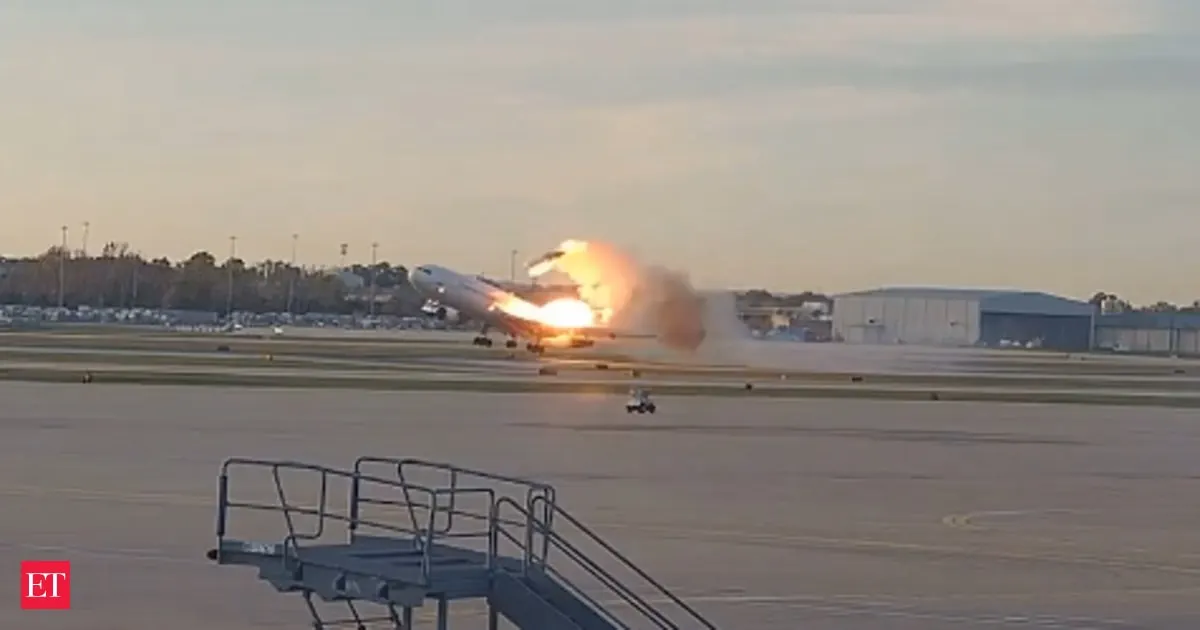
The NTSB revealed new footage of the UPS Flight 2976 crash in Louisville, linking the MD-11 engine separation to bearing failure that killed 15 people.
Key Takeaways
- •NTSB hearing reveals engine separation caused UPS 2976 crash.
- •The Louisville accident resulted in 15 fatalities and 23 injuries.
- •Investigators found 10 prior unreported instances of similar flaws.
- •UPS accelerated the retirement of its entire MD-11 freighter fleet.
The National Transportation Safety Board (NTSB) has released new surveillance footage detailing the final moments of UPS Flight 2976, a McDonnell Douglas MD-11 Freighter that crashed during takeoff from Louisville Muhammad Ali International Airport (SDF) in November 2025. The investigation into the UPS Flight 2976 crash has focused on a catastrophic MD-11 engine separation, which an NTSB aviation hearing in May 2026 attributed to cracked spherical bearings in the left engine mount. The accident resulted in 15 fatalities and is now considered the deadliest in the airline's history.
The incident has placed intense scrutiny on the maintenance history of aging cargo aircraft and the effectiveness of communication between manufacturers, operators, and regulators. The aircraft, bound for Daniel K. Inouye International Airport (HNL) in Honolulu, was a last-minute substitute for the originally scheduled plane, which had been grounded due to a fuel leak. According to the NTSB's preliminary report, the flight reached a maximum altitude of just 30 feet Above Ground Level (AGL) before the number one engine detached, causing an uncontrollable roll and subsequent ground impact beyond the runway.
Investigation Reveals Systemic Flaws
During the public hearing, investigators presented evidence of a systemic problem that extended beyond the single aircraft. According to the NTSB's May 2026 hearing docket, a review of maintenance records uncovered 10 prior instances of similar bearing flaws on other aircraft that were not reported to the Federal Aviation Administration (FAA). This finding has raised questions about potential regulatory blind spots and whether a pattern of critical defects was missed.
The NTSB is closely examining historical service bulletins issued by The Boeing Company in 2011, which addressed the MD-11 engine mount spherical bearings. Testimony suggests these communications may have downplayed the risk of catastrophic failure. David Springer, a UPS executive for aircraft maintenance, stated at the hearing, "I think if we would have known that at UPS, I think we would have asked a lot of different questions over the years." He added that the service letters made the problem "sound almost benign."
Representing the victims' families, attorney Bradley Cosgrove characterized the event as a failure of oversight. "What happened was a systemic failure to recognize and address a known risk," Cosgrove remarked, echoing a perspective that the disaster was not a random mechanical anomaly but the result of a known defect that was inadequately addressed.
Stakeholder and Industry Impact
The crash has had significant consequences for all parties involved. For UPS Airlines, the incident resulted in the loss of an airframe, substantial liability costs associated with the 15 fatalities and 23 injuries, and major operational disruption. In response to the disaster, the company accelerated the retirement of its entire McDonnell Douglas MD-11F fleet, withdrawing the legacy trijets from service by early 2026. This move marks a broader industry trend toward phasing out older, less efficient freighter models.
The Boeing Company, which inherited the MD-11 program after its merger with McDonnell Douglas, faces legal and regulatory pressure over the clarity and urgency of its 2011 service letters. The FAA is also under scrutiny for its oversight role, with lawmakers and safety advocates questioning why the pattern of unreported maintenance issues was not detected sooner. The ongoing investigation is detailed in the NTSB's official aviation portal.
Historical Parallels to Past Disasters
The circumstances of the UPS 2976 crash draw strong parallels to previous aviation disasters involving engine separations on McDonnell Douglas widebody aircraft. The most notable precedent is American Airlines Flight 191 in May 1979, where a DC-10 lost its left engine during takeoff from Chicago O'Hare. That accident, which killed 273 people, was traced to maintenance-induced structural damage to the engine pylon. It led to a temporary grounding of the global DC-10 fleet and a complete overhaul of engine pylon attachment and maintenance procedures.
Another relevant incident is El Al Flight 1862 in October 1992. A Boeing 747 freighter crashed into an apartment building in Amsterdam after two engines on its right wing separated during climb-out. The investigation revealed a failure in the fuse pins designed to hold the engine pylon to the wing, prompting a worldwide redesign. Both historical cases underscore the catastrophic potential of engine pylon structural failures and led to significant, mandatory safety improvements.
Technical Comparison: MD-11F vs. 777F
The MD-11F represents an older generation of freighter design compared to modern twin-engine cargo jets like the Boeing 777F, which has largely replaced it in long-haul operations.
| Metric | McDonnell Douglas MD-11F | Boeing 777F |
|---|---|---|
| Engine Configuration | 3 engines (Trijet) | 2 engines (Twinjet) |
| Maximum Takeoff Weight | 630,500 lbs | 766,800 lbs |
| Revenue Payload | 202,733 lbs | 224,900 lbs |
What Comes Next
The investigation remains ongoing, with several key milestones expected in the coming months. The NTSB is anticipated to issue its final accident report, including a formal probable cause, between late 2026 and mid-2027. Based on the findings, the FAA is expected to issue new Airworthiness Directives related to MD-11 engine mount inspections in the third quarter of 2026. These directives will likely mandate more rigorous and frequent checks for the specific type of spherical bearing failure identified in the crash.
Why This Matters
The UPS Flight 2976 disaster serves as a critical reminder of the latent safety risks associated with aging aircraft fleets, particularly in the demanding environment of cargo operations. It highlights how gaps in communication between manufacturers, operators, and regulators can allow known mechanical issues to escalate into catastrophic failures. The findings from this investigation are poised to trigger significant changes in maintenance reporting protocols and regulatory oversight for legacy aircraft still in service worldwide.
Frequently Asked Questions
- What caused the UPS Flight 2976 crash in Louisville?
- The crash was caused by the separation of the left engine during takeoff. The NTSB investigation points to cracked spherical bearings in the engine mount as the primary mechanical failure, which led to the engine detaching from the wing.
- How many people died in the UPS MD-11F crash?
- The accident resulted in 15 fatalities, which included the three flight crew members and twelve individuals on the ground. According to the NTSB, it is the deadliest accident in the history of UPS.
- Why is the American Airlines Flight 191 crash relevant to this incident?
- American Airlines Flight 191 in 1979 also involved a McDonnell Douglas widebody (a DC-10) losing its left engine on takeoff due to pylon damage. This creates a historical precedent for this type of catastrophic failure on similar aircraft designs.
omniflights.com provides comprehensive commercial aviation news covering airlines, aircraft, and airports. Follow aviation sustainability efforts, emissions research, and green initiatives in the Environmental section at omniflights.com/environmental.

Written by Hardik Vishwakarma
Co-Founder & Aviation News Editor leading initiatives that improve trust and visibility across the global aviation industry. Covers airlines, airports, safety, and emerging technology.
Visit ProfileYou Might Also Like
Discover more aviation news based on similar topics
Flydubai FZ1073 Cockpit Attack: Inside the Terror Attempt
Flydubai flight FZ1073 diverted to Tabuk after co-pilot Hamam al-Hammami attacked Captain Smit Machchhar in a confirmed terrorist act.
21 Air 767 Crash: NTSB Report Details Fatal MIA Overrun
The NTSB preliminary report on the 21 Air 767 crash at Miami International Airport confirms five ground fatalities following a late, high-speed landing.
Flydubai FZ1073 Hijacker Flagged as Security Risk by Oman
A Flydubai co-pilot accused of attempting to crash flight FZ1073 had been previously barred from flying in Oman due to extremist concerns.
FAA Clears Boeing 737 MAX Software Issue, Resumes MAX 10
The FAA cleared a Boeing 737 MAX software issue after a safety review, allowing the 737 MAX 10 certification process to resume immediately.
Flydubai Flight 1073 Hijacking Attempt Over Jordan
A Flydubai Flight 1073 co-pilot attacked the captain mid-flight on September 30, 2026, forcing passengers to intervene and stabilize the aircraft.

Families Demand DCA Midair Collision Safety Reforms
Families of 67 victims from the 2025 DCA midair collision are pressing Congress for mandatory ADS-B In technology to prevent future aviation tragedies.