Airlines Enforce New ICAO Power Bank Safety Rules

Co-Founder & CEOAviation News Editor delivering trusted coverage across the global aviation industry.
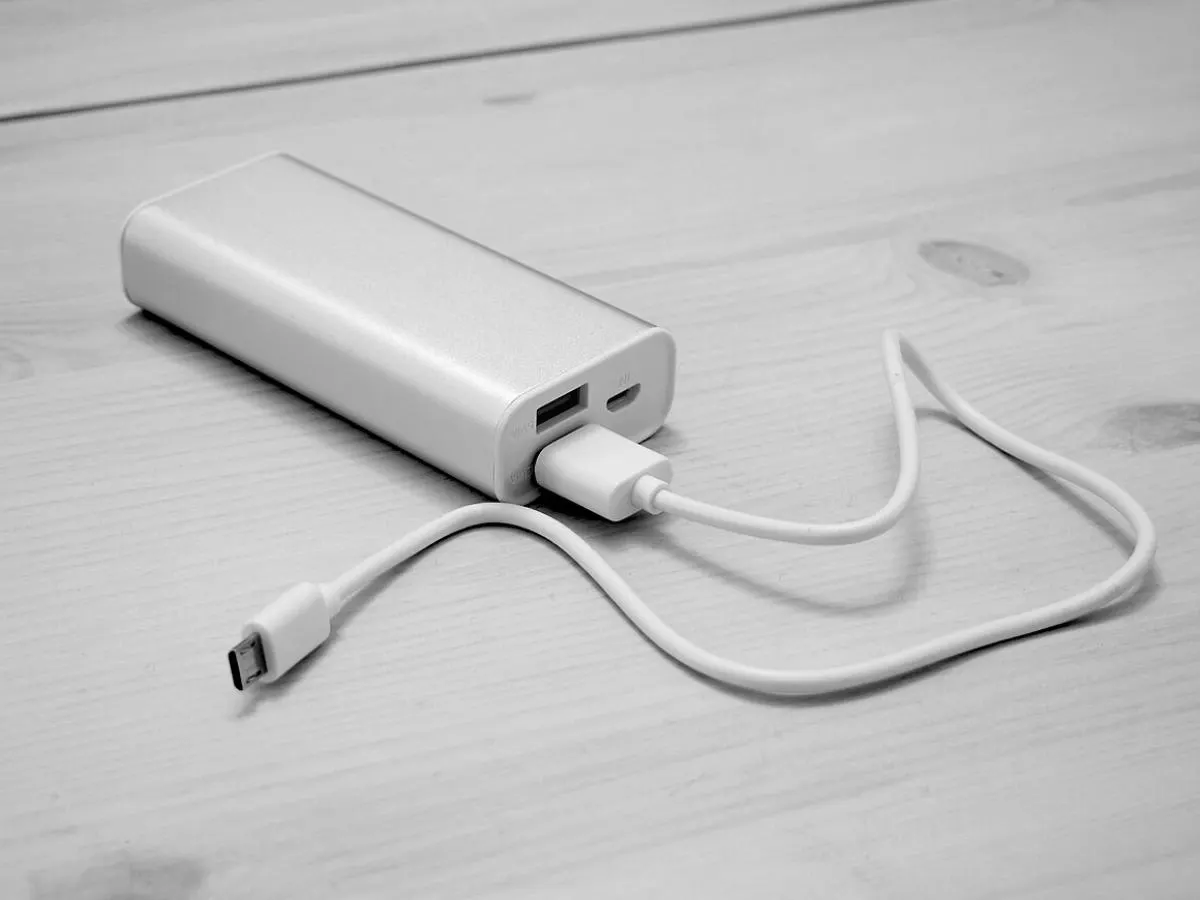
Airlines are enforcing new ICAO rules limiting passengers to two power banks and banning inflight charging due to rising lithium battery fire risks.
Key Takeaways
- •ICAO rules now limit passengers to two power banks per person.
- •Inflight recharging of portable chargers is strictly prohibited.
- •FAA data shows 97 lithium battery incidents on US flights in 2025.
- •Airlines now ban storing power banks in overhead bins for safety.
Global airlines are implementing stricter ICAO power bank regulations following an addendum to international safety standards, fundamentally changing how passengers carry and use portable chargers. The new rules, a direct response to the increasing danger of inflight thermal runaway events, restrict travelers to two power banks per person and institute a complete flight portable charger ban on inflight recharging. This update to aviation lithium battery rules aims to mitigate fire risks inside the passenger cabin.
The new mandate originates from the International Civil Aviation Organization (ICAO), the United Nations agency that sets global aviation safety standards. On March 27, 2026, ICAO issued an addendum to its Technical Instructions for the Safe Transport of Dangerous Goods by Air (Doc 9284). The International Air Transport Association (IATA), which represents global carriers, quickly integrated these changes into its 67th Edition of the Dangerous Goods Regulations (DGR), making them operationally binding for its member airlines.
The Data Driving the Change
The regulatory shift was prompted by a sharp increase in lithium battery incidents. Data from the Federal Aviation Administration (FAA) Office of Security and Hazardous Materials Safety revealed 97 separate incidents involving smoke, fire, or extreme heat from lithium batteries on U.S. flights in 2025 alone. This alarming trend underscored the urgent need for more stringent controls.
Beyond quantity limits, the regulations reinforce capacity restrictions. According to the updated IATA Dangerous Goods Regulations, power banks exceeding 160 Watt-hours (Wh) are completely forbidden on passenger aircraft. Those with a capacity between 100 Wh and 160 Wh may be carried, but only with prior approval from the airline. Devices under 100 Wh are generally permitted within the two-device limit. In parallel, major U.S. carriers including Southwest, United, and American Airlines introduced policies in spring 2026 prohibiting the storage of power banks in overhead bins, requiring them to be kept in under-seat bags or in sight of the passenger.
Historical Precedents and Industry Impact
This is not the first time aviation regulators have acted decisively on lithium battery risks. The industry's foundational precedent was the January 2013 grounding of the global Boeing 787 Dreamliner fleet. This drastic measure was taken after thermal runaways occurred in the aircraft's own auxiliary lithium-ion batteries, establishing such events as critical threats to flight safety.
More recently, an incident in July 2025 aboard Virgin Australia Flight 737 directly influenced the new cabin storage rules. A power bank inside a passenger's backpack in an overhead bin caught fire, forcing the crew to use multiple extinguishers and declare a PAN PAN distress call. Angus Mitchell, Chief Commissioner of the Australian Transport Safety Bureau (ATSB), noted that such fires are exceptionally difficult to manage at altitude, highlighting the need for devices to remain accessible to cabin crew.
The new regulations impact several key groups. For long-haul passengers, the ban on inflight charging curtails the ability to use personal high-capacity chargers, increasing reliance on aircraft-provided power. Commercial airline cabin crews now bear the added responsibility of enforcing the charging ban and monitoring for compliance, adding to their in-flight duties. There is also a potential, though minor, impact on consumer electronics manufacturers, who may face pressure to more clearly label Wh ratings on their products to avoid passenger confusion and confiscations at security.
Technical Analysis
The updated ICAO and IATA rules represent a reactive, yet necessary, evolution in cabin safety policy driven by consumer technology trends. The proliferation of high-capacity portable electronic devices has introduced a statistically significant fire risk that existing regulations did not fully address. The pattern mirrors the 2013 Boeing 787 grounding: a new technology's potential failure mode was not fully appreciated until real-world incidents demonstrated its severity. The 97 FAA-documented events in 2025 served as a clear data-driven catalyst for the ICAO's Dangerous Goods Panel (DGP) to act.
However, some industry experts have raised concerns. According to aviation safety consultants, the practical enforceability of the new limits remains a significant challenge. Gate agents and flight attendants have limited capacity to inspect every carry-on bag for the quantity of power banks or to continuously monitor for prohibited inflight charging. This suggests that while the regulations establish a new legal standard, effective mitigation will still heavily rely on passenger compliance and awareness campaigns.
What Comes Next
The aviation industry will continue to adapt to the risks posed by lithium batteries. The current rules are codified in the 67th Edition of the IATA DGR. Airlines and regulators will monitor incident data under the new policy framework to assess its effectiveness. The next scheduled update, the IATA DGR 68th Edition, is confirmed to become effective on January 1, 2027, and may include further refinements based on operational feedback and incident trends. The official FAA database of lithium battery incidents will remain a key source for tracking the issue.
Why This Matters
This development marks a significant shift in managing passenger-carried electronics, moving from passive rules like
Frequently Asked Questions
- What are the new ICAO power bank regulations for flights?
- Under new ICAO rules, passengers are limited to carrying a maximum of two power banks each, and there is a strict ban on recharging them during the flight. Devices with a capacity over 160 Watt-hours (Wh) are prohibited, while those between 100-160 Wh require prior airline approval.
- Why are airlines banning power banks in overhead bins?
- Airlines banned overhead bin storage for power banks due to the risk of inflight thermal runaway, where a lithium battery can uncontrollably overheat and catch fire. This policy ensures cabin crew can quickly access and extinguish a malfunctioning device, a safety measure prompted by recent fire incidents.
- How many lithium battery incidents happened on US flights in 2025?
- According to official data from the Federal Aviation Administration (FAA), there were 97 documented incidents involving lithium batteries that resulted in smoke, fire, or extreme heat on flights within the United States during 2025.
Access up-to-date commercial aviation news and airline industry developments via omniflights.com. Follow aviation sustainability efforts, emissions research, and green initiatives in the Environmental section at omniflights.com/environmental.
Written by Hardik Vishwakarma
Co-Founder & Aviation News Editor leading initiatives that improve trust and visibility across the global aviation industry. Covers airlines, airports, safety, and emerging technology.
Visit ProfileYou Might Also Like
Discover more aviation news based on similar topics

Families Demand DCA Midair Collision Safety Reforms
Families of 67 victims from the 2025 DCA midair collision are pressing Congress for mandatory ADS-B In technology to prevent future aviation tragedies.

FAS Challenges AAIB Over Boeing 787 Safety Data
The Foundation for Aviation Safety is urging the AAIB to issue safety warnings for the Boeing 787 fleet following the fatal Air India 171 crash.
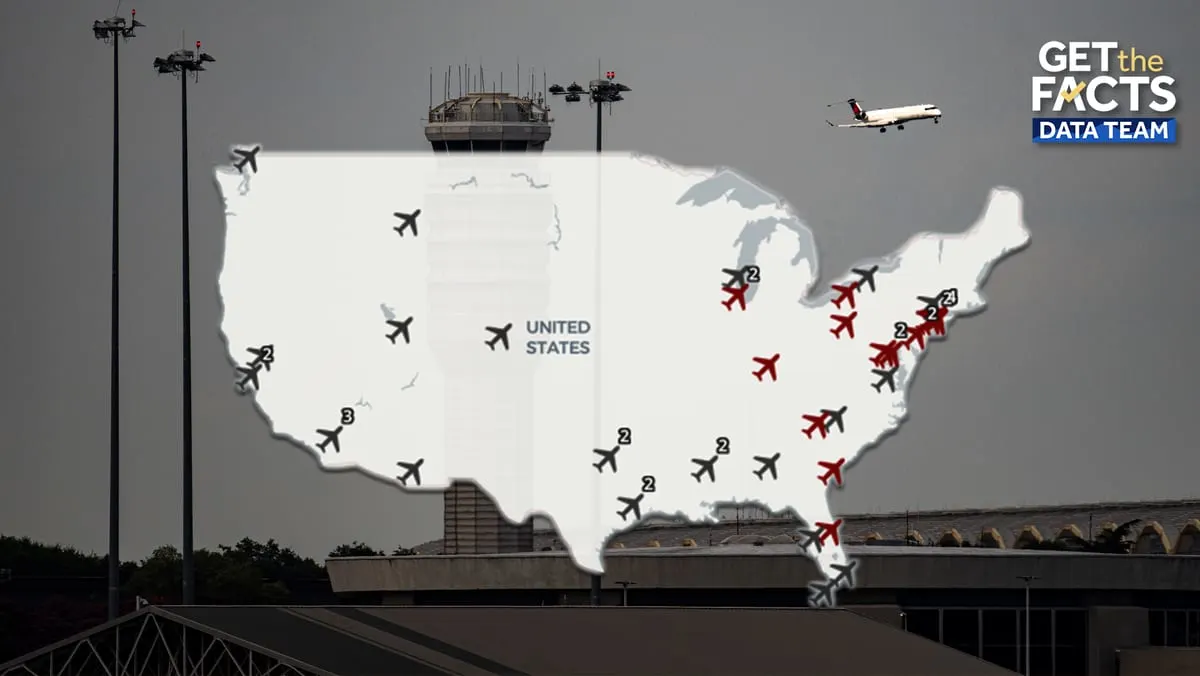
NTSB Safety Recommendations Lag Amid 6 Monthly Near-Misses
Approximately 6 near-miss incidents occur monthly at U.S. airports as 270 NTSB safety recommendations remain unaddressed by federal regulators.
NTSB Rejects FAA Safety Responses After 67-Fatality Crash
The NTSB labeled 11 FAA responses to 2025 DCA mid-air collision recommendations as unacceptable, citing the lack of a mandatory ADS-B In requirement.
EASA Orders Urgent Airbus A380 Wing Spar Inspections
The EASA ordered urgent inspections on 16 Airbus A380s after discovering wing spar cracks that could compromise structural integrity.
Ryanair Flight RK514 Diverts to Birmingham After Emergency
Ryanair flight RK514 diverted to Birmingham Airport on September 13, 2026, following a medical emergency involving a passenger.