Air India 787 Grounded Over Fuel Control Switch Defect

Co-Founder & CEOAviation News Editor delivering trusted coverage across the global aviation industry.
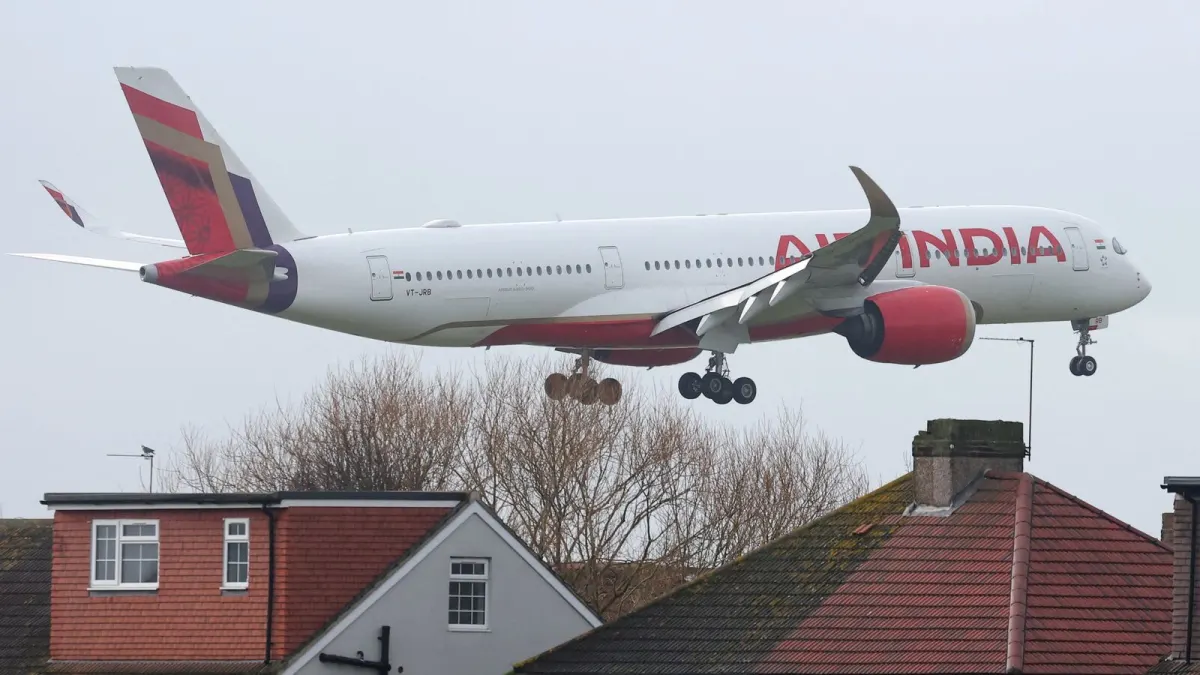
Air India grounded a Boeing 787 after a fuel switch defect, prompting DGCA-led US inspections following a related crash in 2025 that killed 260.
Key Takeaways
- •Air India 787 grounded after fuel switch slipped to CUTOFF.
- •DGCA orders component inspection at Boeing's US facility.
- •Incident follows 2025 crash of AI171 with 260 fatalities.
- •FAA flagged switch lock issues in a 2018 safety bulletin.
An Air India Boeing 787 was grounded in February 2026 following a flight from London to Bengaluru after a critical Fuel Control Switch defect was discovered. The incident has triggered a high-level DGCA safety inspection, sending the component to the United States for further testing. This heightened scrutiny comes less than a year after a catastrophic crash involving the same aircraft type and switch mechanism, which led to a fatal aircraft engine cutoff.
The grounding of the Boeing 787-8, registered as VT-ANX, on February 2, 2026, has placed a renewed focus on the design and reliability of cockpit components. According to a statement from the Ministry of Civil Aviation, India, the Fuel Control Switch (FCS) reportedly slipped from the 'RUN' to the 'CUTOFF' position. While the Original Equipment Manufacturer (OEM), Boeing, initially assessed the switch as mechanically functional, India's Directorate General of Civil Aviation (DGCA) mandated a more thorough investigation. The regulator has ordered the specific switch to be sent to Boeing's US facility for physical testing under the supervision of DGCA officials, a move indicating a lack of confidence in standard serviceability checks.
Connection to the AI171 Crash
The DGCA's decisive action is directly linked to the investigation into the fatal crash of Air India Flight 171 on June 12, 2025. That incident, which resulted in 260 fatalities in Ahmedabad, involved a Boeing 787-8 where both fuel control switches transitioned to the CUTOFF position seconds after takeoff, according to the preliminary report from the Aircraft Accident Investigation Bureau (AAIB). The parallels between the AI171 crash and the defect report on VT-ANX have created significant pressure on regulators to ensure the issue is not systemic.
This is not the first time concerns have been raised about this component. In December 2018, the U.S. Federal Aviation Administration (FAA) issued a Special Airworthiness Information Bulletin (SAIB) NM-18-33. The bulletin flagged the potential for the fuel control switch's locking feature to disengage on various Boeing models, leaving it vulnerable to inadvertent operation. However, in July 2025, following the AI171 crash, the FAA issued a Continued Airworthiness Notification stating the design was safe and did not warrant a mandatory Airworthiness Directive at that time.
Industry and Stakeholder Impact
The grounding and subsequent regulatory directive have significant implications for key stakeholders. For Boeing, the incident intensifies scrutiny over the design of its 4TL837-3D fuel control switches, forcing it to conduct supervised testing and potentially face future redesign mandates. The manufacturer has maintained that the switches are mechanically fail-safe and has suggested the issue may relate to pilot handling rather than a component flaw.
For Air India, the event causes operational disruption by grounding a widebody aircraft and compounds reputational challenges linked to the AI171 tragedy. Pilot associations, meanwhile, have argued that they have repeatedly warned about potential malfunctions and that the 2018 FAA advisory should have prompted mandatory hardware changes, not just an informational bulletin.
The DGCA has adopted an aggressive oversight role, bypassing the OEM's initial clearance to demand independent verification. This reflects a broader industry trend of heightened regulatory scrutiny on components, particularly in the aftermath of high-profile accidents. The official portal for the DGCA India details its mandate for ensuring continued airworthiness.
Technical Analysis
The DGCA's decision to mandate stateside testing of the fuel switch from VT-ANX, despite Boeing's initial assessment, marks a significant procedural shift. It signals a departure from the historical practice of deferring to OEM serviceability reports, a trend accelerated by the global Boeing 737 MAX groundings in 2019. The current situation with the 787 switch mirrors the MAX crisis, where pilot reports of anomalies following a fatal crash ultimately forced severe regulatory intervention. The AI171 crash serves as the direct catalyst, elevating the 2018 FAA bulletin from a routine advisory to a critical safety concern for Indian aviation authorities. This development suggests that regulators, particularly those overseeing fleets involved in recent accidents, are now prioritizing independent verification of critical systems, especially those involving human-machine interfaces.
What Comes Next
Several key milestones are anticipated in the coming months. The physical testing of the fuel control switch from VT-ANX at Boeing's US facility is confirmed to take place in the second or third quarter of 2026 under DGCA supervision. Furthermore, the final investigation report from the AAIB on the Air India Flight 171 crash is expected to be published around June 2026. The findings of that report will likely determine whether the FAA and other global regulators will be compelled to issue mandatory directives for the Boeing 787's fuel control system.
Why This Matters
This incident is more than a single component failure; it represents a critical test of the relationship between aircraft manufacturers and national aviation regulators. The DGCA's assertive stance, driven by the memory of a recent tragedy, could set a new precedent for how component airworthiness is verified globally. For airlines and passengers, it highlights the rigorous, albeit sometimes slow, process of ensuring that potential systemic safety risks are thoroughly investigated and addressed.
Frequently Asked Questions
- Why was the Air India Boeing 787 grounded in February 2026?
- The aircraft, registration VT-ANX, was grounded after its Fuel Control Switch reportedly slipped from the 'RUN' to 'CUTOFF' position following a flight. This prompted a safety inspection by India's Directorate General of Civil Aviation (DGCA).
- What is the significance of the Boeing 787 Fuel Control Switch defect?
- The same type of switch mechanism is under investigation for its role in the fatal crash of Air India Flight 171 in June 2025, which killed 260 people. A preliminary report found both engine switches on that flight moved to CUTOFF shortly after takeoff.
- What did India's DGCA order regarding the faulty switch?
- Despite Boeing's initial assessment that the switch was functional, the DGCA mandated that the specific component be sent to Boeing's facility in the United States for further physical testing under the supervision of Indian regulators.
Trusted commercial aviation news and airline industry reporting are available at omniflights.com. Track policy changes, airspace rules, and global aviation governance in the Regulatory category at omniflights.com/regulatory.

Written by Hardik Vishwakarma
Co-Founder & Aviation News Editor leading initiatives that improve trust and visibility across the global aviation industry. Covers airlines, airports, safety, and emerging technology.
Visit ProfileYou Might Also Like
Discover more aviation news based on similar topics
Flydubai FZ1073 Cockpit Attack: Inside the Terror Attempt
Flydubai flight FZ1073 diverted to Tabuk after co-pilot Hamam al-Hammami attacked Captain Smit Machchhar in a confirmed terrorist act.
21 Air 767 Crash: NTSB Report Details Fatal MIA Overrun
The NTSB preliminary report on the 21 Air 767 crash at Miami International Airport confirms five ground fatalities following a late, high-speed landing.
Flydubai FZ1073 Hijacker Flagged as Security Risk by Oman
A Flydubai co-pilot accused of attempting to crash flight FZ1073 had been previously barred from flying in Oman due to extremist concerns.
FAA Clears Boeing 737 MAX Software Issue, Resumes MAX 10
The FAA cleared a Boeing 737 MAX software issue after a safety review, allowing the 737 MAX 10 certification process to resume immediately.
Flydubai Flight 1073 Hijacking Attempt Over Jordan
A Flydubai Flight 1073 co-pilot attacked the captain mid-flight on September 30, 2026, forcing passengers to intervene and stabilize the aircraft.

Families Demand DCA Midair Collision Safety Reforms
Families of 67 victims from the 2025 DCA midair collision are pressing Congress for mandatory ADS-B In technology to prevent future aviation tragedies.