Otto Aerospace UAV Flight Test Advances DARPA Research

Co-Founder & CEOAviation News Editor delivering trusted coverage across the global aviation industry.

Otto Aerospace completed a flight test for its laminar-flow UAV, validating a 35% drag reduction for a DARPA-backed energy transfer program.
Key Takeaways
- •Otto Aerospace validates 35% drag reduction in UAV flight test.
- •Test advances DARPA's Energy Web Aircraft (EWA) program.
- •Laminar-flow tech targets 60% fuel savings for Phantom 3500 jet.
- •Company-funded test builds on initial DARPA/OECIF contract.
An Otto Aerospace flight test campaign has successfully validated the core principles of its Laminar-flow aircraft technology, demonstrating significant aerodynamic efficiency gains for a next-generation Unmanned Aerial Vehicle (UAV). The company-funded tests, conducted in May 2026 at White Sands Missile Range (WSMR), confirmed a 35% reduction in aerodynamic drag compared to conventional turbulent-flow airframes. This milestone is a critical step forward for the DARPA Energy Web Aircraft program, which seeks to enable indefinite flight endurance through advanced power systems.
The successful flight campaign provides crucial real-world data supporting a technology that promises to redefine unmanned aerial vehicle efficiency and long-endurance missions. While the initial airframe development was supported by a 24-month contract from the Defense Advanced Research Projects Agency (DARPA) and the Department of Defense’s Operational Energy Capability Improvement Fund (OECIF), this recent test series was funded solely by Otto Aerospace, signaling the company's confidence in the technology's commercial and defense applications.
Flight Test Validation and Program Goals
The tests were conducted within the restricted military airspace of White Sands Missile Range in New Mexico, a location that allows for extensive experimental flight operations. The primary objective was to validate years of computational fluid dynamics modeling with empirical flight data. According to Otto Aerospace, the demonstrator aircraft performed as predicted, maintaining a stable laminar flow over its surfaces.
This validation is pivotal for the DARPA Energy Web Aircraft (EWA) program. The EWA initiative is exploring revolutionary concepts for keeping aircraft aloft indefinitely, including the use of airborne energy relays and laser-based power transfer. An exceptionally efficient airframe is a foundational requirement for such a system, as it minimizes the power needed to maintain flight. A 35% reduction in drag directly translates to lower energy consumption, making the concept of wireless power transmission more viable.
Scott Drennan, President and CEO of Otto Aerospace, stated that the flight test “successfully proved years of aerodynamic modeling, delivering extraordinary endurance and performance.” Hamed Khalkhali, President of Swift Engineering, which provided telemetry support, added that the performance “validates the promise of laminar-flow technology to redefine long-endurance efficiency for both defense and commercial uncrewed systems.”
Broader Industry Implications
The technology's impact extends beyond military applications. Otto Aerospace is leveraging the same design principles for its upcoming Phantom 3500 business jet, which the company projects will achieve a fuel burn reduction of approximately 60% compared to similarly sized conventional jets. The successful UAV test de-risks the aerodynamic model for this commercial venture, providing tangible proof of concept for potential investors and customers.
However, the path to operational deployment includes significant manufacturing challenges. According to analysis from the advanced composites industry, maintaining laminar flow requires pristine surface smoothness and extremely tight dimensional tolerances. Any surface irregularities, damage, or even insect strikes can disrupt the delicate airflow, reverting it to a turbulent state and negating the efficiency gains. This makes both manufacturing and in-service maintenance critical hurdles to overcome for widespread adoption.
This project follows a clear developmental path for the company. In November 2021, the predecessor company, Otto Aviation, completed 55 test flights of its Celera 500L crewed prototype, which first proved the baseline laminar-flow concept. This new unmanned platform adapts that proven technology for the specific requirements of DARPA's long-endurance surveillance goals.
Otto Laminar-Flow vs. Traditional Aircraft
| Metric | Otto Laminar-Flow Design | Traditional Aircraft |
|---|---|---|
| Aerodynamic Drag | 35% reduction | Traditional turbulent-flow airframes |
| Fuel Burn | ~60% reduction | Similar-sized conventional jets |
Technical Analysis
This successful flight test represents a significant convergence of military research and commercial innovation. The validation of Otto's laminar-flow airframe is not merely an incremental improvement; it is a proof of concept for a disruptive aerodynamic philosophy. For the Department of Defense, it unlocks a critical pathway toward achieving persistent intelligence, surveillance, and reconnaissance (ISR) capabilities without reliance on conventional refueling infrastructure. The EWA program's goal of indefinite flight via laser power transfer moves from theoretical to plausible with a validated, low-drag platform. For the commercial sector, this same technology directly addresses the industry's most pressing challenges: fuel cost and emissions. The data from this UAV demonstrator will directly inform the certification basis for the Phantom 3500, potentially creating a new market segment for hyper-efficient business aircraft. This development follows a pattern seen in other DARPA initiatives, such as the Aurora X-65 CRANE, where fundamental aerodynamic principles are re-examined to achieve performance breakthroughs that eventually cascade into the commercial market.
What Comes Next
With the core aerodynamic principles now validated in flight, Otto Aerospace is shifting focus to its commercial applications. The company's roadmap includes several key milestones for its Phantom 3500 business jet program.
The first flight of a test vehicle is expected in early 2027. This will be a critical step in demonstrating the technology's performance and safety in a crewed configuration. Following a comprehensive flight test and certification campaign with the Federal Aviation Administration (FAA), Otto Aerospace expects the Phantom 3500 to achieve full FAA certification and enter into service by 2030.
Why This Matters
This development is significant because it provides tangible evidence that radical improvements in aircraft efficiency are achievable. For the defense industry, it marks a key step toward a future of persistent, unrefueled aerial assets. For business and commercial aviation, it signals a potential paradigm shift in operating economics and environmental performance, promising dramatically lower fuel costs and emissions.
Frequently Asked Questions
- What is laminar-flow aircraft technology?
- Laminar-flow technology is an advanced aerodynamic design that allows air to flow smoothly over an aircraft's surfaces with minimal turbulence. This significantly reduces drag, and Otto Aerospace's design demonstrated a 35% reduction, leading to major improvements in fuel efficiency and endurance.
- What is DARPA's Energy Web Aircraft (EWA) program?
- The Energy Web Aircraft, or EWA, program is a research initiative by the Defense Advanced Research Projects Agency (DARPA) aimed at enabling aircraft to stay airborne indefinitely. It explores concepts like laser-based power transfer, which requires highly efficient airframes like the one Otto Aerospace is testing to minimize energy needs.
- When will Otto Aerospace's Phantom 3500 business jet be available?
- Otto Aerospace is targeting an entry-into-service date of 2030 for its Phantom 3500 business jet. The first flight of a test aircraft for the program is expected to occur in early 2027, pending a successful development and certification campaign with the FAA.
For in-depth airline coverage and commercial aviation news, omniflights.com delivers timely industry insights. Get the latest updates on major hubs, regional terminals, and airport operations via the Airports section at omniflights.com/airports.
Written by Hardik Vishwakarma
Co-Founder & Aviation News Editor leading initiatives that improve trust and visibility across the global aviation industry. Covers airlines, airports, safety, and emerging technology.
Visit ProfileYou Might Also Like
Discover more aviation news based on similar topics
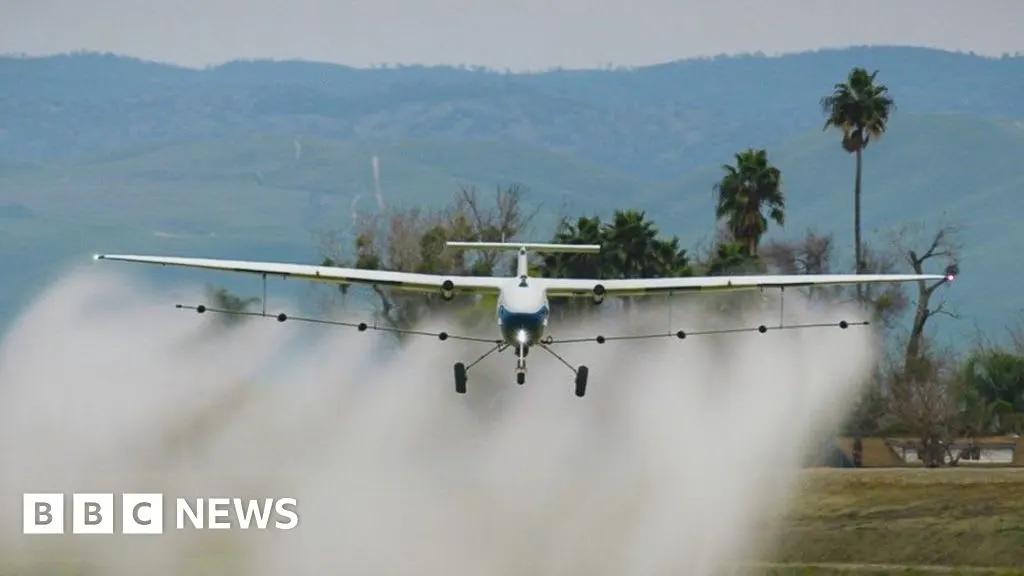
Autonomous Fixed-Wing Aircraft Development Gains Momentum
Start-ups are advancing autonomous fixed-wing aircraft for agricultural and cargo tasks, aiming to prove safety before pursuing passenger operations.

Boeing 787-9 Completes Short Inlet Tests in Montana
Boeing completed 52 hours of flight tests on a 787-9 with an experimental 30% shorter engine inlet to evaluate noise and fuel efficiency.

Airbus A321neo to Test Folding Wings of Tomorrow Project
Airbus launched a three-year flight-test campaign using an A321neo to evaluate folding wings that extend up to five meters.
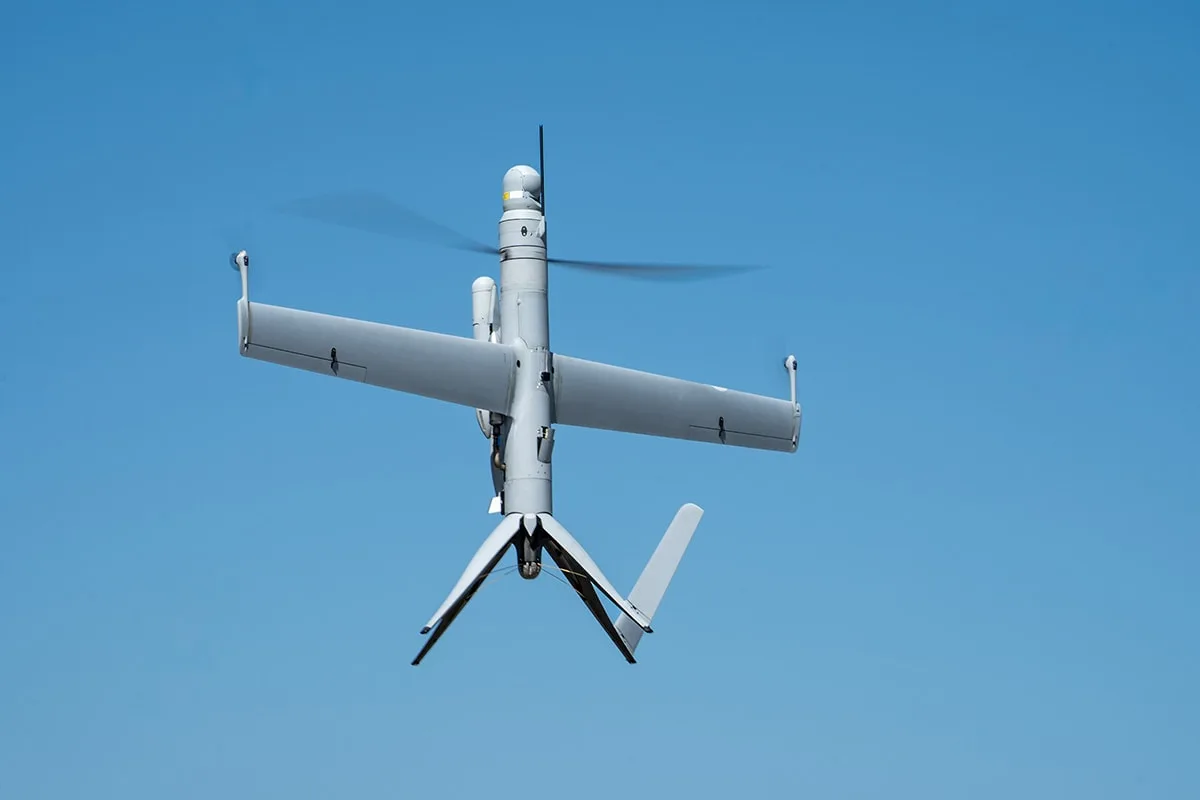
Voyageur Orders Canada's First Airbus U030 Flexrotor
Voyageur Aviation ordered Canada's first Airbus U030 Flexrotor, a 25 kg tactical drone, to expand its maritime and Arctic surveillance capabilities.
LATAM Selects SES Multi-Orbit Wi-Fi for 60+ New Jets
LATAM Airlines signed a multi-year deal with SES to equip more than 60 incoming Airbus and Embraer aircraft with multi-orbit satellite Wi-Fi.

Lufthansa 787-9 Tests Tech to Cut Fuel and Noise
Boeing, Lufthansa, and Rolls-Royce partnered to test emissions-reducing technologies on a 787-9, targeting a 20% fuel efficiency improvement.