NTSB Issues Report on Cessna 172N Hudson River Ditching

Co-Founder & CEOAviation News Editor delivering trusted coverage across the global aviation industry.

The NTSB released its preliminary report on a Cessna 172N ditching in the Hudson River, detailing a total loss of engine power and zero oil pressure.
Key Takeaways
- •Details a total loss of engine power and zero oil pressure on a Cessna 172N.
- •Highlights a successful fixed-gear aircraft ditching in the freezing Hudson River.
- •Confirms both the flight instructor and student pilot survived with minor injuries.
- •Places the engine failure in the context of high-utilization training aircraft.
The National Transportation Safety Board (NTSB) has released its preliminary report, ERA26LA134, on the Cessna 172N Hudson River ditching that occurred on March 2, 2026. The report confirms the instructional flight experienced a total loss of engine power accompanied by zero oil pressure shortly after departing New York Stewart International Airport (SWF).
The incident is notable for the successful water landing and survival of both occupants despite the significant risks associated with ditching a fixed-gear aircraft, especially in freezing conditions. The investigation into the Lycoming O-320 engine failure is being closely watched by the general aviation community, given the Cessna 172's role as a primary training aircraft worldwide.
Incident Details
According to the NTSB's report, the flight, operated by American Airman Inc., was conducted under Title 14 CFR Part 91 rules. The aircraft, a Cessna 172N Skyhawk with registration N1560E, had just completed a touch-and-go landing at SWF. Shortly after climbing out, the flight instructor noted the engine was not producing normal Revolutions Per Minute (RPM). Subsequently, the oil pressure dropped to zero, followed by a complete loss of engine power.
Unable to return to the airport, the instructor executed a forced landing in the Hudson River at approximately 19:10 Local Time. The ditching occurred about 2.3 miles south of the Newburgh-Beacon Bridge. Both the flight instructor and the student pilot evacuated the aircraft with only minor injuries. They were rescued by local emergency services responding to the scene. The weather at the time was reported as Visual Meteorological Conditions (VMC), but the water temperature was -2°C (28°F), with broken patch ice on the river, adding a critical element of environmental risk to the successful outcome.
Technical Context and Ditching Risks
The Cessna 172N is one of the most common training aircraft globally. As aviation attorney and pilot Joseph LoRusso noted, it is the "workhorse of the flight instruction world." This high utilization places unique wear pressures on engines like the Lycoming O-320. An investigation into the cause of a sudden power and oil pressure loss in such a widely used engine is of significant interest to flight schools and maintenance organizations.
Furthermore, the successful outcome of the ditching is statistically significant. Ditching a fixed-gear aircraft carries a high probability of the aircraft flipping upon water contact as the landing gear digs in. LoRusso emphasized that such a maneuver is "incredibly dangerous." The instructor’s ability to land the aircraft upright, allowing for a safe egress in freezing water, demonstrates a high level of skill in emergency procedures.
Historical Parallels and Industry Impact
While vastly different in scale, this incident inevitably draws comparisons to the 2009 ditching of US Airways Flight 1549, the "Miracle on the Hudson." That event involved an Airbus A320 and 155 occupants. The successful outcome of this Cessna 172N ditching provides another data point on survivable water landings in the same waterway, reinforcing the importance of crew training for such low-probability, high-consequence events.
The primary stakeholder impacted is the flight school, American Airman Inc., which has lost a training airframe and will face regulatory scrutiny of its maintenance records as part of the NTSB investigation. For the broader flight training community operating Cessna 172Ns, the final report could lead to new service bulletins or airworthiness directives related to the Lycoming O-320 engine, depending on the NTSB's findings on the probable cause.
What Comes Next
The NTSB's investigation is ongoing. The preliminary report does not state a probable cause, which is typical at this early stage. Investigators will continue to examine the salvaged airframe and engine, review maintenance records, and analyze flight data and witness statements. A final report, which will include a determination of the probable cause and any contributing factors, is expected to be published between March 2027 and March 2028.
Why This Matters
This incident highlights the critical importance of emergency procedure training and the inherent risks of engine failure in single-engine aircraft. The successful outcome provides a valuable case study in general aviation safety and crisis management. The NTSB's final findings on the cause of the Lycoming O-320 engine failure could have direct implications for maintenance and operational protocols for thousands of training aircraft globally, potentially enhancing safety across the entire flight training sector.
omniflights.com is your source for accurate commercial aviation news and global aviation updates. For airline finances, mergers, and industry strategy, visit the Business category at omniflights.com/business.
Written by Hardik Vishwakarma
Co-Founder & Aviation News Editor leading initiatives that improve trust and visibility across the global aviation industry. Covers airlines, airports, safety, and emerging technology.
Visit ProfileYou Might Also Like
Discover more aviation news based on similar topics

Families Demand DCA Midair Collision Safety Reforms
Families of 67 victims from the 2025 DCA midair collision are pressing Congress for mandatory ADS-B In technology to prevent future aviation tragedies.

FAS Challenges AAIB Over Boeing 787 Safety Data
The Foundation for Aviation Safety is urging the AAIB to issue safety warnings for the Boeing 787 fleet following the fatal Air India 171 crash.
NTSB Safety Recommendations Lag Amid 6 Monthly Near-Misses
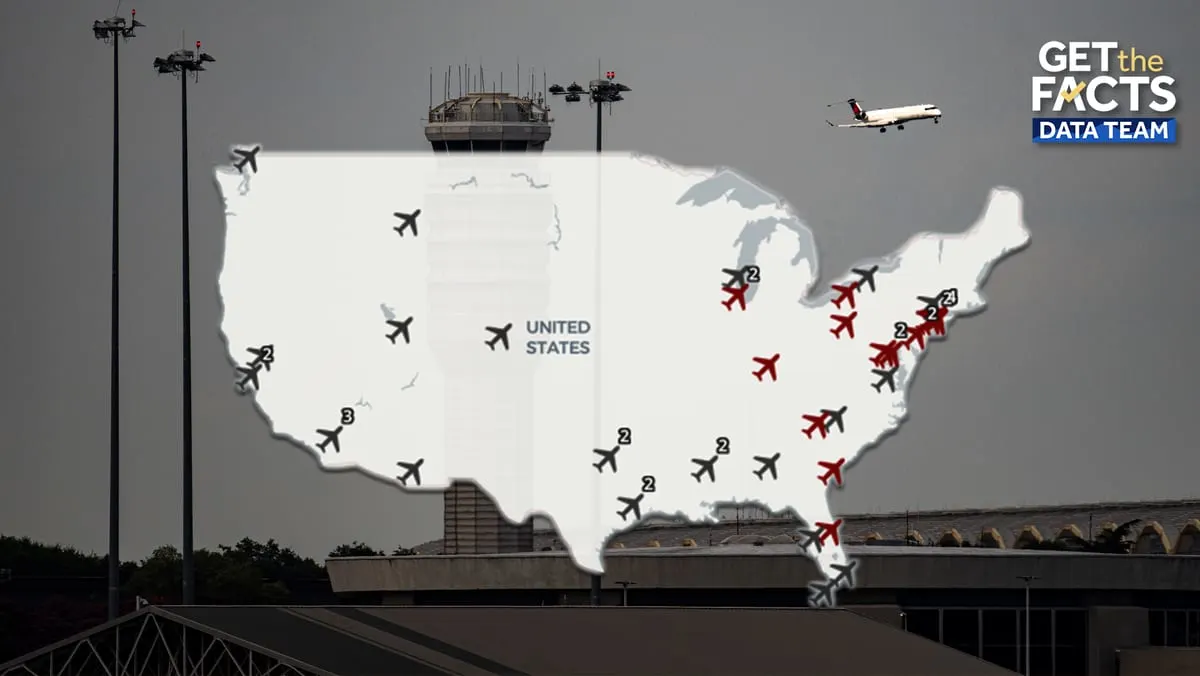
Approximately 6 near-miss incidents occur monthly at U.S. airports as 270 NTSB safety recommendations remain unaddressed by federal regulators.
NTSB Rejects FAA Safety Responses After 67-Fatality Crash
The NTSB labeled 11 FAA responses to 2025 DCA mid-air collision recommendations as unacceptable, citing the lack of a mandatory ADS-B In requirement.
EASA Orders Urgent Airbus A380 Wing Spar Inspections
The EASA ordered urgent inspections on 16 Airbus A380s after discovering wing spar cracks that could compromise structural integrity.
Ryanair Flight RK514 Diverts to Birmingham After Emergency
Ryanair flight RK514 diverted to Birmingham Airport on September 13, 2026, following a medical emergency involving a passenger.