MCO Adds New Nonstop Flights Amid Record Spring Break Traffic

Co-Founder & CEOAviation News Editor delivering trusted coverage across the global aviation industry.
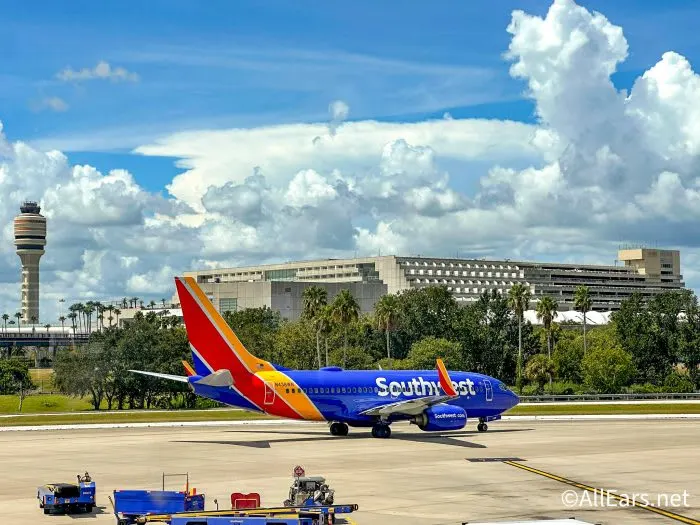
Orlando International Airport adds new nonstop routes from Southwest and Frontier to accommodate record-breaking Spring Break passenger traffic.
Key Takeaways
- •Adds new nonstop routes from Southwest and Frontier in March 2026.
- •Projects a record 7.4 million passengers during the 46-day Spring Break travel window.
- •Reinforces its status as a major leisure destination dominated by low-cost carriers.
- •Sees Southwest Airlines maintain its position as the largest carrier with a 22.88% market share.
Orlando International Airport (MCO) is expanding its domestic network with several new nonstop flights in March 2026, coinciding with a period of record-breaking passenger traffic. The expansion is driven primarily by Southwest Airlines and Frontier Airlines, reinforcing the airport's position as a critical gateway for Florida's leisure travel market. The new services are timed to meet surging demand during the spring travel season, with the airport authority forecasting 7.4 million passengers during the 46-day Spring Break window, an 8% increase over the previous year.
The additions underscore a broader industry trend of capacity growth in sun-belt leisure destinations. New routes include Southwest Airlines service to Knoxville, TN, and Frontier Airlines flights to Little Rock, AR, and Tulsa, OK. These connections from secondary US markets directly support Central Florida's tourism ecosystem, particularly major attractions like Walt Disney World and Universal Studios Resorts. According to the Greater Orlando Aviation Authority (GOAA), the government agency that manages the airport, MCO handled 57.67 million passengers in 2025, a modest 0.81% increase over 2024 but still 13% above pre-pandemic levels.
Market Dynamics and Carrier Share
The route expansion further solidifies the dominance of low-cost carriers at MCO. According to the GOAA CY 2025 Passenger Market Share Report, Southwest Airlines is the largest operator at the airport, holding a 22.88% market share. Delta Air Lines is the second-largest carrier with a significantly smaller share of 12.67%. The growth of Ultra-Low-Cost Carriers (ULCCs) like Frontier and Spirit, which collectively hold a significant portion of the market, highlights MCO's operational model, which is heavily weighted toward point-to-point origin and destination (O&D) traffic rather than connecting hub operations.
Lance Lyttle, CEO of the GOAA, commented on the strategic approach to route development. "By collaborating with our tourism partners and other key stakeholders, we are able to launch new routes, strengthen economies and connect people, cultures and possibilities," he stated. Lyttle also noted that the airport's record-breaking Spring Break traffic is driven by Central Florida's appeal to a diverse range of travelers. The official airport website, flymco.com, provides updated flight schedules and passenger information.
Stakeholder and Economic Impact
The influx of new flights has a significant downstream effect on the regional economy. For stakeholders like Walt Disney World and Universal Studios, increased daily seat capacity from new markets is critical for sustaining theme park attendance and hotel occupancy rates. The surge in passenger volume also directly benefits the GOAA through increased non-aeronautical revenue streams, such as parking and concessions, in addition to standard landing fees.
This growth presents operational challenges for local ground transportation providers, including Mears Connect and various rideshare services, which must scale their fleets to manage the higher volume of airport-to-resort transfers. For legacy carriers like Delta, American, and United, the continued expansion of LCC and ULCC point-to-point networks represents further market share dilution at a key Florida destination.
Historical Context and Future Outlook
MCO's current market structure is a direct result of a strategic shift that occurred over a decade ago. In 2007, Delta Air Lines' decision to de-hub its Orlando operations marked a turning point, transforming MCO from a traditional legacy hub into a massive leisure-focused airport. This historical precedent paved the way for carriers like Southwest and Frontier to build dominant positions by serving strong O&D demand. The current route expansions are a continuation of this long-term trend.
Looking ahead, the GOAA has identified several key dates for the current travel peak. The busiest day of the Spring Break season is expected to be March 15, 2026, with a projection of 212,000 passengers. The entire peak travel window is confirmed to conclude on April 7, 2026. The successful management of this period, facilitated by gate and slot allocations by GOAA, will be a key performance indicator for the airport's capacity to handle sustained growth.
Why This Matters
The addition of new routes at Orlando International Airport is more than a simple schedule update; it confirms the sustained strength of the domestic leisure travel market and the success of the point-to-point model championed by low-cost carriers. For the aviation industry, it demonstrates how airports can thrive by aligning their strategy with regional economic drivers, in this case, tourism. For travelers, it means increased connectivity and competition on routes to one of the world's most popular vacation destinations.
omniflights.com provides comprehensive commercial aviation news covering airlines, aircraft, and airports. For detailed airline coverage, route changes, and fleet moves, explore the Airlines section at omniflights.com/airlines.
Written by Hardik Vishwakarma
Co-Founder & Aviation News Editor leading initiatives that improve trust and visibility across the global aviation industry. Covers airlines, airports, safety, and emerging technology.
Visit ProfileYou Might Also Like
Discover more aviation news based on similar topics

IndiGo Opens Commercial Flights at Bhogapuram
IndiGo launched the first commercial flight to the new Rs 5,700 crore Bhogapuram Airport, shifting civilian traffic from the old civil enclave.

Sydney Airport Master Plan 2045 Approved
The Australian government approved Sydney Airport's Master Plan 2045, enabling terminal integration to handle 72.6 million passengers by 2045.

Visakhapatnam Airport Ends Commercial Flights for 30 Years
Visakhapatnam Airport ended scheduled commercial flights ahead of Bhogapuram's opening, triggering a 30-year moratorium on civil operations.

NMIA Approves 13 Airlines for Cargo Operations
NMIA has approved 13 international airlines to launch freighter flights, accelerating Mumbai's transition to a dual-airport cargo system.

Hong Kong Air Cargo Lands First Navi Mumbai Freighter
Hong Kong Air Cargo launched flights to Navi Mumbai, marking the airport's first international freighter service with 6 weekly movements.

ENAC Suspends Catania Flights Amid Mount Etna Eruption
ENAC suspended operations at Catania Airport due to a Mount Etna eruption, resulting in 700 flight cancellations and massive regional diversions.