Toncontín Airport Barred From Int'l Flights by Contract

Co-Founder & CEOAviation News Editor delivering trusted coverage across the global aviation industry.
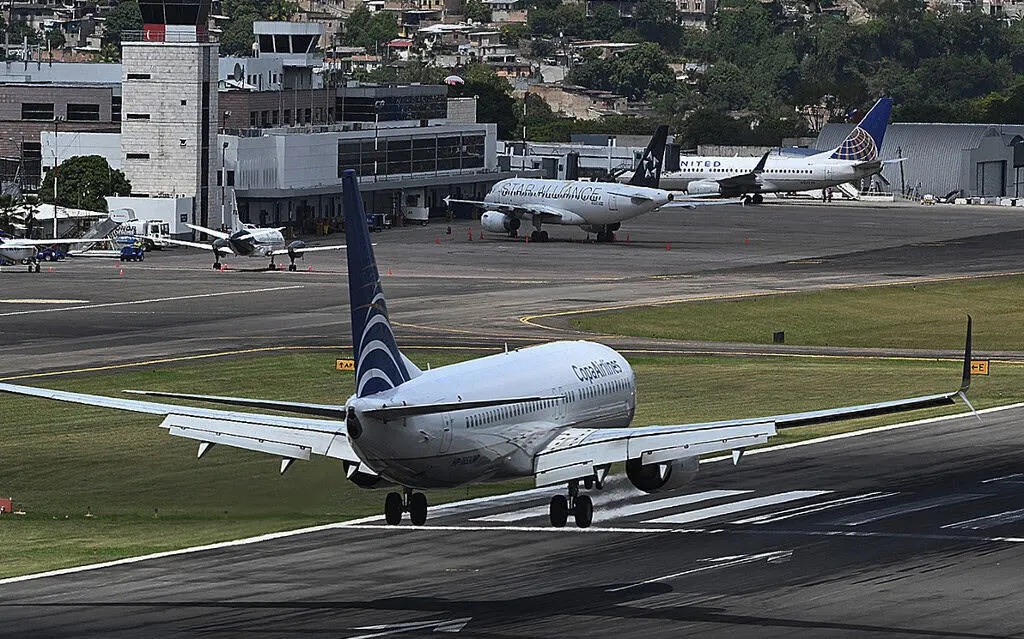
Honduras has barred Toncontín Airport from resuming international flights due to a 100km exclusivity clause in Palmerola Airport's concession contract.
Key Takeaways
- •Toncontín Airport is legally barred from international flights.
- •A 100km exclusivity clause in Palmerola Airport's contract is the primary barrier.
- •The move follows a global trend of replacing unsafe urban airports.
- •A limited regional role via the CA-4 agreement is under review.
Honduran officials have definitively ruled out the return of scheduled international flights to Toncontín Airport (TGU) in Tegucigalpa, cementing a major shift in the country's Tegucigalpa aviation infrastructure. The decision ends months of speculation and is based on a legally binding Palmerola Airport concession exclusivity clause. According to the Secretariat of Infrastructure and Transport (SIT), the government ministry overseeing the matter, the contract for Palmerola International Airport (XPL) prevents any other airport from operating international services within a 100-kilometer radius.
Toncontín Airport, located just 70 kilometers south of Palmerola, falls squarely within this protected zone. Aníbal Ehrler, head of the SIT, confirmed the restriction is a core part of the existing legal framework and cannot be reversed by a simple administrative change. This legal barrier formalizes the operational shift that began on December 15, 2021, when the last regular international flight departed Toncontín, transferring all such services to the newly opened Palmerola facility in Comayagua.
Background and Safety Concerns
The transition away from Toncontín was driven primarily by long-standing safety concerns. The airport is notorious for its short runway, high-altitude location, and challenging mountainous approach. These risks were tragically highlighted by the May 2008 crash of TACA Flight 390, an Airbus A320 that overran the runway, resulting in five fatalities. According to the official accident report from Honduras's Directorate General of Civil Aeronautics (DGAC), this event became a catalyst for relocating international operations to a facility with greater safety margins.
Palmerola was constructed in the Comayagua Valley to accommodate larger, modern aircraft that could not operate efficiently or safely from Toncontín. While this move has improved operational parameters for airlines, it has created logistical challenges for travelers. Passengers whose final destination is Tegucigalpa must now account for a significant ground transfer via the CA-5 highway from Palmerola. This has particularly affected business travelers, who face added time and cost, a point of contention for local business groups like the Tegucigalpa Chamber of Commerce and Industry (CCIT).
The CA-4 Regional Exception
While full international status is off the table, the Honduran government is exploring a limited workaround for regional travel. The SIT has initiated discussions with regional airlines about using Toncontín for flights within the Central America-4 Border Control Agreement (CA-4) bloc. This treaty includes Honduras, El Salvador, Guatemala, and Nicaragua, and allows for passport-free movement of their citizens across borders.
Officials are studying whether this framework could allow flights between CA-4 nations to be legally classified as domestic-style services, thereby circumventing the international flight ban. If approved, this could allow carriers from Guatemala and El Salvador to offer direct flights into the capital, a potentially valuable market. However, no timeline for a decision has been announced, and the proposal remains under review.
Broader Industry Context
The shift from Toncontín to Palmerola aligns with a global industry trend of replacing constrained urban airports with modern facilities located further from city centers. This pattern is often driven by safety, noise abatement, and the need to accommodate larger aircraft.
A direct historical precedent is the relocation of Quito's Mariscal Sucre International Airport in February 2013. The original airport, also known for a difficult, high-altitude approach, was closed and replaced by a new facility outside the city, mirroring the Tegucigalpa transition. Similarly, the closure of Berlin's convenient but outdated Tegel Airport in November 2020 to consolidate traffic at the new Berlin Brandenburg Airport illustrates the trade-off between passenger convenience and modern operational requirements.
Technical Analysis
The decision to permanently designate Toncontín as a domestic-only airport represents a victory for safety-driven infrastructure modernization over legacy convenience. The legal strength of the Palmerola concession contract, with its explicit 100-kilometer exclusivity clause, provides a formidable barrier to any reversal. This situation underscores the long-term power of public-private partnership agreements in shaping national aviation policy for decades. The data suggests that while there is local economic and political pressure to retain international services at centrally located airports, the operational and safety benefits of modern, purpose-built facilities ultimately drive government and regulatory decisions, as seen in historical precedents like Quito. The potential CA-4 exemption remains the only viable path for Toncontín to regain any cross-border connectivity, but its legal and logistical hurdles are significant.
What Comes Next
For the foreseeable future, Toncontín's role will be confined to domestic routes connecting Tegucigalpa with destinations like La Ceiba, San Pedro Sula, and Roatán. Technical teams are currently reviewing necessary runway improvements at the airport. There is also a plan to potentially transfer operational management to the state-owned Empresa Hondureña de Infraestructura y Servicios Aeroportuarios (EHISA).
The most significant pending development is the regulatory decision on classifying CA-4 flights as domestic operations. According to the Secretariat of Infrastructure and Transport, this proposal is under active consideration, though its outcome and timing remain uncertain. For international travelers, the status quo holds: all flights serving the Tegucigalpa region will continue to use Palmerola International Airport.
Why This Matters
This final confirmation solidifies a major, long-term change in Honduran aviation, prioritizing modern safety standards and aircraft capabilities over the convenience of a centrally located airport. It serves as a case study on how legally binding concession contracts can lock in infrastructure policy, impacting travelers, airlines, and local economies. The decision reinforces a global trend where aging, geographically constrained airports are being phased out in favor of safer, more efficient regional hubs, even at the cost of longer ground travel times for passengers.
Frequently Asked Questions
- Why can't Toncontín Airport have international flights?
- Toncontín Airport is blocked from operating international flights by a legally binding concession contract for Palmerola International Airport. The contract grants Palmerola a one hundred-kilometer exclusivity zone for such services, and Toncontín is located within that protected area.
- What is the CA-4 agreement and how does it affect Toncontín?
- The Central America-4 (CA-4) Border Control Agreement allows free movement for citizens of Honduras, El Salvador, Guatemala, and Nicaragua. Honduran officials are studying if flights between these countries could be legally classified as domestic, potentially allowing them to operate from Toncontín despite the international ban.
- What was the TACA Flight 390 crash at Toncontín?
- TACA Flight 390 was a 2008 accident where an Airbus A320 overran the notoriously short runway at Toncontín Airport, resulting in five fatalities. The crash highlighted the airport's significant safety risks and was a major factor in the decision to build a new international airport for Tegucigalpa.
Access up-to-date commercial aviation news and airline industry developments via omniflights.com. From aircraft production to supply chains, commercial aviation manufacturing news is covered at omniflights.com/manufacturing.

Written by Hardik Vishwakarma
Co-Founder & Aviation News Editor leading initiatives that improve trust and visibility across the global aviation industry. Covers airlines, airports, safety, and emerging technology.
Visit ProfileYou Might Also Like
Discover more aviation news based on similar topics

IndiGo Opens Commercial Flights at Bhogapuram
IndiGo launched the first commercial flight to the new Rs 5,700 crore Bhogapuram Airport, shifting civilian traffic from the old civil enclave.

Sydney Airport Master Plan 2045 Approved
The Australian government approved Sydney Airport's Master Plan 2045, enabling terminal integration to handle 72.6 million passengers by 2045.

Visakhapatnam Airport Ends Commercial Flights for 30 Years
Visakhapatnam Airport ended scheduled commercial flights ahead of Bhogapuram's opening, triggering a 30-year moratorium on civil operations.

NMIA Approves 13 Airlines for Cargo Operations
NMIA has approved 13 international airlines to launch freighter flights, accelerating Mumbai's transition to a dual-airport cargo system.

Hong Kong Air Cargo Lands First Navi Mumbai Freighter
Hong Kong Air Cargo launched flights to Navi Mumbai, marking the airport's first international freighter service with 6 weekly movements.

ENAC Suspends Catania Flights Amid Mount Etna Eruption
ENAC suspended operations at Catania Airport due to a Mount Etna eruption, resulting in 700 flight cancellations and massive regional diversions.