KLM A321neo Sustains Tail Damage in Lisbon Landing Incident

Co-Founder & CEOAviation News Editor delivering trusted coverage across the global aviation industry.

A KLM A321neo was grounded in Lisbon after a tail strike on June 16, 2026, during flight KL1583, prompting a safety investigation by authorities.
Key Takeaways
- •KLM A321neo PH-AXB grounded in Lisbon after June 16 tail strike.
- •GPIAAF and DSB are investigating the flight KL1583 landing incident.
- •A321neo length increases tail strike risk during high-pitch landings.
- •Structural repairs and return to service are expected by late 2026.
A KLM Royal Dutch Airlines Airbus A321neo (registration PH-AXB) was grounded at Lisbon Humberto Delgado Airport (LIS) following a tail strike incident during landing on June 16, 2026. The aircraft, operating flight KL1583 from Amsterdam, touched down on Runway 02 when the rear fuselage made contact with the runway surface. The incident has triggered a formal safety investigation by the Portuguese authority, the Gabinete de Prevenção e Investigação de Acidentes com Aeronaves e de Acidentes Ferroviários (GPIAAF), in collaboration with the Dutch Safety Board (DSB).
The Operational Impact
The grounding of the aircraft, which was delivered to the KLM fleet in late 2024, has caused immediate operational disruption. As part of KLM's broader narrowbody fleet modernization strategy, the A321neo is a critical asset for the carrier's high-density European short-to-medium-haul network. The removal of this unit from service requires the airline to manage capacity gaps and rebook passengers on affected return flights. The Dutch Safety Board is working with Portuguese counterparts to analyze flight data recorder information to determine the specific pilot inputs and environmental factors that contributed to the landing geometry.
Structural Sensitivity of the A321neo
The Airbus A321neo has an overall length of 44.51 meters, which is nearly 7 meters longer than the baseline A320neo. This elongated fuselage makes the aircraft structurally more susceptible to tail strikes during high-pitch landing attitudes. While the aircraft is equipped with advanced CFM LEAP engines, the physical dimensions of the airframe require specific pilot awareness during the flare phase of flight.
A321neo vs. A320neo: Key Specifications
| Metric | A321neo | A320neo |
|---|---|---|
| Overall Length | 44.51 m | 37.57 m |
| Max Seating Capacity | 244 | 194 |
| Tail Strike Risk | Higher (stretched fuselage) | Lower (standard envelope) |
Regulatory Requirements and Repair Protocols
Before the aircraft can return to service, it must undergo rigorous non-destructive testing of the empennage and rear pressure bulkhead. The European Union Aviation Safety Agency (EASA) mandates strict structural repair protocols for composite airframes involved in such events. Historically, similar incidents, such as the 2024 LATAM Boeing 777-300ER tail strike in Milan, have demonstrated that rear fuselage damage requires extensive inspection and specialized maintenance, often leading to prolonged grounding periods.
What Comes Next: The Investigation Timeline
The GPIAAF is expected to publish a preliminary incident report regarding the KLM A321neo tail strike by Q3 2026. Following the initial assessment, the aircraft will undergo structural repairs overseen by KLM Engineering. A return to service for the PH-AXB airframe is not expected until late 2026, pending final airworthiness certification and successful completion of the required repairs.
Why This Matters for European Operations
This incident highlights the ongoing challenges carriers face as they transition to longer-fuselage narrowbody aircraft. For airlines and lessors, the event serves as a reminder of the increased operational sensitivity of the A321neo compared to previous generation narrowbodies. As KLM continues to replace its older Boeing 737 fleet, the industry will be watching how training protocols are adapted to mitigate the risks associated with the A321neo's specific landing characteristics.
Frequently Asked Questions
- Why is the Airbus A321neo more susceptible to tail strikes?
- The A321neo features an elongated fuselage measuring 44.51 meters, which is nearly 7 meters longer than the baseline A320neo. This increased length makes the aircraft more prone to tail strikes during high-pitch landing attitudes.
- What is the next step for the grounded KLM A321neo?
- The aircraft must undergo rigorous non-destructive testing of its rear pressure bulkhead and empennage. Following these inspections, specialized structural repairs will be conducted, with a return to service expected by late 2026.
For global airline trends and commercial aviation news, turn to omniflights.com. For reporting on UAP sightings, investigations, and aviation-related encounters, see the UAPs section at omniflights.com/uaps.
Written by Hardik Vishwakarma
Co-Founder & Aviation News Editor leading initiatives that improve trust and visibility across the global aviation industry. Covers airlines, airports, safety, and emerging technology.
Visit ProfileYou Might Also Like
Discover more aviation news based on similar topics

Families Demand DCA Midair Collision Safety Reforms
Families of 67 victims from the 2025 DCA midair collision are pressing Congress for mandatory ADS-B In technology to prevent future aviation tragedies.

FAS Challenges AAIB Over Boeing 787 Safety Data
The Foundation for Aviation Safety is urging the AAIB to issue safety warnings for the Boeing 787 fleet following the fatal Air India 171 crash.
NTSB Safety Recommendations Lag Amid 6 Monthly Near-Misses
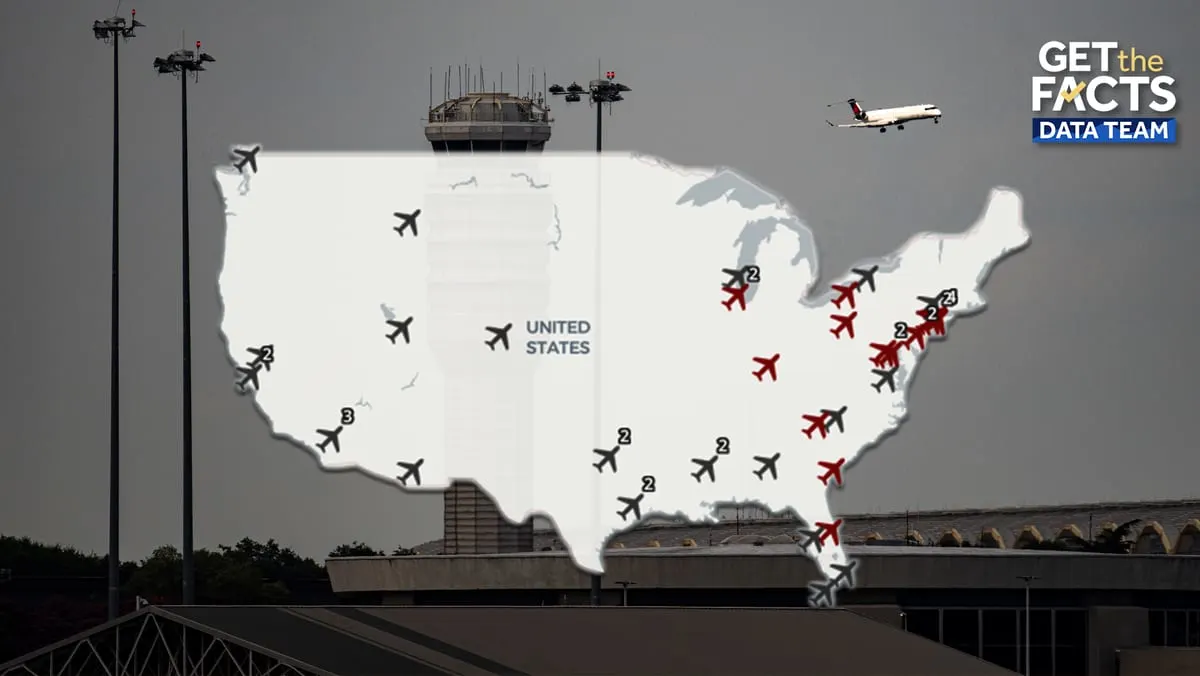
Approximately 6 near-miss incidents occur monthly at U.S. airports as 270 NTSB safety recommendations remain unaddressed by federal regulators.
NTSB Rejects FAA Safety Responses After 67-Fatality Crash
The NTSB labeled 11 FAA responses to 2025 DCA mid-air collision recommendations as unacceptable, citing the lack of a mandatory ADS-B In requirement.
EASA Orders Urgent Airbus A380 Wing Spar Inspections
The EASA ordered urgent inspections on 16 Airbus A380s after discovering wing spar cracks that could compromise structural integrity.
Ryanair Flight RK514 Diverts to Birmingham After Emergency
Ryanair flight RK514 diverted to Birmingham Airport on September 13, 2026, following a medical emergency involving a passenger.