Iraq Reopens Airspace to International Transit Flights

Co-Founder & CEOAviation News Editor delivering trusted coverage across the global aviation industry.
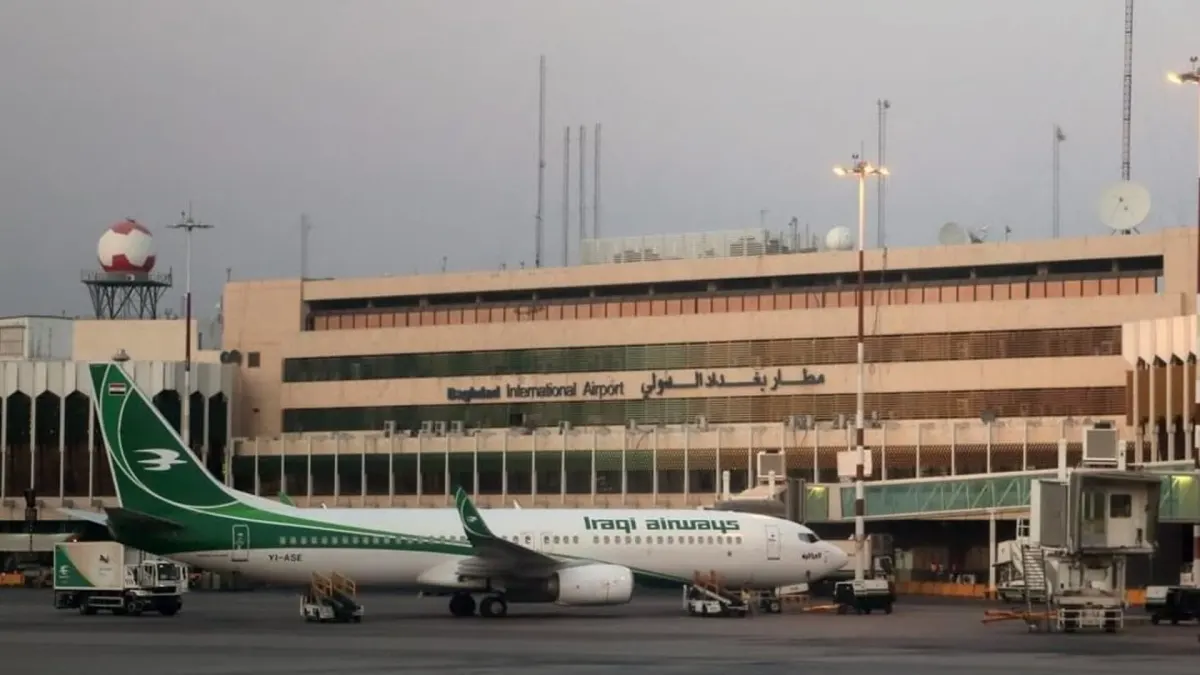
Iraq has resumed international transit flights through its airspace, with traffic doubling within 48 hours of the reopening announcement.
Key Takeaways
- •Iraq has reopened its airspace to international transit flights.
- •Traffic doubled to over 220 flights on the second day of operations.
- •FAA and EASA maintain high-altitude restrictions due to security risks.
- •GCANS is managing increased GPS spoofing using primary radar vectoring.
The Iraqi Ministry of Transportation has officially announced the reopening of Iraqi airspace for international transit flights, marking a significant step in the restoration of the Baghdad Flight Information Region (FIR), designated as ORBB. This decision follows intensive coordination efforts between the Iraqi government and regional partners, including the Kingdom of Saudi Arabia, the State of Kuwait, and the Kingdom of Bahrain. The move is designed to re-establish the country as a vital artery for East-West aviation traffic, which has been severely constrained by regional geopolitical instability.
Operational Recovery and Capacity
Following the announcement, the General Company for Air Navigation Services (GCANS) initiated a rapid scale-up of its operations to accommodate the returning traffic. According to the Iraqi Ministry of Transportation, over 114 aircraft transited Iraqi airspace on the first day of the reopening, a figure that doubled on the second day. This rapid recovery highlights the strategic importance of the corridor, especially given the ongoing industry-wide pressure to optimize routes amid restricted access to other regional airspaces. Prior to recent disruptions, the Iraqi corridor handled over 450 transiting aircraft daily, a significant increase from the 250 transits recorded in the previous year.
Regulatory Context and Safety Constraints
Despite the optimism from Baghdad, international operators remain subject to stringent safety advisories. The Federal Aviation Administration (FAA) continues to enforce Special Federal Aviation Regulation (SFAR) No. 77, which prohibits U.S. civil aviation operators from flying in the Baghdad FIR at altitudes below Flight Level (FL) 320 (32,000 feet). This FAA directive cites persistent risks from militant activities and un-deconflicted military operations. Similarly, the European Union Aviation Safety Agency (EASA) maintains a Conflict Zone Information Bulletin (CZIB), requiring European carriers to conduct rigorous risk assessments before entering the region. These regulatory stances contrast with the Iraqi Ministry’s assessment of a stable aviation environment, reflecting a cautious industry approach to operations in conflict-prone zones.
Technical Challenges in the Baghdad FIR
To manage the surge in traffic, GCANS has optimized its radar and communication systems to meet International Civil Aviation Organization (ICAO) standards. However, the operational environment remains complex. Air traffic controllers are reportedly managing increased instances of GPS spoofing and jamming, particularly in the northern sections of the FIR. These conditions necessitate a heavy reliance on primary radar vectoring and traditional ground-based navigation rather than reliance on satellite-based positioning alone. The IATA Economics report underscores that during the peak of the Middle East conflict escalation in March 2026, approximately 85% of flights to and from Gulf airports were canceled, demonstrating the volatility that still drives current regulatory caution.
The Strategic Importance of the Corridor
For long-haul carriers, the availability of the Iraqi corridor is essential for reducing fuel burn and flight times. The broader industry context, including the closure of Russian airspace to Western airlines since 2022, has forced traffic into narrow corridors over Egypt, Saudi Arabia, and Iraq. The return of the Baghdad FIR provides a necessary relief valve for this congested airspace. The financial impact is also substantial, as the Iraqi Civil Aviation Authority (ICAA) stands to recover millions of dollars in monthly overflight fees that were lost during the airspace suspension. Historically, the 2021 FAA decision to rescind the total altitude ban over Iraq serves as a precedent for this current recovery, though the current operational environment remains highly sensitive to regional geopolitical shifts.
Frequently Asked Questions
- What are the altitude restrictions for U.S. carriers in the Baghdad FIR?
- Under FAA Special Federal Aviation Regulation (SFAR) No. 77, U.S. civil aviation operators are prohibited from flying in the Baghdad FIR (ORBB) at altitudes below Flight Level 320 (32,000 feet).
- Why do airlines rely on primary radar in Iraqi airspace?
- Airlines and air traffic controllers in the region frequently encounter GPS spoofing and jamming, forcing a reliance on primary radar vectoring and traditional ground-based navigation systems for safe aircraft separation.
omniflights.com provides comprehensive commercial aviation news covering airlines, aircraft, and airports. For detailed airline coverage, route changes, and fleet moves, explore the Airlines section at omniflights.com/airlines.
Written by Hardik Vishwakarma
Co-Founder & Aviation News Editor leading initiatives that improve trust and visibility across the global aviation industry. Covers airlines, airports, safety, and emerging technology.
Visit ProfileYou Might Also Like
Discover more aviation news based on similar topics

FAA Proposes Ending Overland Supersonic Flight Ban
The FAA has proposed a new performance-based noise standard to replace the 1973 ban on overland supersonic flight, enabling future commercial travel.

DOT Rule Exempts Airlines From Cyberattack Delay Costs
Starting October 19, 2026, the DOT will allow airlines to withhold meal and hotel vouchers for delays caused by cyberattacks and nine other events.

Wizz Air, Ryanair Demand NATS Reform After ATC Failure
Wizz Air and Ryanair are calling for urgent NATS reform after a September 8 system failure caused over 1,000 flight cancellations across the UK.

US Treasury Iran Sanctions Target 27 Airlines, Mahan Air
The U.S. Treasury sanctioned 36 entities, including 27 Iranian airlines, to disrupt illicit procurement networks used by the Iranian government.

FAA Awards $481M in Airport Infrastructure Grants
The FAA announced $481 million in infrastructure grants across 191 U.S. airports to improve runways, terminals, and overall capacity.
FAA Air Traffic Controllers Protest Pay and Staffing Cuts
The FAA is withholding a 2.8% pay raise for air traffic controllers, exacerbating morale and safety concerns amid a critical nationwide staffing shortage.