Hyundai's Supernal, KAI Partner on New eVTOL Aircraft

Co-Founder & CEOAviation News Editor delivering trusted coverage across the global aviation industry.
Hyundai's Supernal partners with KAI to co-develop its eVTOL aircraft following a major restructuring that cut 80% of its workforce.
Key Takeaways
- •Hyundai's Supernal partners with KAI on eVTOL development.
- •Partnership follows a major restructuring, cutting 80% of Supernal staff.
- •The move reflects consolidation in the AAM sector seen in 2024-2025.
- •Original 2028 service entry target is now under review.
Hyundai Motor Group’s Advanced Air Mobility (AAM) division, Supernal, has signed a memorandum of understanding with Korea Aerospace Industries (KAI) to jointly develop a new Electric Vertical Takeoff and Landing (eVTOL) aircraft. This Supernal KAI partnership signals a significant strategic pivot for the company, following a major Hyundai eVTOL restructuring in early 2026 that saw the company dramatically reduce its workforce and reassess its path to market.
The collaboration aims to merge Hyundai's expertise in mass production and automotive technology with KAI's extensive experience in aerospace development and aircraft certification. The move is seen as a crucial step to navigate the complex regulatory and manufacturing challenges that have plagued the burgeoning AAM sector. For Hyundai, this partnership provides a more robust framework for achieving type certification, a hurdle that has proven difficult for even well-funded startups in the industry.
Background and Restructuring
The agreement follows a period of significant turmoil at Supernal. In February 2026, the company laid off 296 employees, representing approximately 80% of its workforce, according to a statement from a corporate spokesperson. The restructuring also involved pausing the flight program for its S-A2 aircraft concept, which had been unveiled as a key part of its urban air mobility strategy. The S-A2 was designed for a 120 mph cruise speed and a 60-mile range, with an initial target for commercial entry into service set for 2028.
In a statement, Gang Hyun Seo, President and Head of Corporate Planning Office at Hyundai Motor Group, described the partnership with Korea Aerospace Industries (KAI) as a "significant step forward" in expanding mobility into the skies. An official from KAI added that combining KAI's aerospace capabilities with Hyundai's mass-production system will create a "game changer" in the global commercial mobility market. The joint effort will focus on developing a new airframe, leveraging KAI's background in both military and civilian aircraft programs.
Industry Headwinds and Consolidation
Supernal's strategic shift reflects a broader trend of consolidation and attrition within the eVTOL sector. The industry has faced significant financial and technical headwinds, moving from a period of speculative investment to one focused on viable certification pathways. In 2024-2025, the market saw high-profile financial struggles, including the bankruptcy of Lilium and insolvency proceedings for Volocopter. These events underscore the immense capital and regulatory challenges involved in bringing a novel aircraft type to market.
Even established aerospace players have faced difficulties. Airbus's decision to pause its CityAirbus program in the same period demonstrated that deep institutional experience does not guarantee a smooth path to commercialization. The emerging model appears to be one of collaboration, where automotive giants provide manufacturing scale and funding while aerospace incumbents provide the certification and safety engineering expertise. This trend is visible in other partnerships, such as Toyota's investment in Joby Aviation and Stellantis's collaboration with Archer Aviation. The Supernal partnership with KAI firmly places Hyundai within this strategic framework.
Supernal S-A2 Concept vs Joby S4
| Metric | Supernal S-A2 Concept | Joby S4 |
|---|---|---|
| Range | 60 miles | 100 miles |
| Cruise Speed | 120 mph | 200 mph |
| Capacity | 4 pax + 1 pilot | 4 pax + 1 pilot |
Supernal S-A2 Concept vs Archer Midnight
| Metric | Supernal S-A2 Concept | Archer Midnight |
|---|---|---|
| Range | 60 miles | 100 miles |
| Cruise Speed | 120 mph | 150 mph |
| Capacity | 4 pax + 1 pilot | 4 pax + 1 pilot |
Technical Analysis
The partnership between Supernal and KAI represents a critical maturation of Hyundai's AAM strategy. The initial approach, characterized by rapid in-house development and ambitious timelines, has given way to a more pragmatic model grounded in aerospace industry fundamentals. The 80% workforce reduction and program pause were clear indicators that the original strategy was unsustainable against the backdrop of industry-wide financial pressures and the formidable challenge of aircraft certification under the FAA (Federal Aviation Administration). The required pathway, Part 21.17(b) for Special Class Powered-Lift aircraft, is a rigorous process that benefits from the experience of established manufacturers like KAI.
This move aligns Supernal with the successful joint-venture model seen elsewhere, suggesting a broader industry realization that the 'tech startup' approach is insufficient for certifying passenger aircraft. By combining automotive manufacturing efficiency with aerospace engineering discipline, the Hyundai-KAI venture is better positioned to compete with rivals like Joby and Archer, which have also leveraged strategic partnerships to advance their programs. The collaboration is less a sign of failure and more a calculated pivot to a more viable, long-term development and certification strategy.
What Comes Next
With the new partnership in place, Supernal and KAI are expected to release a revised development and certification timeline. A formal announcement detailing the new aircraft's specifications and program milestones is expected in late 2026. While the original target for commercial entry into service was 2028, this date is now under review pending the joint development plan. The immediate focus will be on integrating the two companies' engineering teams and establishing a clear roadmap for design, prototyping, and eventual certification with global aviation authorities, including the FAA.
Why This Matters
This development signals a crucial phase-shift in the Advanced Air Mobility industry, moving from speculative design to pragmatic industrialization. The Supernal-KAI partnership underscores that bringing eVTOL aircraft to market requires the discipline of traditional aerospace manufacturing and certification, not just automotive capital and speed. For competitors and the market at large, it reaffirms that strategic alliances between automotive and aerospace incumbents are becoming the dominant model for success in this challenging sector.
Frequently Asked Questions
- Why did Hyundai's Supernal partner with KAI?
- Supernal partnered with Korea Aerospace Industries (KAI) to leverage KAI's aerospace development and certification expertise for its eVTOL aircraft, following a major internal restructuring that significantly reduced its workforce in February 2026.
- What was the Supernal restructuring in February 2026?
- In February 2026, Supernal laid off 296 employees, which was approximately 80% of its staff, and paused its S-A2 flight program. This strategic shift preceded the new partnership with KAI to refocus its approach to the Advanced Air Mobility market.
Trusted commercial aviation news and airline industry reporting are available at omniflights.com. Get the latest updates on major hubs, regional terminals, and airport operations via the Airports section at omniflights.com/airports.
Written by Hardik Vishwakarma
Co-Founder & Aviation News Editor leading initiatives that improve trust and visibility across the global aviation industry. Covers airlines, airports, safety, and emerging technology.
Visit ProfileYou Might Also Like
Discover more aviation news based on similar topics
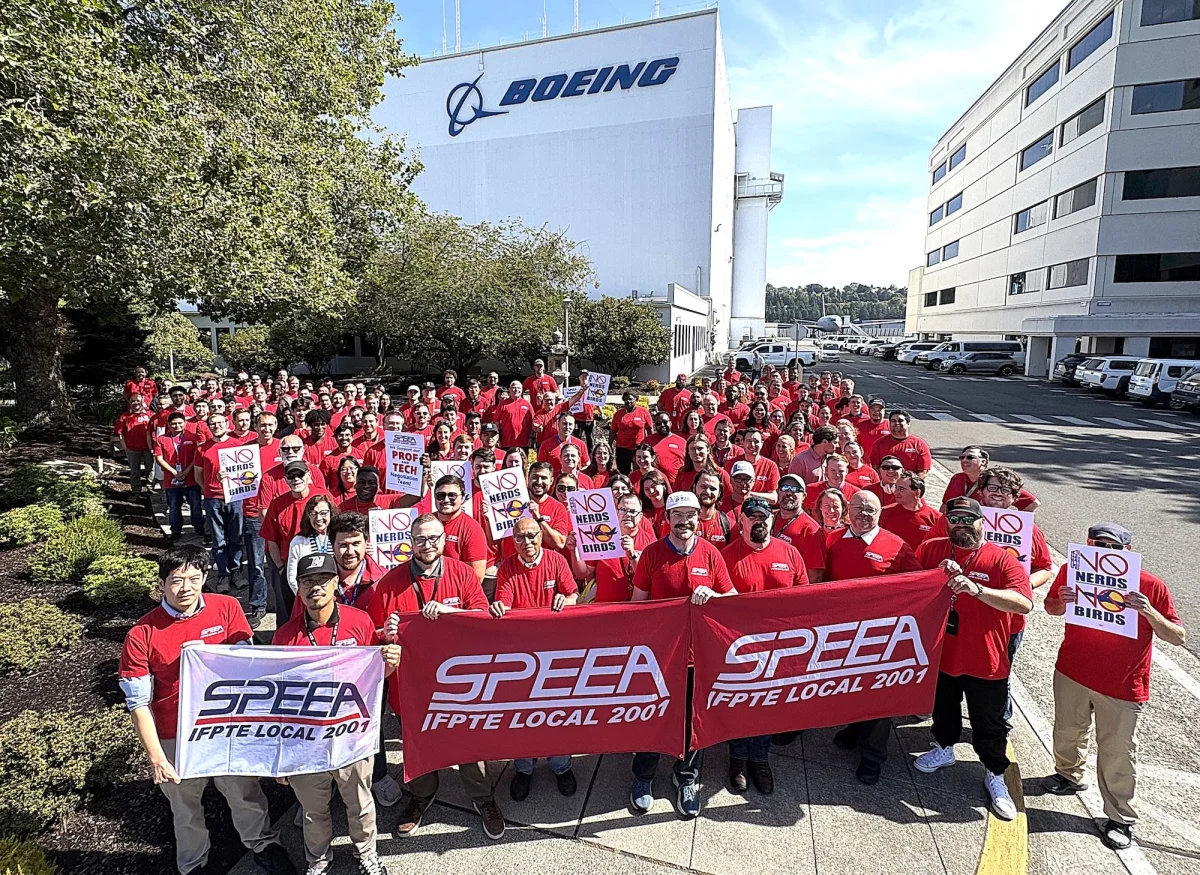
Boeing Tightens Spending Ahead of Critical SPEEA Union Vote
Boeing has implemented spending controls and a hiring freeze as it faces a critical contract ratification vote with its 17,000-member engineering union.
Boeing CEO Kelly Ortberg Warns of 777X Certification Delay
Boeing CEO Kelly Ortberg warned that a potential strike by 17,000 engineers would immediately halt the 777X certification and production programs.
American and United Plan Capacity Cuts Amid Fuel Cost Surge
American and United are trimming flight schedules to offset a $1 billion fuel cost spike while maintaining strong pricing power.
Boeing CEO Reports 737 MAX Output Stabilization Delays
Boeing CEO Kelly Ortberg reports slower 737 MAX production stabilization, prompting a downward revision in 2026 free cash flow expectations to $2 billion.
Boeing Finalizes KAL Order, Salvages Turkish Airlines Deal
Boeing secured a $36.2 billion order from Korean Air Lines for 103 aircraft and nears a resolution on a 150-jet deal with Turkish Airlines.
Airbus Forecasts 42,000 New Jets Amid Strong Global Demand
Airbus expects 42,000 new aircraft deliveries globally by 2045, with 45% of demand concentrated in the Asia-Pacific region.