Dubai Hub Traffic Plummets 66% Amid Mideast Conflict

Co-Founder & CEOAviation News Editor delivering trusted coverage across the global aviation industry.
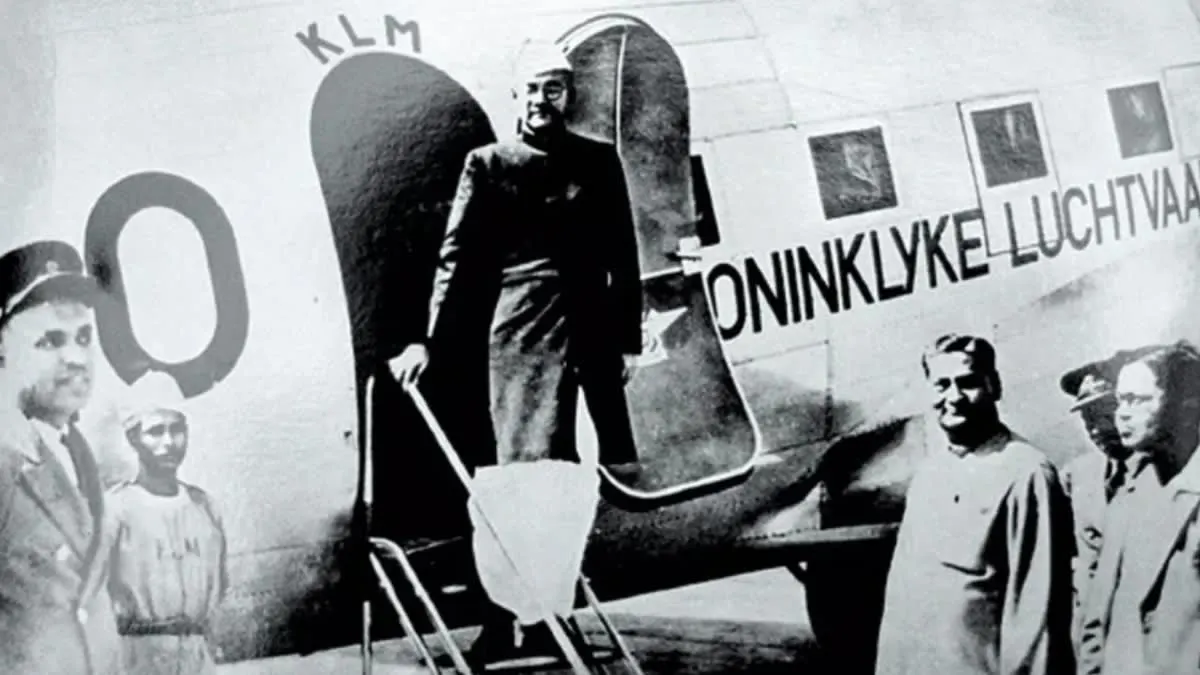
Middle East conflict causes a 66% traffic drop at Dubai's hub, recalling the historical decline of Kolkata's once-dominant role in global aviation.
Key Takeaways
- •Dubai passenger traffic dropped 66% in March 2026 due to regional conflict.
- •Over 12,000 flights were canceled as regulators closed Middle East airspace.
- •Kolkata was a key global hub before the Boeing 747 enabled direct long-haul.
- •Airlines are now rerouting Europe-Asia traffic, increasing flight times.
The escalating conflict in the Middle East has dealt a severe blow to the region's aviation sector, with the Dubai aviation hub conflict triggering widespread Middle East airspace closure and thousands of Iran Israel flight cancellations. According to data from Dubai Airports, passenger traffic at the world's busiest international airport plummeted by 66% in March 2026. The disruption highlights the vulnerability of modern super-hubs to geopolitical shocks and draws a sharp parallel to the history of India's Kolkata airport, a once-dominant global crossroads.
The immediate operational impact has been staggering. Flight-tracking data from Cirium shows that over 12,000 flights to and from the Middle East were canceled by early March 2026. This crisis has forced a fundamental re-evaluation of the Europe-Asia air corridors, which have long relied on the efficiency of Gulf hubs. For carriers like Emirates, flydubai, and Qatar Airways, the closures represent an existential threat to their business models, which are built on high-volume transit traffic. Passengers face canceled flights and significantly longer journeys as airlines scramble to find viable alternative routes.
Regulatory Response and Airspace Chaos
In response to the military activities, aviation authorities have issued strict directives. The European Union Aviation Safety Agency (EASA) published Conflict Zone Information Bulletin CZIB 2026-03-R9, recommending that operators avoid the airspace of Iran, Israel, and the UAE. Similarly, the US Federal Aviation Administration (FAA) has prohibited American civil aircraft from the Tehran Flight Information Region (FIR) under SFAR 117, citing the risk of misidentification. These Notices to Air Missions (NOTAMs) have effectively shut down one of the world's most critical airspaces, leading to what aviation planners describe as severe airspace compression on alternative routes.
According to analysis from Universal Weather and Aviation, even in regions where airspace is technically open, operations are constrained by reduced air traffic control capacity and strict routing, preventing a return to normal traffic levels. The situation echoes the airspace closures during the 1990-1991 Gulf War, which caused massive rerouting and financial strain on global airlines.
A Forgotten Hub: Kolkata's Golden Age
Long before Dubai became synonymous with global air transit, Kolkata's Dum Dum airport aviation history placed it at the center of the world map. Now known as Netaji Subhas Chandra Bose International Airport (NSCBIA), the airport was a cornerstone of intercontinental travel from the 1920s through the 1960s. Historical archives from the Airports Authority of India show that as early as 1924, KLM used Kolkata as a scheduled stop on its pioneering Amsterdam-to-Batavia route. For decades, it was an essential refueling and crew-change point for nearly every major airline flying between Europe and the Far East or Australia.
The decline of Kolkata's prominence was not due to conflict but to technological advancement—a trend that reshaped global aviation. In the era of propliners, long-haul journeys involved numerous stops, making airports like Kolkata indispensable. However, the arrival of the jet age, and specifically the Boeing 747, rendered this model obsolete.
The Jet Age Shift
The introduction of the Boeing 747 in 1970 was the catalyst that bypassed Kolkata. With its unprecedented range and passenger capacity, the jumbo jet could connect European capitals with Asian hubs in one or two stops, eliminating the need for the multiple refueling stops that characterized the propliner era. This technological leap directly contributed to the marginalization of historic transit points.
Boeing 747-100 vs 1950s Propliners (e.g., Douglas DC-6B)
| Metric | Boeing 747-100 | Douglas DC-6B |
|---|---|---|
| Range | 4,620 nm | 2,580 nm |
| Passenger Capacity | 366 | 54-102 |
| Europe-Asia Routing | 1-2 stops | 6-10 stops |
This shift underscores how aviation networks are fundamentally shaped by aircraft capabilities. The 747 enabled the rise of the single-stop hub-and-spoke model that Dubai later perfected, while simultaneously ending the era of multi-stop global trunk routes that sustained airports like Kolkata.
Technical Analysis
The current crisis in the Middle East is a geopolitical echo of the technological disruption that dethroned Kolkata. While the 747 made multi-stop hubs inefficient, the 2026 conflict demonstrates how modern single-stop super-hubs are acutely vulnerable to regional instability. The concentration of massive traffic flows through a single geographic point creates a critical point of failure. The risk of misidentification in a tense military environment, tragically highlighted by the shootdown of Ukraine International Airlines Flight 752 over Iran in 2020, makes operating in the region untenable for many carriers.
The data suggests a potential long-term shift. Airlines are actively rerouting traffic via northern corridors over the Caucasus or southern corridors over Egypt and Saudi Arabia. While these routes increase flight times and fuel burn, they offer stability. Independent aviation analyst John Strickland notes that alternative hubs like Istanbul may gain market share as airlines and passengers seek to avoid the conflict zone. This forced decentralization of traffic could mark the beginning of a new phase in global network strategy, one less reliant on a single, dominant crossroads.
What Comes Next
The immediate future of Middle East air travel remains uncertain. The EASA conflict zone bulletin is expected to be reviewed around May 12, 2026, but any reopening of airspace will be contingent on a significant de-escalation of military activities. Meanwhile, the stakeholders most affected—Gulf carriers and their passengers—face a prolonged period of disruption.
Ironically, as Dubai's hub model is tested, Kolkata is set to reflect on its own aviation legacy. The Airports Authority of India has confirmed that NSCBIA will hold its centenary celebrations in December 2026, marking 100 years since its beginnings as a key global link.
Why This Matters
The disruption of the Dubai hub is more than a temporary operational headache; it is a live stress test of the modern global aviation network. It reveals how geopolitical events can rapidly redraw air routes and challenge the viability of business models built on geographic advantage. For the industry, this crisis serves as a powerful reminder that the centers of gravity in global aviation are not permanent and can be shifted by conflict as decisively as they were once shifted by technology.
Frequently Asked Questions
- Why did flight traffic drop at Dubai Airport in 2026?
- Passenger traffic at Dubai International Airport fell by 66% in March 2026 due to widespread airspace closures and flight cancellations resulting from military conflict in the region. Regulators like the European Union Aviation Safety Agency (EASA) and the US Federal Aviation Administration (FAA) issued warnings advising airlines to avoid the airspace.
- What was Kolkata's historical role in aviation?
- From the 1920s to the 1960s, Kolkata's Dum Dum Airport (now Netaji Subhas Chandra Bose International Airport) was a primary global aviation hub. It was a crucial refueling and transit stop for long-haul flights between Europe and Asia before the advent of long-range jetliners like the Boeing 747 made such stops unnecessary.
- How are airlines avoiding the Middle East conflict zone?
- Airlines are rerouting flights on Europe-Asia corridors to bypass the central Middle East. They are using southern routes over Egypt and Saudi Arabia or northern routes via the Caucasus, which increases flight times and fuel consumption but enhances safety and operational stability.
omniflights.com is your source for accurate commercial aviation news and global aviation updates. Track policy changes, airspace rules, and global aviation governance in the Regulatory category at omniflights.com/regulatory.
Written by Hardik Vishwakarma
Co-Founder & Aviation News Editor leading initiatives that improve trust and visibility across the global aviation industry. Covers airlines, airports, safety, and emerging technology.
Visit ProfileYou Might Also Like
Discover more aviation news based on similar topics

Boeing Tightens Spending Ahead of Critical SPEEA Union Vote
Boeing has implemented spending controls and a hiring freeze as it faces a critical contract ratification vote with its 17,000-member engineering union.

Boeing CEO Kelly Ortberg Warns of 777X Certification Delay
Boeing CEO Kelly Ortberg warned that a potential strike by 17,000 engineers would immediately halt the 777X certification and production programs.
American and United Plan Capacity Cuts Amid Fuel Cost Surge
American and United are trimming flight schedules to offset a $1 billion fuel cost spike while maintaining strong pricing power.

Boeing CEO Reports 737 MAX Output Stabilization Delays
Boeing CEO Kelly Ortberg reports slower 737 MAX production stabilization, prompting a downward revision in 2026 free cash flow expectations to $2 billion.

Boeing Finalizes KAL Order, Salvages Turkish Airlines Deal
Boeing secured a $36.2 billion order from Korean Air Lines for 103 aircraft and nears a resolution on a 150-jet deal with Turkish Airlines.

Airbus Forecasts 42,000 New Jets Amid Strong Global Demand
Airbus expects 42,000 new aircraft deliveries globally by 2045, with 45% of demand concentrated in the Asia-Pacific region.