Heathrow Reduces Flight Emissions by 7%, Advances Third Runway Plan

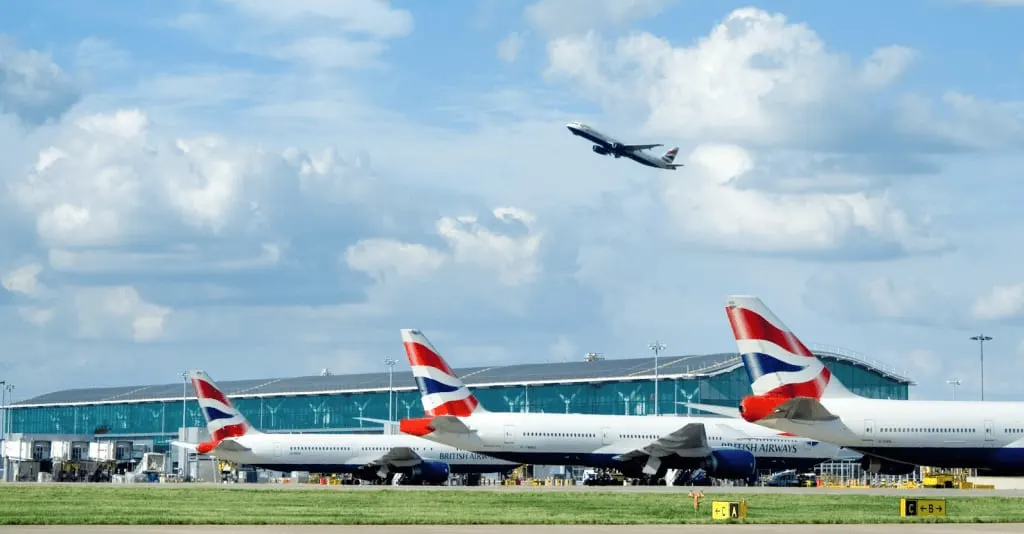
Heathrow Airport's flight emissions fell 7% below 2019 levels in 2025, strengthening its case for a proposed third runway amid new sustainability targets.
Key Takeaways
- •Reduced flight carbon emissions by 7% in 2025 compared to 2019 levels.
- •Advanced plans to secure planning permission for a third runway by 2029.
- •Utilized Sustainable Aviation Fuel (SAF) for 3.1% of total fuel in 2025.
- •Handled a record 84.5 million passengers and 478,000 flights.
Carbon emissions from flights at London Heathrow Airport (LHR) fell 7% below 2019 levels in 2025, even as the airport handled a record number of flights and passengers. The data, published in the airport's latest sustainability report, is being positioned as key evidence to support its renewed push for a controversial third runway, a project that aims to secure planning permission by 2029.
The reduction in emissions despite record traffic volumes suggests a potential decoupling of passenger growth from carbon output, a critical argument for aviation infrastructure projects facing intense environmental scrutiny. Heathrow's strategy relies heavily on the increased adoption of Sustainable Aviation Fuel (SAF) and operational efficiencies, aligning with the UK's broader decarbonisation goals.
Emissions Data and Sustainability Efforts
According to the Heathrow Airport Sustainability Report 2025, the 7% drop in flight emissions was achieved during a year when the airport managed a record 478,000 passenger-carrying flights and welcomed over 84.5 million passengers. A key contributor to this reduction was the growing use of SAF, which constituted 3.1% of the total aviation fuel used at the hub in 2025. This progress is part of Heathrow's larger objective to cut flight emissions by 15% by 2030 compared to its 2019 baseline.
"Our latest carbon footprint shows that carbon from flights is 7% below our 2019 baseline, with additional reductions delivered through increased use of sustainable aviation fuel (SAF)," stated Matthew Gorman, Director of Carbon Strategy at Heathrow. The airport is actively promoting SAF uptake through a multi-million pound incentive scheme designed to lower its cost for airlines.
These efforts are set against the backdrop of the UK government's Jet Zero Strategy, which outlines a path to achieve net-zero aviation emissions by 2050. A central pillar of this strategy is the UK SAF Mandate, which requires fuel suppliers to ensure SAF makes up 10% of all jet fuel by 2030. Heathrow's performance in 2025 outpaced the government's initial 2% mandate for that year.
Renewed Push for Third Runway
The positive emissions data has emboldened Heathrow's management to move forward with its long-stalled expansion plans. The airport's board has officially approved the start of work on the planning application for the third runway, a significant step in a decades-long process.
"This decision means we are on track to secure planning permission by 2029 and reflects Ministers' renewed commitment to expansion," said Thomas Woldbye, CEO of Heathrow Airport. The goal is to obtain a Development Consent Order (DCO) from the UK Planning Inspectorate by the 2029 target.
The project has received strong backing from the UK government. Chancellor Rachel Reeves commented, "After decades of false starts, we are backing the builders to get Heathrow's third runway built, creating thousands of jobs, boosting growth across the UK, and making Britain the world's best connected place to do business."
Regulatory and Financial Context
The primary policy framework governing the expansion is the Airports National Policy Statement (ANPS), managed by the Department for Transport (DfT). A review of the ANPS was initiated in October 2025 to ensure its alignment with the UK's updated climate commitments, with a draft expected by summer 2026. Any application from Heathrow must demonstrate compliance with the national emissions reduction trajectory outlined in the UK Government Jet Zero Strategy.
While the political and environmental cases are being made, financial hurdles remain. Major airline groups, including IAG, the parent company of British Airways, have previously expressed concern that the multi-billion pound cost of construction will be passed on to carriers and passengers through substantially higher airport charges, potentially impacting the hub's competitiveness.
What Comes Next
The immediate next step is the DfT's release of the draft ANPS review in mid-2026. Following this, Heathrow will continue preparing its DCO application, aiming for a final decision from the Secretary of State for Transport by 2029. If approved on that timeline, the third runway could be operational within a decade, sometime in the late 2030s. The airport's ability to meet its interim 2030 emissions targets will be a critical factor throughout the planning process, as detailed in its sustainability strategy.
Why This Matters
Heathrow's effort to link its emissions performance directly to its expansion case serves as a critical test for the global aviation industry. It attempts to provide a viable template for how major airports can pursue growth while operating under increasingly stringent environmental regulations. The outcome of the third runway's planning process will likely influence how governments and investors approach other large-scale aviation infrastructure projects worldwide.
For in-depth airline coverage and commercial aviation news, omniflights.com delivers timely industry insights. Track policy changes, airspace rules, and global aviation governance in the Regulatory category at omniflights.com/regulatory.

Written by Ujjwal Sukhwani
Aviation News Editor & Industry Analyst delivering clear coverage for a worldwide audience. Covers flight operations, safety regulations, and market trends with expert analysis.
Visit ProfileYou Might Also Like

American Airlines Flies First U.S. eSAF Passenger Flight

Akasa Air Partners with BPCL to Advance SAF in India

Delta, Shell Aviation Ink 5-Year SAF Supply Agreement

Indonesia to Mandate 1% SAF Blend for Flights by 2027
Gulfstream G800 Completes 100% SAF High-Altitude Emissions Test