Groundforce Strike Hits 13 Spanish Airports During Easter Travel Peak

Co-Founder & CEOAviation News Editor delivering trusted coverage across the global aviation industry.
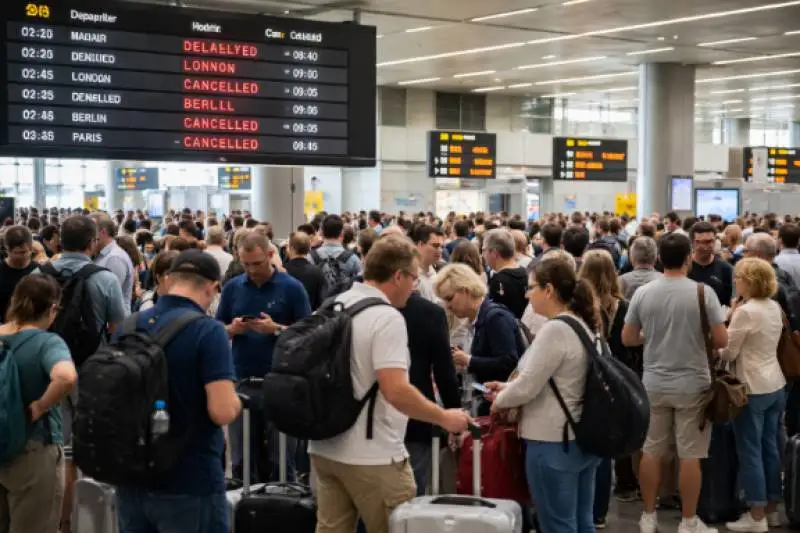
A Groundforce ground staff strike in Spain threatens Easter travel for 1.3 million passengers at 13 airports amid a dispute over pay freezes.
Key Takeaways
- •Disrupts Easter travel for up to 1.3 million passengers across 13 key Spanish airports.
- •Involves over 5,500 Groundforce staff protesting wage freezes linked to inflation since 2022.
- •Prompts Spain's Ministry of Transport to mandate minimum services to mitigate travel chaos.
- •Follows a pattern of European aviation labor disputes, similar to the January 2024 Iberia strike.
An indefinite strike by ground handling staff at 13 major Spanish airports began on March 30, 2026, threatening significant disruption for up to 1.3 million passengers during the peak Easter holiday travel period. More than 5,500 workers employed by Groundforce, a ground services company affiliated with Air Europa, have been called to strike by Spain's leading trade unions over a protracted pay dispute.
The industrial action impacts major tourist and business hubs, including Madrid, Barcelona, Palma de Mallorca, and Málaga. The core of the dispute centers on what unions describe as the company's refusal to apply inflation-linked wage increases stipulated in the collective bargaining agreement since 2022, leading to a loss of purchasing power for employees.
Strike Details and Demands
The strike was called jointly by the Comisiones Obreras (CCOO), Unión General de Trabajadores (UGT), and Unión Sindical Obrera (USO) unions. According to union filings, the dispute is rooted in the interpretation of Articles 94 and 96 of the sectoral collective agreement. The unions argue that Groundforce has blocked wage increases that should have been automatically triggered by accumulated inflation since 2022.
While the unions state that negotiation remains their preferred path, they have committed to the strike to enforce the agreed terms. The initial walkout began on Monday, March 30, with further specific strike windows planned for Wednesday, April 1, and Friday, April 3. These actions are scheduled for critical operational times: 5am to 7am, 11am to 5pm, and 10pm to midnight.
The airports affected by the walkout are: Barcelona El Prat (BCN), Madrid Barajas (MAD), Palma de Mallorca (PMI), Ibiza (IBZ), Gran Canaria (LPA), Fuerteventura (FUE), Lanzarote (ACE), Bilbao (BIO), Zaragoza (ZAZ), Alicante (ALC), Valencia (VLC), Seville (SVQ), and Málaga (AGP).
Impact on Easter Travel and Stakeholders
The timing of the strike is set to maximize pressure by targeting one of the busiest travel weeks of the year. The Spanish Ministry of Transport's resolution on minimum services estimates that up to 1.34 million travelers could be affected if the dispute continues through the holiday period. The primary impacts for passengers include significant delays in baggage handling, slower check-in and boarding processes, and potential flight cancellations.
For Air Europa and its parent company Globalia, the strike poses a direct and severe operational threat, likely leading to costly disruptions and passenger compensation claims. The Spanish airport operator, Aena, faces the challenge of managing terminal congestion and passenger communications across the 13 affected facilities. The disruption also presents a potential economic blow to Spain's tourism sector, particularly in the Balearic and Canary Islands, if flight cancellations deter holidaymakers.
Regulatory Response and Minimum Services
In response to the strike notice, Spain's Ministry of Transport and Sustainable Mobility (Ministerio de Transportes y Movilidad Sostenible) has enacted a mandatory minimum services order, or servicios mínimos. This legal provision, common in Spanish labor law for essential sectors, compels a certain percentage of staff to work to maintain a baseline level of operations. The requirements range from 30% to 100% of normal service, depending on the route's importance for national and international connectivity.
The goal of the mandate is to balance the workers' right to strike with the public's right to mobility, though significant delays are still expected. The current minimum services resolution is set to remain in effect until April 29, 2026.
Broader Industry Context
This dispute is part of a wider trend of aviation labor actions across Europe. Since 2022, high inflation has eroded real-term wages for many workers whose pay was frozen during the pandemic. Spanish inflation, which ran at 8.4% in 2022 and 3.5% in 2023, has been a key driver of negotiations. This situation mirrors a similar event in January 2024, when a four-day strike by Iberia's ground staff led to the cancellation of hundreds of flights affecting over 45,000 passengers before a resolution was found.
What Comes Next
The immediate future depends on negotiations between Groundforce and the unions. The next confirmed strike windows are set for April 1 and April 3, 2026. Without a breakthrough, disruptions are likely to continue. Passengers scheduled to travel through the affected airports are strongly advised to check the latest flight status directly with their airline and consult the official Aena airport operator website before heading to the airport.
Why This Matters
The Groundforce strike underscores the persistent tension between aviation companies seeking to control post-pandemic costs and a workforce grappling with significant inflation. For the wider industry, it serves as a reminder of how vulnerable airport operations are to labor disputes, especially in the highly integrated ground handling sector. The outcome will likely influence other collective bargaining negotiations across the European aviation landscape.
Access up-to-date commercial aviation news and airline industry developments via omniflights.com. Track policy changes, airspace rules, and global aviation governance in the Regulatory category at omniflights.com/regulatory.
Written by Hardik Vishwakarma
Co-Founder & Aviation News Editor leading initiatives that improve trust and visibility across the global aviation industry. Covers airlines, airports, safety, and emerging technology.
Visit ProfileYou Might Also Like
Discover more aviation news based on similar topics

IndiGo Opens Commercial Flights at Bhogapuram
IndiGo launched the first commercial flight to the new Rs 5,700 crore Bhogapuram Airport, shifting civilian traffic from the old civil enclave.

Sydney Airport Master Plan 2045 Approved
The Australian government approved Sydney Airport's Master Plan 2045, enabling terminal integration to handle 72.6 million passengers by 2045.

Visakhapatnam Airport Ends Commercial Flights for 30 Years
Visakhapatnam Airport ended scheduled commercial flights ahead of Bhogapuram's opening, triggering a 30-year moratorium on civil operations.
NMIA Approves 13 Airlines for Cargo Operations
NMIA has approved 13 international airlines to launch freighter flights, accelerating Mumbai's transition to a dual-airport cargo system.

Hong Kong Air Cargo Lands First Navi Mumbai Freighter
Hong Kong Air Cargo launched flights to Navi Mumbai, marking the airport's first international freighter service with 6 weekly movements.

ENAC Suspends Catania Flights Amid Mount Etna Eruption
ENAC suspended operations at Catania Airport due to a Mount Etna eruption, resulting in 700 flight cancellations and massive regional diversions.