GE Aerospace Raises 2026 Guidance Amid Fuel Shock

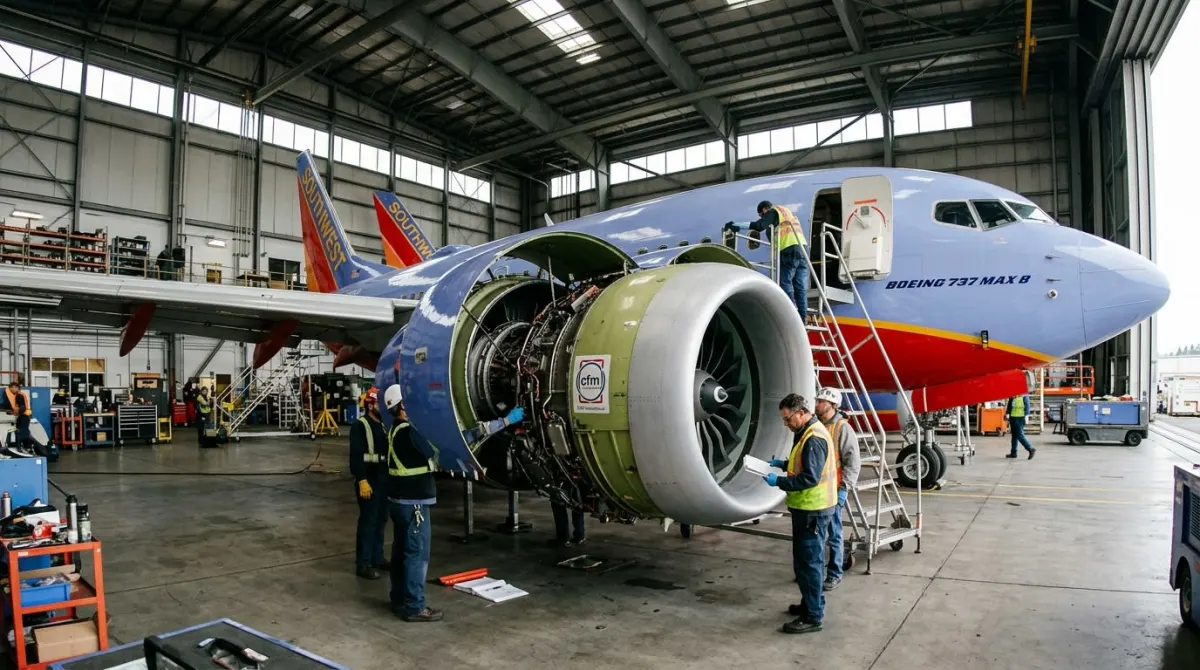
GE Aerospace raised its 2026 EPS guidance to up to $7.85 as a 72% jet fuel price spike forces airlines to keep repairing older engine fleets.
Key Takeaways
- •GE Aerospace raised its 2026 adjusted EPS guidance to between $7.65 and $7.85.
- •Jet fuel prices surged 72% to $4.32 per gallon following a mid-2026 crisis.
- •Commercial services backlog reached over $210 billion by mid-2026.
- •CFM International certified the LEAP-1B durability kit to double time-on-wing.
GE Aerospace upgraded its GE Aerospace 2026 earnings guidance on July 16, 2026, driven by persistent demand for engine repairs despite a major aviation fuel shock 2026 that has strained airline operating budgets. Persistent aircraft delivery backlogs from major airframe manufacturers are forcing operators to keep older, less fuel-efficient aircraft in service longer.
This operational reality has triggered an unprecedented surge in demand for Maintenance, Repair, and Overhaul (MRO) services. Airlines are prioritizing engine overhauls to maintain capacity, even as global jet fuel prices spiked 72% to an average of $4.32 per gallon in mid-2026 following the closure of the Strait of Hormuz.
Record Backlog and Guidance Upgrades
According to GE Aerospace's Q2 2026 earnings release, the company raised its full-year 2026 adjusted earnings per share (EPS) guidance to a range of $7.65 to $7.85, up from its previous projection of $7.10 to $7.40. The engine manufacturer also projected free cash flow to reach between $8.9 billion and $9.2 billion for the year. This financial upgrade reflects a 20% increase in commercial services revenue, supported by a commercial services backlog that reached over $210 billion by mid-2026. Additionally, total engine deliveries increased 31% in the first half of 2026, demonstrating improved throughput despite persistent supply chain bottlenecks.
GE Aerospace Chairman and CEO H. Lawrence Culp, Jr., noted that the company's overhaul shops remain "wildly oversubscribed" as airlines work to keep their existing fleets active. To address the durability demands of newer engines, GE Aerospace, through CFM International (CFM)—its joint venture with Safran Aircraft Engines—completed certification with the Federal Aviation Administration (FAA) and the European Union Aviation Safety Agency (EASA) for the LEAP-1B durability kit. This upgrade includes an improved High-Pressure Turbine (HPT) blade designed to double time-on-wing.
Divergent Pressures Across the Supply Chain
The current market dynamics present highly divergent impacts across the aviation value chain. For commercial airlines, the combination of delivery delays and the mid-2026 fuel shock represents a severe financial double-whammy, forcing them to incur high maintenance costs on older, fuel-thirsty jets. Independent MRO providers are experiencing near-capacity operations, with extended turnaround times as material inputs and priority supplier constraints limit repair velocity. Meanwhile, although Boeing and Airbus face criticism for their delivery backlogs, these delays are directly fueling the highly profitable aftermarket demand for GE Aerospace.
However, some financial analysts urge caution. According to RBC Capital Markets, while investors have welcomed the top-line revenue growth, fulfilling this massive backlog is compressing profit margins due to high priority supplier costs and persistent inflation.
Historical Precedent: 2008 vs. 2026
The current environment contrasts sharply with historical industry downturns. During the 2008 Global Financial Crisis fuel price spike, surging jet fuel costs led to massive airline capacity cuts and the rapid retirement of older, inefficient aircraft. In contrast, the 2026 fuel shock has not triggered a retirement wave because severe aircraft shortages leave airlines with no alternative but to retain and repair older planes, regardless of their fuel burn rates.
The Economics of Legacy Engine Overhauls
The ongoing demand for CFM56 overhauls highlights a structural shift in airline fleet management. Historically, high fuel prices accelerated fleet renewal cycles. However, the current convergence of supply chain constraints and engine durability issues has decoupled fuel prices from aircraft retirement rates. This development indicates that the aviation industry is entering an extended period of fleet stagnation, where MRO capacity—rather than fuel economics—will dictate airline capacity limits. As long as airframe OEMs struggle to meet delivery targets, the aftermarket services sector will remain the primary driver of aerospace manufacturing profitability, offsetting the cyclical volatility typically associated with fuel price shocks.
LEAP-1B Durability Kit Rollout Timeline
A key milestone for GE Aerospace is the full cutover of the LEAP-1B durability kit, which is expected by the beginning of 2027. This rollout, featuring the newly certified HPT blade, aims to alleviate some of the pressure on MRO shops by extending the operational window of newer Boeing 737 MAX fleets. Additionally, the company will monitor whether the Strait of Hormuz closure and the resulting $4.32 per gallon fuel price average persist into the second half of 2026, which could eventually force airlines to trim schedules if yields begin to soften.
The MRO Capacity Crunch
For the broader aviation industry, GE Aerospace's performance demonstrates that engine MRO has become the bottleneck of global airline capacity. As long as new aircraft deliveries remain stalled, the financial health of airlines will depend heavily on their ability to secure shop visits in oversubscribed facilities. This shift elevates engine manufacturers to a position of unprecedented influence over global airline schedules and route profitability.
Frequently Asked Questions
- Why did GE Aerospace raise its 2026 financial guidance?
- GE Aerospace upgraded its full-year 2026 adjusted EPS guidance to a range of $7.65 to $7.85 due to persistent, robust demand for engine repairs and replacement parts. Airline operators are keeping older jet fleets in service longer to cope with ongoing aircraft delivery backlogs.
- How did the 2026 aviation fuel shock affect airline fleet decisions?
- Despite a 72% spike in jet fuel prices to $4.32 per gallon following the Strait of Hormuz closure, airlines did not retire older aircraft. Severe delivery delays from Boeing and Airbus forced operators to retain and repair older, less fuel-efficient planes.
- What is the LEAP-1B durability kit?
- The LEAP-1B durability kit is an upgraded engine component package certified by the FAA and EASA. Developed by CFM International, it features an improved high-pressure turbine blade designed to double the engine's time-on-wing.
From airline operations to fleet updates, commercial aviation news lives at omniflights.com. For airline finances, mergers, and industry strategy, visit the Business category at omniflights.com/business.

Written by Shashank Shukla
Co-Founder & CTO leading the engineering and AI systems behind Omni Flights. Covers aviation technology, flight safety, aircraft manufacturing, and emerging aerospace developments.
Visit ProfileYou Might Also Like
Boeing Reports 161 Commercial Deliveries for Q3 2026

GE Aerospace Plans to Double India Supplier Spend by 2030

Boeing Tests MUM-T Software for MQ-25A and F/A-18 Teaming

COMAC C919 Faces Production Delays Amid US Export Curbs

Boeing Awarded $14.7B Contract for PAC-3 Missile Seekers