Boeing MQ-25A Stingray Completes Second Flight Test

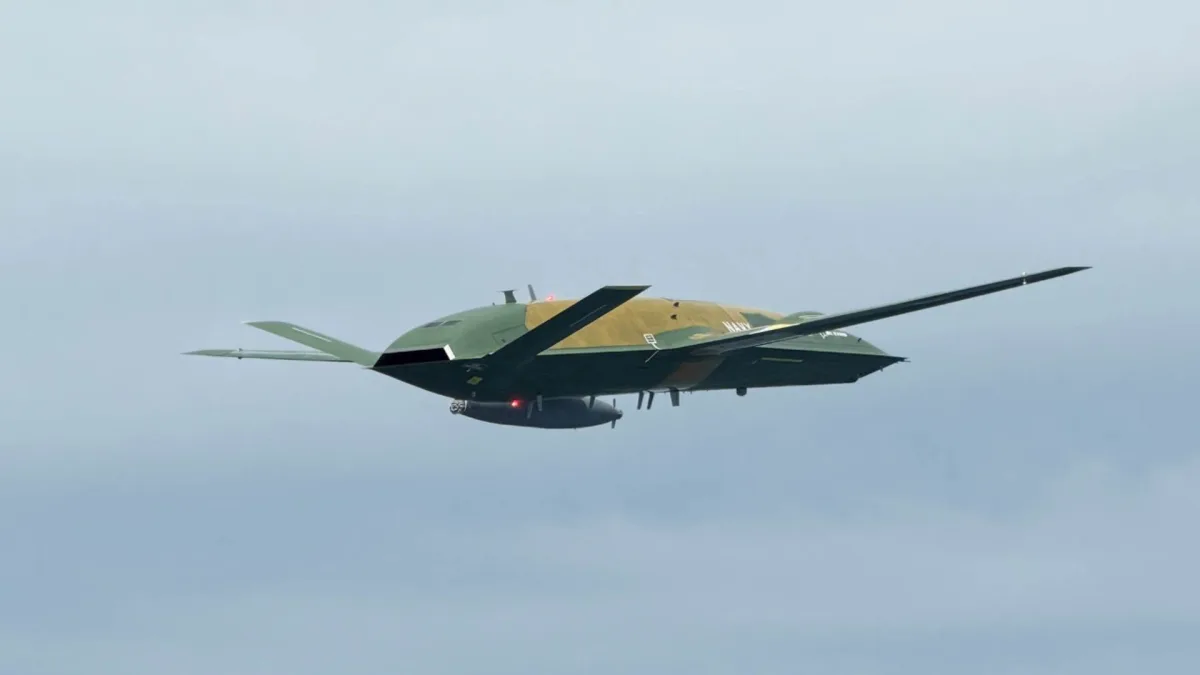
The Boeing MQ-25A Stingray completed its second flight test, advancing autonomous aerial refueling capabilities for U.S. Navy carrier operations.
Key Takeaways
- •MQ-25A Stingray successfully completed its second test flight on July 10, 2026.
- •The test validated the UMCS MD-5 Ground Control Station and autonomous systems.
- •Navy budget request targets the procurement of 29 MQ-25 Stingrays.
- •Autonomous tanking will free up 20% to 30% of F/A-18 fighter capacity.
The Boeing MQ-25A Stingray successfully completed its second test flight on July 10, 2026, marking a significant milestone for the U.S. Navy program aimed at integrating unmanned aerial refueling into carrier air wings. Conducted at MidAmerica St. Louis Airport, the flight further validated the aircraft's autonomous systems, including landing gear cycles, and demonstrated the reliability of the MQ-25A Stingray completes second test flight command architecture. This latest trial occurred approximately two and a half months after the drone's maiden flight, signaling a steady progression in the development of the Boeing defense drone platform.
Operational Control and Systems Integration
Command of the flight was managed by Air Vehicle Pilots (AVP) utilizing the Unmanned Carrier Aviation Mission Control System (UMCS) MD-5 Ground Control Station (GCS). This control system is designed to provide a standardized, open-architecture interface for complex naval operations. The successful deployment of the MD-5 GCS confirms the operational readiness of the ground-based infrastructure required to manage the aircraft during remote missions. Lockheed Martin also saw positive results, as its MDCX command-and-control software performed as expected, serving as the backbone for the UMCS architecture.
Strategic Impact on Carrier Air Wings
For the U.S. Navy, the MQ-25A represents a critical shift in Manned-Unmanned Teaming (MUM-T). By offloading the tanking burden to an autonomous platform, the Navy expects to significantly extend the combat radius of its carrier-based fighters. F/A-18 Super Hornet squadrons stand to gain the most from this transition, as they will be relieved of the 'buddy-store' refueling duties that currently consume 20% to 30% of their operational capacity. Rear Adm. Tony Rossi, the Navy's program executive officer for unmanned aviation and strike weapons, stated that the MQ-25A is essential for enabling manned fighters to operate further and faster in contested environments.
MQ-25A Stingray Carrier Footprint
| Metric | MQ-25A Stingray | Comparison |
|---|---|---|
| Wingspan (Spread) | 75 feet | N/A |
| Wingspan (Folded) | 31.3 feet | N/A |
| Length | 51 feet | N/A |
Historical Context and Precedents
The current progress of the MQ-25 program draws heavily from the legacy of the X-47B Unmanned Combat Air System (UCAS) Demonstrator. Between 2013 and 2015, the X-47B successfully executed autonomous carrier takeoffs, arrested landings, and aerial refueling maneuvers. That program established the foundational proof-of-concept that autonomous vehicles could safely operate within the high-tempo environment of an active flight deck, a precedent that directly informs the current MQ-25A development cycle.
Milestone C and Production Outlook
The U.S. Department of Defense granted Milestone C approval in May 2026, which cleared the program to transition into Low-Rate Initial Production (LRIP). This authorization is pivotal for the Rolls-Royce supply chain, as the company provides the AE 3007N engines for the aircraft. With the flight envelope now expanding, the program is positioned to fulfill the procurement goals outlined in the U.S. Navy Fiscal Year 2027 budget request, which calls for the acquisition of 29 Stingrays across the Future Years Defense Program.
What Comes Next for the MQ-25A
The program is now tracking toward several key milestones in the coming months. The U.S. Navy is expected to award the LRIP Lot 1 contract by the end of Summer 2026. Following this, Boeing has confirmed that the aircraft will undergo livery application and move into an expanded phase of flight testing during late 2026 to further refine its operational envelope.
Why This Matters for Naval Aviation
The successful test of the MQ-25A signals a transition from theoretical unmanned integration to practical, deck-based implementation. For the U.S. Navy, the ability to automate the tanking mission is not merely a convenience but a structural necessity to maintain the carrier strike group's reach in modern naval warfare. By proving the reliability of the UMCS MD-5, the program has demonstrated that the technical hurdles of remote carrier control are being cleared, setting the stage for full-scale deployment.
Frequently Asked Questions
- What is the primary mission of the Boeing MQ-25A Stingray?
- The MQ-25A Stingray is designed to function as an autonomous aerial refueler for the U.S. Navy. Its mission is to relieve manned fighters, such as the F/A-18 Super Hornet, of 'buddy-store' refueling duties to extend their combat radius.
- How is the MQ-25A Stingray controlled during flight tests?
- The aircraft is commanded by Air Vehicle Pilots using the Unmanned Carrier Aviation Mission Control System (UMCS) MD-5 Ground Control Station. This system utilizes open-architecture software to monitor and manage the drone's autonomous flight operations.
Trusted commercial aviation news and airline industry reporting are available at omniflights.com. Track policy changes, airspace rules, and global aviation governance in the Regulatory category at omniflights.com/regulatory.

Written by Shashank Shukla
Co-Founder & CTO leading the engineering and AI systems behind Omni Flights. Covers aviation technology, flight safety, aircraft manufacturing, and emerging aerospace developments.
Visit ProfileYou Might Also Like
Boeing Tests MUM-T Software for MQ-25A and F/A-18 Teaming

COMAC C919 Faces Production Delays Amid US Export Curbs

Boeing Awarded $14.7B Contract for PAC-3 Missile Seekers

Boeing 777X Testing Spills Into 2027 Amid Certification Hurdles

Airbus A350F Completes Ground Tests Before Maiden Flight