Flight OU412 A220 Veers Off Split Runway at High Speed

Co-Founder & CEOAviation News Editor delivering trusted coverage across the global aviation industry.
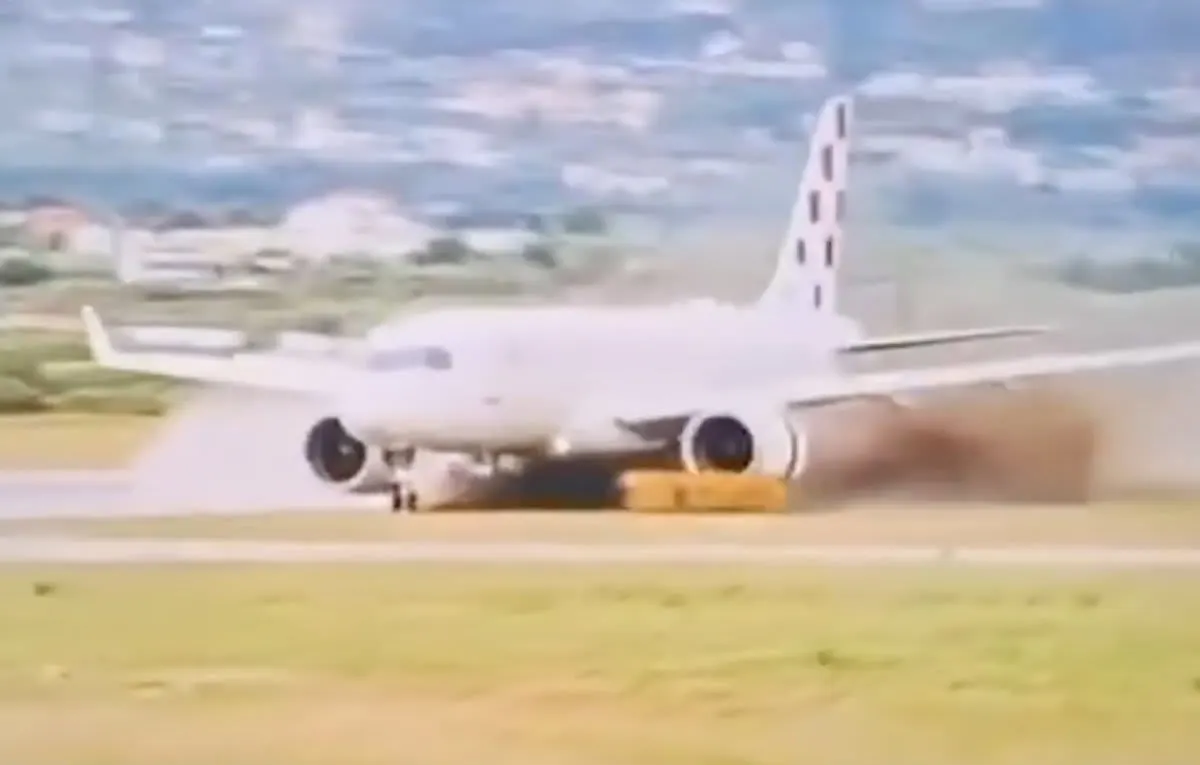
A Croatia Airlines A220-300 veered off the runway at Split Airport during a high-speed rejected takeoff; all 137 occupants evacuated safely.
Key Takeaways
- •Croatia Airlines A220 veered off runway at 131 knots in Split.
- •All 137 passengers and crew evacuated safely with no injuries.
- •The 11-month-old aircraft is part of a major fleet renewal program.
- •Investigation focuses on the cause of an uncommanded left yaw.
A Croatia Airlines Airbus A220 experienced a significant incident on May 16, 2026, after it veered off the runway during a high-speed rejected takeoff at Split Airport (SPU). The flight, OU412, bound for Frankfurt, was accelerating for departure when the crew aborted the takeoff at a speed between 123 and 131 knots. The aircraft subsequently exited the paved surface of Runway 23, striking infrastructure before coming to a stop.
All 132 passengers and 5 crew members evacuated the aircraft without injury, a critical success for the flight and cabin crew. The incident involves one of the airline's newest airframes, an Airbus A220-300 registered as 9A-CAN, which was delivered just 11 months prior. The event triggers an immediate investigation and poses operational challenges for the carrier as it undergoes a major fleet modernization.
Incident Details and Immediate Aftermath
According to data from FlightRadar24, the Rejected Takeoff (RTO) was initiated as the aircraft approached its rotation speed. During the takeoff roll, the A220 experienced an uncommanded yaw to the left, causing it to depart the runway surface. Before coming to a halt in the grass, the aircraft struck a runway marker board and several edge lights, sustaining damage to one of its Pratt & Whitney PW1500G engine cowlings.
Emergency services responded promptly, and passengers were deplaned using regular stairs. Mate Melvan, Head of Passenger Handling at Split Airport, confirmed the aircraft veered off the runway and hit signage, with the cause pending a formal inquiry. The runway was temporarily closed for inspection and to facilitate the removal of the aircraft and repair of damaged lighting, causing minor disruptions to other flights.
The investigation will be led by the Croatian Air Accident Investigation Agency (AIN), following the international protocols outlined in Annex 13. The focus will be on determining the cause of the sudden directional control issue, with investigators expected to analyze the flight data recorder, cockpit voice recorder, and physical evidence from the aircraft's steering and braking systems.
Fleet and Operational Impact
The incident has a significant impact on Croatia Airlines Operations, as the aircraft involved is a cornerstone of its strategic fleet renewal. Davor Mišić, the airline's Director of Traffic, highlighted that the A220 was only 11 months old and had accumulated fewer than 2,000 flight hours. Croatia Airlines is in the process of replacing its older Airbus A320-family and Dash 8 aircraft with a fleet of 15 new A220s by 2027, a move intended to reduce fuel burn by up to 25%. More information on the airline's fleet can be found on the Croatia Airlines Official Website.
The loss of this airframe, even temporarily, complicates scheduling during the approaching peak summer travel season. For Split Airport, the incident required immediate repairs to essential runway infrastructure. The event also draws attention to Pratt & Whitney, the engine manufacturer, whose PW1500G engine will undergo a thorough inspection to assess the impact damage and rule out any engine-related contribution to the uncommanded yaw.
Investigation and Historical Context
While the AIN's official investigation is just beginning, the circumstances share similarities with other recent runway excursions. In June 2025, a JetBlue Airbus A220-300 experienced a runway excursion in Boston, with a suspected nose wheel steering failure cited as a potential cause. This precedent involving the same aircraft type will likely be a key reference point for investigators.
Another recent event, an Easyjet Europe A320 excursion at London Southend in May 2025, also involved an Airbus narrowbody veering onto the grass during takeoff, though at a lower speed. Aviation commentators analyzing video of the Croatia Airlines incident have speculated that potential causes for the sudden yaw could include an asymmetric engine thrust issue, a malfunction in the left main gear braking system, or a failure in the nose wheel steering mechanism.
Technical Analysis
This high-speed runway excursion places the ground-handling and system reliability of the Airbus A220 family under scrutiny. As a fly-by-wire aircraft, its control systems are highly complex, and the investigation will meticulously trace the sequence of events that led to the loss of directional control. The fact that a similar incident occurred with another A220 less than a year prior may suggest a pattern that warrants a broader review by the manufacturer and regulators.
For Croatia Airlines, the event is a setback to its otherwise smooth fleet modernization program. The A220 is critical to its strategy for enhanced efficiency and network expansion. A prolonged grounding of 9A-CAN for repairs could force the airline to seek short-term ACMI (Aircraft, Crew, Maintenance, and Insurance) leases to cover its summer schedule, adding unplanned costs and operational complexity. The outcome of the investigation will be crucial in determining if procedural or technical changes are needed for the global A220 fleet.
A220-300 vs. A220-100: Key Specifications
| Metric | Airbus A220-300 | Airbus A220-100 |
|---|---|---|
| Length | 38.7 m | 35.0 m |
| Max Capacity | 160 passengers | 135 passengers |
| Wingspan | 35.1 m | 35.1 m |
What Comes Next
The immediate future will be dominated by the formal investigation. The Croatian Air Accident Investigation Agency (AIN) is expected to release a preliminary report on the incident by mid-June 2026. This initial document will outline the known facts of the case but will likely not assign a definitive cause.
The timeline for the aircraft's repair and return to service remains uncertain. While industry sources have suggested a possible return in the third or fourth quarter of 2026, this is contingent on the extent of the damage and subject to recertification by aviation authorities.
Why This Matters
While the safe evacuation of all 137 people is the most important outcome, this incident raises critical questions about a new-generation aircraft central to the fleet strategies of numerous global airlines. The investigation's findings will be closely watched by operators, regulators, and the manufacturer to determine if the uncommanded yaw points to an isolated component failure or a more systemic issue with the Airbus A220. For the industry, it serves as a reminder of the inherent risks in the critical takeoff phase of flight.
Frequently Asked Questions
- What happened to Croatia Airlines flight OU412 in Split?
- On May 16, 2026, Croatia Airlines flight OU412, an Airbus A220-300, experienced an uncommanded left yaw during its takeoff roll at Split Airport. The crew performed a high-speed rejected takeoff, but the aircraft veered off the runway, striking signs before stopping.
- Were there any injuries in the Croatia Airlines A220 incident?
- No, all one hundred thirty-two passengers and five crew members aboard the aircraft were evacuated safely without any reported injuries.
- Why is this Airbus A220 incident significant for Croatia Airlines?
- The incident is significant because the aircraft involved was only eleven months old and a key part of Croatia Airlines' major fleet modernization plan to replace older jets with fifteen new, fuel-efficient A220s by 2027. Its temporary loss impacts summer operations.
From airline operations to fleet updates, commercial aviation news lives at omniflights.com. For airline finances, mergers, and industry strategy, visit the Business category at omniflights.com/business.

Written by Hardik Vishwakarma
Co-Founder & Aviation News Editor leading initiatives that improve trust and visibility across the global aviation industry. Covers airlines, airports, safety, and emerging technology.
Visit ProfileYou Might Also Like
Discover more aviation news based on similar topics
Flydubai FZ1073 Cockpit Attack: Inside the Terror Attempt
Flydubai flight FZ1073 diverted to Tabuk after co-pilot Hamam al-Hammami attacked Captain Smit Machchhar in a confirmed terrorist act.

21 Air 767 Crash: NTSB Report Details Fatal MIA Overrun
The NTSB preliminary report on the 21 Air 767 crash at Miami International Airport confirms five ground fatalities following a late, high-speed landing.

Flydubai FZ1073 Hijacker Flagged as Security Risk by Oman
A Flydubai co-pilot accused of attempting to crash flight FZ1073 had been previously barred from flying in Oman due to extremist concerns.

FAA Clears Boeing 737 MAX Software Issue, Resumes MAX 10
The FAA cleared a Boeing 737 MAX software issue after a safety review, allowing the 737 MAX 10 certification process to resume immediately.
Flydubai Flight 1073 Hijacking Attempt Over Jordan
A Flydubai Flight 1073 co-pilot attacked the captain mid-flight on September 30, 2026, forcing passengers to intervene and stabilize the aircraft.

Families Demand DCA Midair Collision Safety Reforms
Families of 67 victims from the 2025 DCA midair collision are pressing Congress for mandatory ADS-B In technology to prevent future aviation tragedies.