FAA Suspends Visual Separation for Helicopters After Fatal DCA Collision

Co-Founder & CEOAviation News Editor delivering trusted coverage across the global aviation industry.
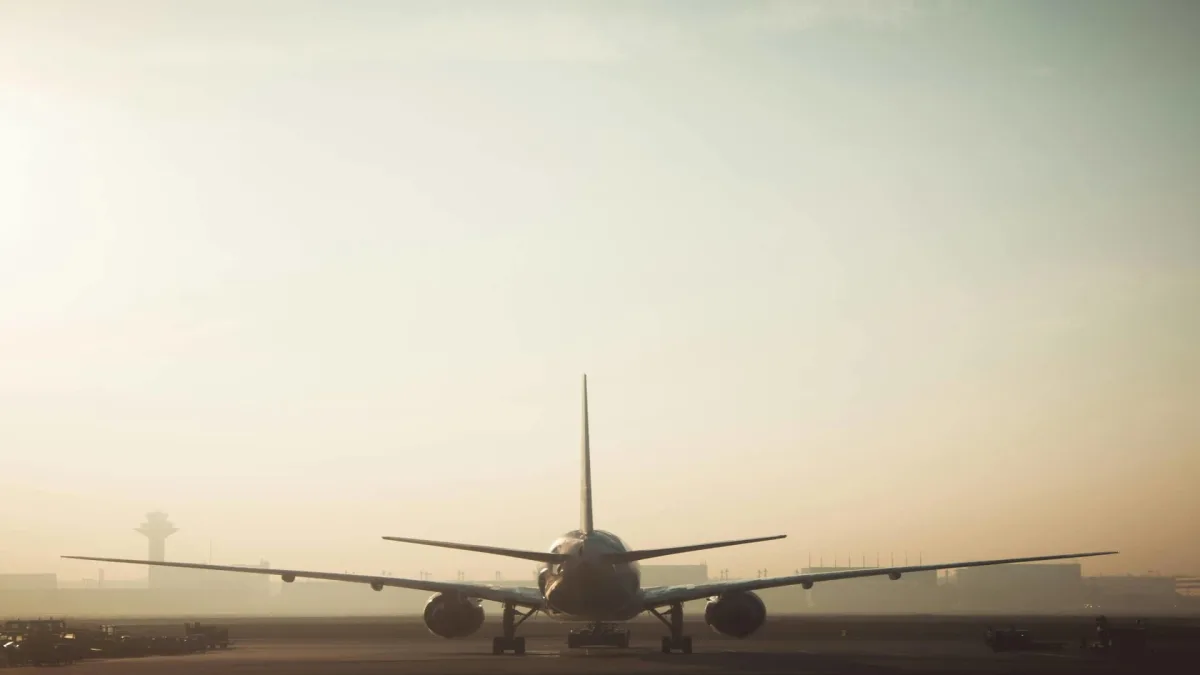
The FAA has suspended visual separation rules for helicopters and airplanes near major airports following a fatal 2025 midair collision near Washington, D.C.
Key Takeaways
- •Suspends visual separation between helicopters and airplanes in busy airspace.
- •Follows a fatal 2025 midair collision near DCA that killed 67 people.
- •Impacts over 150 airports, increasing workload for air traffic controllers.
- •Mandates radar separation under a temporary order set to expire December 24, 2026.
The Federal Aviation Administration (FAA) has suspended the use of visual separation between helicopters and airplanes in the nation's most congested airspace. This regulatory change, effective March 18, 2026, is a direct response to the fatal January 2025 midair collision over the Potomac River that claimed 67 lives.
The new rule mandates that air traffic controllers use radar to separate helicopters and fixed-wing aircraft in Class B, Class C, and Terminal Radar Service Areas (TRSAs). This shift from the long-standing "see and avoid" principle is expected to significantly enhance safety but will also increase controller workload and could introduce routing adjustments for helicopter operators. According to the FAA General Notice, the directive impacts operations at more than 150 of the busiest airports in the United States.
Background of the Regulatory Action
The FAA's decision follows an investigation by the National Transportation Safety Board (NTSB) into the January 29, 2025, collision near Ronald Reagan Washington National Airport (DCA). The incident involved a PSA Airlines Canadair Regional Jet 700 (CRJ700), operating as a regional partner for American Airlines, and a U.S. Army Utility Helicopter 60L (UH-60L) Black Hawk. The NTSB accident investigation report confirmed 67 fatalities in the crash.
In response, the FAA issued a General Notice (GENOT) to immediately amend its primary air traffic control directive, FAA Order 7110.65, specifically paragraph 7-2-1 concerning visual separation. FAA Administrator Bryan Bedford stated, "We identified an overreliance on pilot 'see and avoid' operations that contribute to safety events involving helicopters and airplanes." U.S. Transportation Secretary Sean P. Duffy added, "The tragedy over the Potomac one year ago revealed a startling truth: years of warning signs were missed, and the FAA needed dire reform."
Industry Impact
The directive has significant implications for several stakeholder groups. For helicopter operators, including those conducting medical, law enforcement, and corporate flights, the mandate will require routing adjustments and potential delays in busy airspace as they await positive radar separation instead of receiving immediate visual transit approvals.
Air traffic controllers in Terminal Radar Approach Control (TRACON) facilities and airport towers face an increased workload and liability. They can no longer delegate separation responsibility to pilots and must now actively vector all mixed traffic. For commercial airlines, the change brings enhanced safety on critical approach and departure paths, though urgent helicopter priority clearances for missions like medevac flights could occasionally disrupt established arrival and departure flows.
Historical Precedents
This is not the first time a midair collision has prompted a fundamental redesign of U.S. airspace management. In 1986, the collision between an Aeroméxico DC-9 and a private Piper Archer over Cerritos, California, led to the creation of Terminal Control Areas (now Class B airspace) and mandated Mode C transponders for aircraft operating within them. Similarly, in 2009, a collision between a Piper Saratoga and a tour helicopter over the Hudson River resulted in the NTSB recommending, and the FAA implementing, stricter procedures and a redesigned VFR corridor. Both events, like the 2025 DCA crash, revealed vulnerabilities in relying on "see and avoid" in high-density, mixed-use airspace.
Technical Analysis
The FAA's suspension of visual separation marks an acceleration of a broader trend to eliminate "see and avoid" procedures in congested terminal areas. Following the 2025 crash, the agency had already begun restricting helicopter traffic and mixed-use visual corridors around major hubs like DCA, Baltimore, and Las Vegas. The current nationwide directive codifies this approach, reflecting a systemic shift toward positive air traffic control. The FAA's use of innovative AI tools to analyze cross-traffic data and identify high-risk areas nationwide represents a modern, data-driven approach to this long-standing safety challenge. This event follows the historical pattern seen after the Cerritos and Hudson River collisions, where catastrophic failures in existing separation methods forced regulators to impose more rigid, technology-based solutions. The current action suggests the FAA now views the risk of mixed helicopter and airplane operations under visual rules as unacceptably high in its busiest airspace.
What Comes Next
According to the FAA, the current General Notice amending visual separation rules is a temporary measure set to cancel on December 24, 2026. By that date, the agency is expected to either make the change permanent by formally codifying it into FAA Order 7110.65 or issue a revised procedure. Separately, the U.S. Congress is expected to consider a potential mandate for ADS-B In systems on a wider range of aircraft in late 2026. Such a system would provide pilots with a cockpit display of surrounding traffic, enhancing situational awareness and supplementing ATC-provided radar separation.
Why This Matters
This regulatory shift represents a significant change in the philosophy of air traffic management around major U.S. airports. It prioritizes guaranteed, positive radar separation over the operational flexibility previously afforded by visual procedures. For the aviation industry, it signals a reduced tolerance for risk in complex airspace and places a greater burden of separation assurance on air traffic control, fundamentally altering the dynamic between pilots and controllers in terminal environments.
Visit omniflights.com for the latest commercial aviation news and airline industry updates. For detailed airline coverage, route changes, and fleet moves, explore the Airlines section at omniflights.com/airlines.
Written by Hardik Vishwakarma
Co-Founder & Aviation News Editor leading initiatives that improve trust and visibility across the global aviation industry. Covers airlines, airports, safety, and emerging technology.
Visit ProfileYou Might Also Like
Discover more aviation news based on similar topics
FAA Pauses Flights into LAX Due to Staffing Shortages
The FAA issued a temporary ground stop for flights bound for LAX on Monday morning due to staffing shortages at the Southern California TRACON.
FAA Proposes Ending Overland Supersonic Flight Ban
The FAA has proposed a new performance-based noise standard to replace the 1973 ban on overland supersonic flight, enabling future commercial travel.

DOT Rule Exempts Airlines From Cyberattack Delay Costs
Starting October 19, 2026, the DOT will allow airlines to withhold meal and hotel vouchers for delays caused by cyberattacks and nine other events.

Wizz Air, Ryanair Demand NATS Reform After ATC Failure
Wizz Air and Ryanair are calling for urgent NATS reform after a September 8 system failure caused over 1,000 flight cancellations across the UK.

US Treasury Iran Sanctions Target 27 Airlines, Mahan Air
The U.S. Treasury sanctioned 36 entities, including 27 Iranian airlines, to disrupt illicit procurement networks used by the Iranian government.

FAA Awards $481M in Airport Infrastructure Grants
The FAA announced $481 million in infrastructure grants across 191 U.S. airports to improve runways, terminals, and overall capacity.