FAA Probes United 737 Near-Miss With Black Hawk at John Wayne Airport

Co-Founder & CEOAviation News Editor delivering trusted coverage across the global aviation industry.
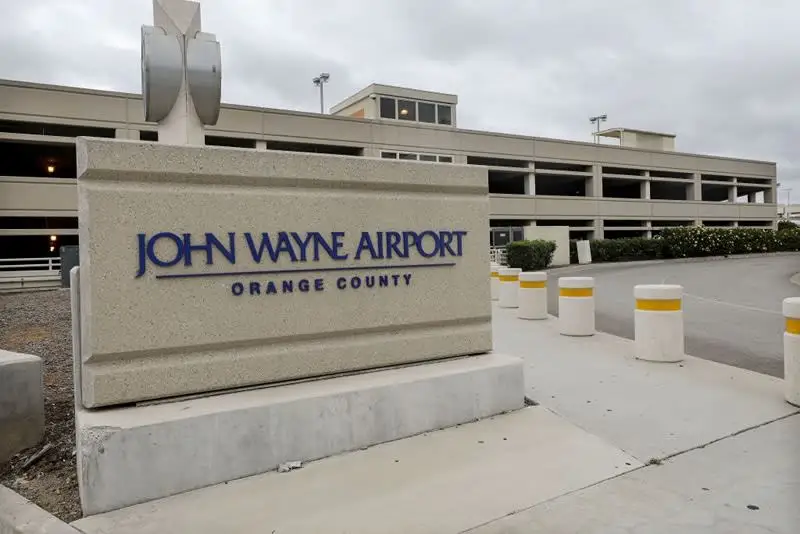
The FAA is investigating a near-miss between a United 737 and a military helicopter at SNA after the aircraft came within 525 vertical feet.
Key Takeaways
- •Investigates a United 737 and Black Hawk near-miss with 525-foot vertical separation at John Wayne Airport.
- •Tests a new FAA mandate suspending visual separation, which was enacted after a fatal 2025 crash resulted in 67 fatalities.
- •Highlights increased air traffic control workload and potential operational delays for helicopter operators under the new rules.
- •FAA investigation into the incident is expected to be completed in late 2026.
The Federal Aviation Administration (FAA) has launched an investigation into a near-miss incident at John Wayne Airport (SNA) involving a United Airlines flight and a U.S. Army National Guard helicopter. The event, which occurred on the evening of March 24, 2026, saw the two aircraft come within 525 feet vertically and 1,422 feet laterally of each other, triggering a cockpit alert aboard the airliner.
The incident is a critical test of a new FAA safety mandate implemented just days prior. On March 18, 2026, the agency suspended the use of visual separation procedures between airplanes and helicopters in congested airspace, requiring controllers to use stricter radar-based separation standards.
Incident Details
United Airlines Flight 589, a Boeing 737-800 carrying 162 passengers and 6 crew members, was on final approach to SNA when its Traffic Collision Avoidance System issued a Resolution Advisory (TCAS RA). This automated alert instructed the flight crew to level off to avoid a potential collision with a UH-60 Black Hawk helicopter operating under Visual Flight Rules (VFR). The Black Hawk had crossed the airliner's flight path during its landing sequence.
According to Flightradar24 ADS-B data, the aircraft were separated by just 0.27 miles laterally at their closest point. Air traffic control audio from the event captured a controller acknowledging the severity of the separation loss, stating, "We're going to be addressing that, because that was not good." The FAA investigation will focus on whether air traffic controllers correctly applied the new radar separation mandate during the incident.
New Regulatory Framework Under Scrutiny
The near-miss at John Wayne Airport puts a spotlight on the FAA's recent overhaul of airspace rules for mixed traffic. The suspension of visual separation in Class B, Class C, and Terminal Radar Service Area (TRSA) airspace affects over 150 of the busiest airports in the United States. This regulatory change was not made in a vacuum; it was a direct response to a fatal accident.
In January 2025, an American Airlines regional jet and a U.S. Army Black Hawk helicopter collided over the Potomac River, resulting in 67 fatalities. The National Transportation Safety Board (NTSB) investigation into that crash was the catalyst for the FAA's nationwide safety review and subsequent mandate to enforce radar separation. FAA Administrator Bryan Bedford recently stated the agency is "proactively mitigating risks before they affect the traveling public," a comment that underscores the intent behind the new rule being tested by the SNA incident.
Industry Impact and Mixed Reactions
The shift away from "see-and-avoid" principles places a significant new burden on air traffic controllers. They are now required to actively manage lateral and vertical radar separation for all mixed traffic in designated airspace, increasing workload and removing the option to rely on pilot visual confirmation. This change is intended to create a more robust safety buffer in complex terminal environments.
However, the new rules have raised concerns among some stakeholders. Helicopter operators, including medical, law enforcement, and military units, may face operational challenges. According to Vertical Aviation International (VAI), a blanket suspension of visual separation could lead to routing adjustments, delays, and reduced flexibility for rotorcraft, which often require more dynamic flight paths than fixed-wing aircraft. The FAA's investigation will likely consider these operational impacts alongside the safety benefits.
What Comes Next
The FAA's formal investigation into the SNA near-miss is expected to conclude in late 2026. The final report will determine the causal factors, including whether controller actions, pilot responses, or procedural gaps contributed to the loss of separation. The findings will be crucial in validating or refining the new radar separation mandate and will inform future air traffic control training and protocols for managing mixed traffic in the nation's busiest airspace.
Why This Matters
This incident is more than a single close call; it is a real-world stress test of the FAA's response to a recent fatal accident. The outcome of the investigation will have wide-ranging implications, affirming the agency's move toward stricter, system-managed separation or forcing a reassessment of how to safely integrate helicopter and airline traffic. For the aviation industry, it represents a critical data point in the ongoing effort to balance operational efficiency with the highest levels of safety.
Access up-to-date commercial aviation news and airline industry developments via omniflights.com. Discover how innovation is shaping aviation through aircraft systems, avionics, and digital tools at omniflights.com/technology.
Written by Hardik Vishwakarma
Co-Founder & Aviation News Editor leading initiatives that improve trust and visibility across the global aviation industry. Covers airlines, airports, safety, and emerging technology.
Visit ProfileYou Might Also Like
Discover more aviation news based on similar topics

Families Demand DCA Midair Collision Safety Reforms
Families of 67 victims from the 2025 DCA midair collision are pressing Congress for mandatory ADS-B In technology to prevent future aviation tragedies.
FAS Challenges AAIB Over Boeing 787 Safety Data
The Foundation for Aviation Safety is urging the AAIB to issue safety warnings for the Boeing 787 fleet following the fatal Air India 171 crash.
NTSB Safety Recommendations Lag Amid 6 Monthly Near-Misses
Approximately 6 near-miss incidents occur monthly at U.S. airports as 270 NTSB safety recommendations remain unaddressed by federal regulators.
NTSB Rejects FAA Safety Responses After 67-Fatality Crash
The NTSB labeled 11 FAA responses to 2025 DCA mid-air collision recommendations as unacceptable, citing the lack of a mandatory ADS-B In requirement.
EASA Orders Urgent Airbus A380 Wing Spar Inspections
The EASA ordered urgent inspections on 16 Airbus A380s after discovering wing spar cracks that could compromise structural integrity.
Ryanair Flight RK514 Diverts to Birmingham After Emergency
Ryanair flight RK514 diverted to Birmingham Airport on September 13, 2026, following a medical emergency involving a passenger.