FAA Mandates Urgent 5-Day Inspections for 156 Boeing 757s

Co-Founder & CEOAviation News Editor delivering trusted coverage across the global aviation industry.

The FAA has mandated inspections of 156 Boeing 757s within five days due to newly found frame cracks, signaling a significant and immediate safety risk.
Key Takeaways
- •Requires urgent 5-day inspections for 156 U.S.-registered Boeing 757s.
- •Targets potential frame cracks near scimitar blended winglet modifications.
- •Triggered by four new crack findings, shortening the compliance from 30 days.
- •Creates immediate operational challenges for major carriers like Delta and United.
The Federal Aviation Administration (FAA) has issued an urgent Airworthiness Directive (AD) requiring inspections on 156 U.S.-registered Boeing 757 aircraft within five days of the directive's issuance. The order, AD 2026-04-06, addresses concerns over potential frame cracks near the wings, a development that signals a significant and immediate safety concern for the aging fleet.
The accelerated timeline creates immediate operational challenges for major U.S. carriers that still rely on the versatile narrowbody, including Delta Air Lines and United Airlines. The directive specifically targets Boeing 757-200 and -300 series aircraft modified with scimitar blended winglets under a Supplemental Type Certificate (STC) held by Aviation Partners Boeing. Operators must conduct detailed visual and specialized High Frequency Eddy Current (HFEC) inspections to detect cracks in the inspar outer lower wing skin area.
Regulatory Urgency and Technical Details
The FAA's decision to enforce a five-day compliance window underscores the severity of the potential safety issue. This timeline is a significant reduction from a 30-day window originally suggested by Aviation Partners Boeing. According to FAA AD 2026-04-06, the urgency was prompted by the discovery of four additional crack findings in February 2026, which indicated a potentially widespread issue that could compromise the structural integrity of the wing if left unaddressed. The cracks were located near access panel 543BB, a critical load-bearing section of the wing structure.
The directive mandates a one-time external detailed inspection and an HFEC inspection of the lower wing skin panel. High Frequency Eddy Current is a non-destructive testing method used to detect very small surface-level cracks that might not be visible to the naked eye. If cracks are found, the AD requires operators to contact Boeing for approved repair instructions before the aircraft can be returned to service.
This action is part of a broader regulatory focus on structural fatigue in older aircraft. Existing FAA regulations, specifically Sections 121.368 and 129.33, already require mandatory structural records reviews and airplane inspections after an aircraft has been in service for 14 years.
Impact on Airlines and MROs
The immediate impact falls on U.S. airlines operating the affected 156 Boeing 757s. The five-day window will likely cause operational disruptions, including potential flight cancellations and schedule adjustments, as aircraft are pulled from service for inspection. For carriers like Delta and United, the 757 remains a key asset for transatlantic routes and high-demand domestic flights where its range and capacity are valuable.
For Aviation Partners Boeing (APB), the developer of the scimitar blended winglets, the AD brings increased regulatory scrutiny. The winglets, while improving fuel efficiency, alter the aerodynamic loads on the wing structure, and the cracking is localized to the area of this modification. The directive places APB's STC at the center of the safety investigation.
Maintenance, Repair, and Overhaul (MRO) providers will experience a sudden surge in demand for specialized HFEC inspection services. The short compliance timeline will pressure MRO facilities with the necessary equipment and certified technicians to accommodate the unscheduled work on short notice.
Historical Precedents for Urgent ADs
The FAA's decisive action is consistent with historical precedents involving structural fatigue in aging Boeing aircraft. In September 2019, the discovery of cracks in the "pickle fork" assembly of Boeing 737 NG aircraft led to an urgent AD that grounded dozens of aircraft globally. That event, focused on a critical component connecting the wing to the fuselage, demonstrated how localized fatigue issues can trigger rapid, fleet-wide regulatory mandates.
Similarly, in May 2000, the FAA ordered emergency inspections on 120 Boeing 767s after damaged bolts were found in a single aircraft's engine pylon. Both historical cases show a pattern where a small number of critical structural findings on older airframes prompt the FAA to adopt a highly conservative approach, prioritizing safety through immediate and widespread inspections.
The Broader Context of an Aging Fleet
The Boeing 757, first introduced in 1983, is an aging workhorse. Airlines are increasingly retiring their 757 fleets in favor of more fuel-efficient, modern narrowbodies. The rising maintenance costs associated with 20-plus-year-old airframes, compounded by issues like the one identified in this AD, accelerate the economic argument for replacement. The Airbus A321neo and particularly the A321XLR are seen as the primary successors to the 757's unique mission capabilities.
Boeing 757-200 vs. Airbus A321XLR
| Metric | Boeing 757-200 | Airbus A321XLR |
|---|---|---|
| Range | 3,900 nm | 4,700 nm |
| Max Capacity | 239 seats | 244 seats |
| Introduction | 1983 | 2024 |
Technical Analysis
This Airworthiness Directive highlights the persistent challenge of managing structural fatigue in aging aircraft, particularly those that have undergone significant modifications like winglet installations. The FAA's rapid escalation from a proposed 30-day timeline to a mandatory 5-day inspection window follows the pattern established during the 737 NG pickle fork crisis, indicating a low regulatory tolerance for potential systemic structural failures. The data suggests that as fleets like the 757 age well beyond their original design service objectives, the frequency of such urgent ADs is likely to increase. This event reinforces the economic pressure on operators to accelerate fleet renewal cycles, moving away from older models with rising and increasingly unpredictable maintenance burdens toward newer-generation aircraft with lower operational costs and longer inspection intervals.
What Comes Next
According to the Federal Aviation Administration, the deadline for completing the initial visual and HFEC inspections is March 3, 2026, five days after the AD was officially issued. Any aircraft found with cracks must be repaired using an FAA-approved method before it can fly again. The results of this initial fleet-wide inspection will determine if further regulatory action, such as repetitive inspections or mandated structural modifications, will be required.
Why This Matters
This urgent directive underscores the rigorous safety oversight applied to aging aircraft fleets and demonstrates the FAA's willingness to mandate disruptive inspections when new data reveals a potential risk. For airlines, it represents a significant, albeit temporary, operational hurdle that highlights the escalating maintenance costs of operating older airframes. The event serves as a stark reminder of the lifecycle of commercial aircraft and the complex interplay between structural modifications, material fatigue, and regulatory oversight.
For in-depth airline coverage and commercial aviation news, omniflights.com delivers timely industry insights. From aircraft production to supply chains, commercial aviation manufacturing news is covered at omniflights.com/manufacturing.
Written by Hardik Vishwakarma
Co-Founder & Aviation News Editor leading initiatives that improve trust and visibility across the global aviation industry. Covers airlines, airports, safety, and emerging technology.
Visit ProfileYou Might Also Like
Discover more aviation news based on similar topics

Families Demand DCA Midair Collision Safety Reforms
Families of 67 victims from the 2025 DCA midair collision are pressing Congress for mandatory ADS-B In technology to prevent future aviation tragedies.

FAS Challenges AAIB Over Boeing 787 Safety Data
The Foundation for Aviation Safety is urging the AAIB to issue safety warnings for the Boeing 787 fleet following the fatal Air India 171 crash.
NTSB Safety Recommendations Lag Amid 6 Monthly Near-Misses
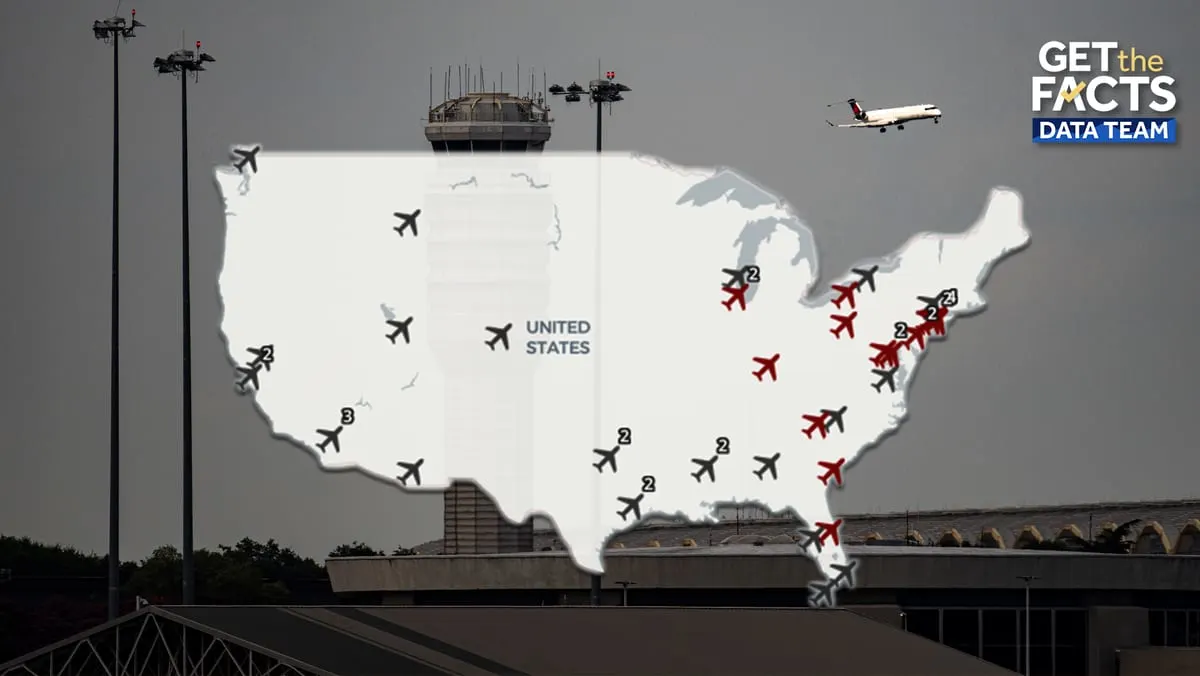
Approximately 6 near-miss incidents occur monthly at U.S. airports as 270 NTSB safety recommendations remain unaddressed by federal regulators.
NTSB Rejects FAA Safety Responses After 67-Fatality Crash
The NTSB labeled 11 FAA responses to 2025 DCA mid-air collision recommendations as unacceptable, citing the lack of a mandatory ADS-B In requirement.
EASA Orders Urgent Airbus A380 Wing Spar Inspections
The EASA ordered urgent inspections on 16 Airbus A380s after discovering wing spar cracks that could compromise structural integrity.
Ryanair Flight RK514 Diverts to Birmingham After Emergency
Ryanair flight RK514 diverted to Birmingham Airport on September 13, 2026, following a medical emergency involving a passenger.