Ethiopian Airlines Leases Two 777-300ERSF Freighters from AerCap

Co-Founder & CEOAviation News Editor delivering trusted coverage across the global aviation industry.

AerCap will lease two Boeing 777-300ERSF converted freighters to Ethiopian Airlines, marking the type's African debut with deliveries set for Q2 2028.
Key Takeaways
- •Leases two Boeing 777-300ERSF converted freighters for Q2 2028 delivery.
- •Becomes the first African operator of the 'Big Twin' freighter, a conversion by IAI and AerCap.
- •Offers 25% more cargo volume than smaller twin-engine freighters and 21% lower fuel burn than 747-400Fs.
- •Supports Ethiopian Airlines' 'Vision 2040' strategy to nearly triple its annual cargo traffic.
Aircraft lessor AerCap has finalized lease agreements with Ethiopian Airlines for two Boeing 777-300ERSF converted freighters. The deal marks the first time the converted freighter, known as the 'Big Twin', will be operated by an African carrier. According to an official announcement from AerCap, deliveries are scheduled to begin in the second quarter of 2028.
This transaction reinforces the growing demand for large-capacity twin-engine freighters, driven by the global expansion of e-commerce and the need to replace aging, less efficient four-engine cargo aircraft. The 777-300ERSF is a passenger-to-freighter (P2F) conversion program jointly developed by AerCap and Israel Aerospace Industries (IAI). The program received its Supplemental Type Certificate (STC) from the U.S. Federal Aviation Administration (FAA) and the Civil Aviation Authority of Israel (CAAI) in September 2025, validating its design for commercial cargo operations. Ethiopian Airlines' commitment to the aircraft aligns with its 'Vision 2040' strategy, which aims to nearly triple its annual cargo traffic from 754,000 tons in 2025 to 1.9 million tons by 2040.
In a statement, AerCap CEO Aengus Kelly highlighted the aircraft's operational benefits, emphasizing its 25% increase in cargo volume compared to smaller twin-engine freighters. Mesfin Tasew, CEO of Ethiopian Airlines Group, noted that the new freighters will significantly enhance the airline's cargo capacity and support regional trade, reflecting the carrier's focus on modern and sustainable aviation solutions.
Technical Profile and Market Context
The 777-300ERSF program leverages the strong performance characteristics of the 777-300ER passenger airframe, powered by GE90-115B engines. According to specifications from IAI, the converted aircraft offers a maximum payload capacity of up to 100 metric tons (220,000 lbs) and a substantial cargo volume of 819 cubic meters. This high volume is particularly advantageous for e-commerce and logistics operators, whose shipments often fill an aircraft's available space before reaching its maximum weight limit.
Compared to legacy freighters, the 'Big Twin' offers significant efficiency gains. IAI data shows the aircraft achieves up to 21% lower fuel burn per tonne than the Boeing 747-400 freighter, a key factor for airlines seeking to reduce both operating costs and carbon emissions. This trend of replacing older quad-jets with modern twin-engine freighters is reshaping the global air cargo fleet.
This lease agreement builds on an established relationship between Ethiopian Airlines and IAI. The airline previously partnered with the Israeli firm to convert several of its older Boeing 767-300ER passenger aircraft into dedicated freighters. The first 777-300ERSF entered service in September 2025, when AerCap delivered the initial two converted aircraft to U.S.-based launch operator Kalitta Air.
Technical Comparisons
Boeing 777-300ERSF vs. Boeing 777-200F
| Metric | 777-300ERSF | 777-200F |
|---|---|---|
| Cargo Volume | 819 cubic meters | ~653 cubic meters |
| Maximum Payload | 100 tonnes | 102 tonnes |
| Optimization | E-commerce (high volume) | Heavy freight (high density) |
Boeing 777-300ERSF vs. Boeing 747-400F
| Metric | 777-300ERSF | 747-400F |
|---|---|---|
| Engines | 2 | 4 |
| Fuel Burn per Tonne | -21% vs Baseline | Baseline |
| Payload | 100 tonnes | 113 tonnes |
Industry Impact
The agreement has notable implications for several key industry stakeholders. For Israel Aerospace Industries (IAI), it provides further market validation for its flagship conversion program and secures a long-term revenue stream. For Boeing Commercial Airplanes, the success of the 777-300ERSF introduces strong competition for its new-build 777-8F freighter, as the cost-effective P2F option may appeal to carriers not requiring the 777-8F's maximum payload or range. Meanwhile, GE Aerospace benefits from the extended operational life of the GE90-115B engines, which will generate continued MRO and spare parts revenue. The deal also positively impacts African export markets, which gain access to increased high-volume cargo capacity, reinforcing Addis Ababa's position as a critical global logistics hub.
What Comes Next
The primary milestone for this agreement is the delivery of the first of the two aircraft to Ethiopian Airlines. AerCap has confirmed this is scheduled to take place during the second quarter of 2028. Following entry into service, the aircraft are expected to be deployed on key international trade lanes connecting Africa with markets in Asia, Europe, and North America.
Why This Matters
This lease agreement is significant as it validates the market for large-capacity converted freighters and accelerates the industry's shift away from less efficient four-engine cargo aircraft. By becoming the first African operator of the 777-300ERSF, Ethiopian Airlines solidifies its leadership in the continent's air freight sector and positions itself to capitalize on the sustained growth of global e-commerce.
For in-depth airline coverage and commercial aviation news, omniflights.com delivers timely industry insights. Stay informed on aviation incidents, investigations, and best practices in the Safety category at omniflights.com/safety.
Written by Hardik Vishwakarma
Co-Founder & Aviation News Editor leading initiatives that improve trust and visibility across the global aviation industry. Covers airlines, airports, safety, and emerging technology.
Visit ProfileYou Might Also Like
Discover more aviation news based on similar topics
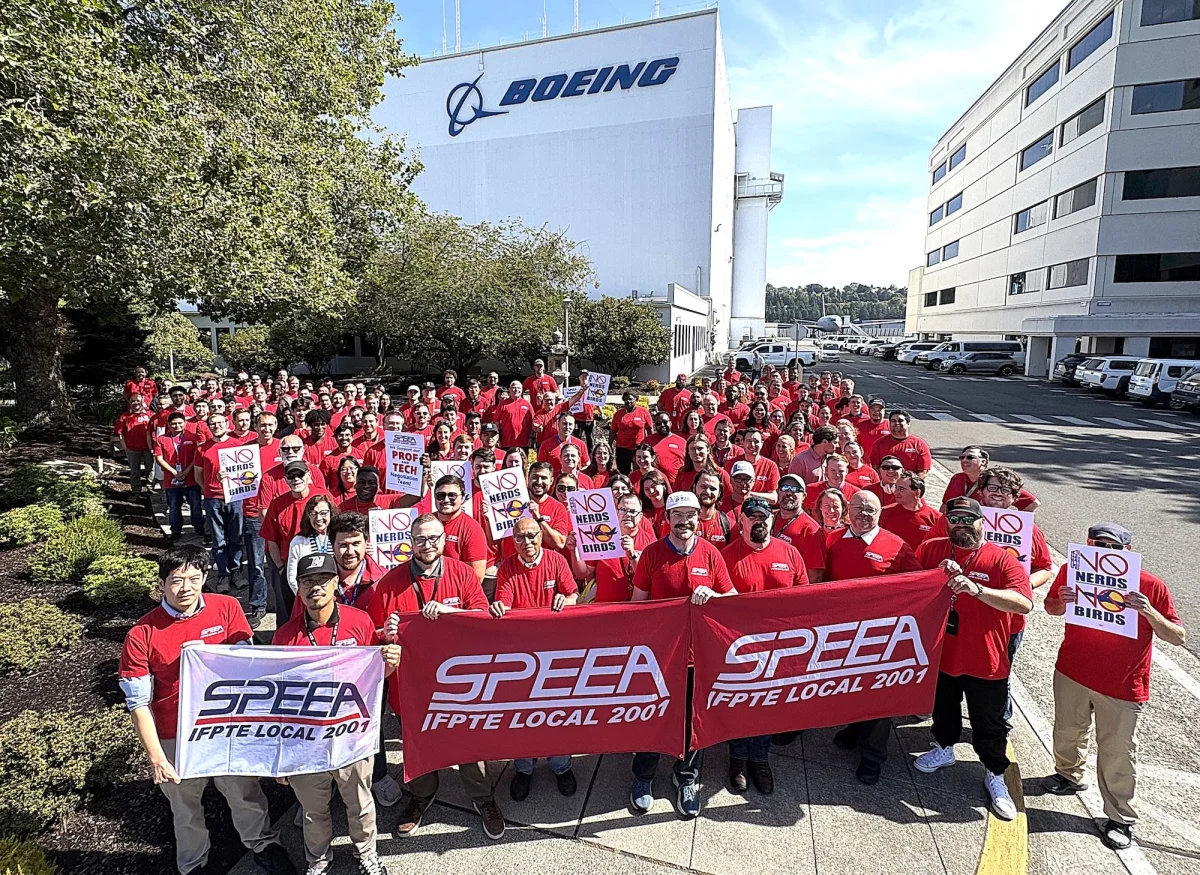
Boeing Tightens Spending Ahead of Critical SPEEA Union Vote
Boeing has implemented spending controls and a hiring freeze as it faces a critical contract ratification vote with its 17,000-member engineering union.

Boeing CEO Kelly Ortberg Warns of 777X Certification Delay
Boeing CEO Kelly Ortberg warned that a potential strike by 17,000 engineers would immediately halt the 777X certification and production programs.

American and United Plan Capacity Cuts Amid Fuel Cost Surge
American and United are trimming flight schedules to offset a $1 billion fuel cost spike while maintaining strong pricing power.

Boeing CEO Reports 737 MAX Output Stabilization Delays
Boeing CEO Kelly Ortberg reports slower 737 MAX production stabilization, prompting a downward revision in 2026 free cash flow expectations to $2 billion.

Boeing Finalizes KAL Order, Salvages Turkish Airlines Deal
Boeing secured a $36.2 billion order from Korean Air Lines for 103 aircraft and nears a resolution on a 150-jet deal with Turkish Airlines.

Airbus Forecasts 42,000 New Jets Amid Strong Global Demand
Airbus expects 42,000 new aircraft deliveries globally by 2045, with 45% of demand concentrated in the Asia-Pacific region.