Emirates & Etihad Suspend Flights as UAE Closes Airspace

Co-Founder & CEOAviation News Editor delivering trusted coverage across the global aviation industry.

Emirates and Etihad Airways have suspended most flights from Dubai and Abu Dhabi after the UAE GCAA closed airspace due to escalating regional conflicts.
Key Takeaways
- •Suspends over 90% of flights from Dubai amid GCAA airspace closure.
- •Disrupts global air cargo, creating a 13-18% capacity shortfall.
- •Diverts traffic to southern corridors, increasing flight times by 2-5 hours.
- •Raises safety concerns following EASA warnings for the entire region.
Major Gulf carriers including Emirates and Etihad Airways have suspended the majority of their flight operations following a directive from the United Arab Emirates' General Civil Aviation Authority (GCAA) to close large sections of its airspace. The move, described as an "exceptional precautionary measure," comes amid escalating regional conflicts and has caused widespread disruption, stranding thousands of passengers and severely impacting global air cargo capacity.
The suspension has effectively crippled operations at two of the world's busiest international hubs, Dubai International Airport (DXB) and Zayed International Airport (AUH) in Abu Dhabi. According to data from FlightAware, over 90% of scheduled flights from Dubai and over 50% from Abu Dhabi were cancelled during the peak of the closure. The broader regional impact was also significant, with data from Cirium showing that 232 of 3,422 scheduled flights to the Middle East, representing 6.7%, were cancelled on February 28, 2026, alone.
Regulatory and Safety Directives
The GCAA's directive was communicated via a Notice to Air Missions (NOTAM), citing the need to safeguard UAE territory and civil aviation. This local action was reinforced by international warnings. The European Union Aviation Safety Agency (EASA) issued Conflict Zone Information Bulletin (CZIB) 2026-03-R4, which advises European operators to avoid all altitudes and flight levels within affected airspace, including the UAE, Iran, Iraq, and Israel. Similarly, the Civil Aviation Authority of Singapore (CAAS) issued its own bulletin advising against operations in Iranian airspace due to the risk of aircraft misidentification.
These warnings underscore the heightened safety concerns in the region. The precedent of the Ukraine International Airlines Flight 752 shootdown in January 2020, where an aircraft was misidentified by air defense systems, heavily influences the current cautious approach by global regulators. The focus remains squarely on de-conflicting civil air traffic from potential military activity.
Severe Impact on Global Cargo and Operations
The closure of the Middle East's critical air corridor has created a significant shock to the global logistics network. According to SEKO Logistics, the disruption has directly caused a 12-13% reduction in global air cargo capacity, contributing to an overall shortfall of 13-18%. This has led to severe backlogs for time-sensitive goods like pharmaceuticals and perishables at major Gulf hubs, which are operating at 50-60% reduced capacity. The impact on humanitarian aid has been particularly acute, with organizations like the International Rescue Committee (IRC) warning that critical medical supplies are stranded, delaying life-saving aid to regions such as Sudan.
Airlines are now forced into lengthy and costly rerouting. SEKO Logistics estimates that diversions around the closed airspace add 2-5 hours of flight time and increase fuel burn by 30-50%. This has put upward pressure on operational costs, reflected in rising fuel prices, which have climbed 4.8% to $99.40 per barrel since late February. Consequently, air freight rates have stabilized at highly elevated levels, with South Asia-Europe routes up approximately 70%.
Historical Context and Network Vulnerability
This event is not without precedent. Temporary airspace closures occurred in April and October 2024 due to missile exchanges, demonstrating the vulnerability of the Gulf hub model. However, the scale and duration of the 2026 closures are more severe. The heavy reliance on a single Middle Eastern 'pipe' for East-West traffic has exposed a critical fragility in global aviation infrastructure. As noted by industry monitor OpsGroup, this dependency creates a system that can break down entirely during regional conflicts.
As a result of the northern route closures, traffic has been forced southward. Data shows traffic through the Saudi-Egypt corridor has spiked by roughly 400% as airlines seek viable alternative routes between Europe and Asia. This massive shift is creating new points of congestion and operational challenges for air traffic control in that region.
What Comes Next
The immediate future of flight operations in the region remains uncertain and is closely tied to geopolitical developments. A key date being monitored is April 6, 2026, which marks the potential end of a US strike pause. Any escalation or de-escalation of military activity following this date is expected to directly influence decisions by the GCAA and other regional authorities regarding the reopening of airspace. In the interim, airlines are focused on operating limited repatriation flights and managing the significant backlog of stranded passengers, urging travelers to avoid airports unless they have a confirmed booking.
Why This Matters
This large-scale airspace closure highlights the systemic risk regional conflicts pose to a highly interconnected global aviation network. It demonstrates the profound vulnerability of the Gulf hub-and-spoke model, which underpins a significant portion of intercontinental travel and cargo. For airlines, the event forces a costly re-evaluation of route networks and risk management, while for the logistics industry, it exposes critical supply chain dependencies that will likely spur a push for greater geographic diversification.
Access up-to-date commercial aviation news and airline industry developments via omniflights.com. Discover how innovation is shaping aviation through aircraft systems, avionics, and digital tools at omniflights.com/technology.
Written by Hardik Vishwakarma
Co-Founder & Aviation News Editor leading initiatives that improve trust and visibility across the global aviation industry. Covers airlines, airports, safety, and emerging technology.
Visit ProfileYou Might Also Like
Discover more aviation news based on similar topics

Families Demand DCA Midair Collision Safety Reforms
Families of 67 victims from the 2025 DCA midair collision are pressing Congress for mandatory ADS-B In technology to prevent future aviation tragedies.

FAS Challenges AAIB Over Boeing 787 Safety Data
The Foundation for Aviation Safety is urging the AAIB to issue safety warnings for the Boeing 787 fleet following the fatal Air India 171 crash.
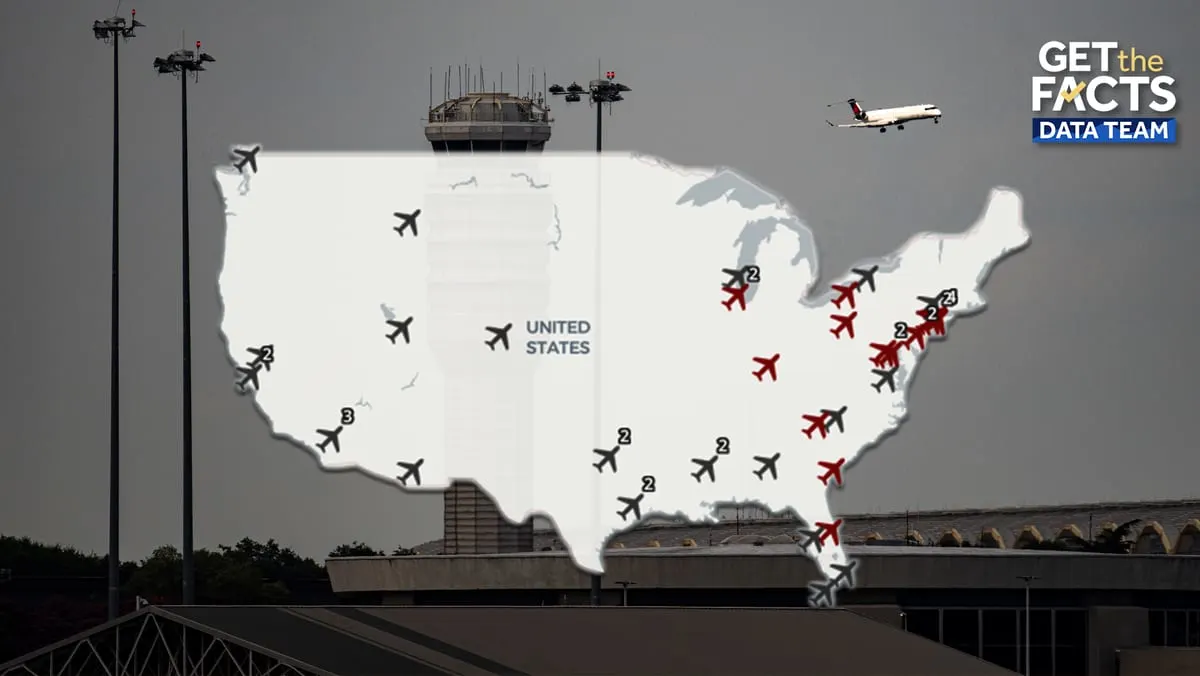
NTSB Safety Recommendations Lag Amid 6 Monthly Near-Misses
Approximately 6 near-miss incidents occur monthly at U.S. airports as 270 NTSB safety recommendations remain unaddressed by federal regulators.
NTSB Rejects FAA Safety Responses After 67-Fatality Crash
The NTSB labeled 11 FAA responses to 2025 DCA mid-air collision recommendations as unacceptable, citing the lack of a mandatory ADS-B In requirement.
EASA Orders Urgent Airbus A380 Wing Spar Inspections
The EASA ordered urgent inspections on 16 Airbus A380s after discovering wing spar cracks that could compromise structural integrity.
Ryanair Flight RK514 Diverts to Birmingham After Emergency
Ryanair flight RK514 diverted to Birmingham Airport on September 13, 2026, following a medical emergency involving a passenger.