Emirates 777-300ER Declares Fuel Emergency in Miami

Co-Founder & CEOAviation News Editor delivering trusted coverage across the global aviation industry.
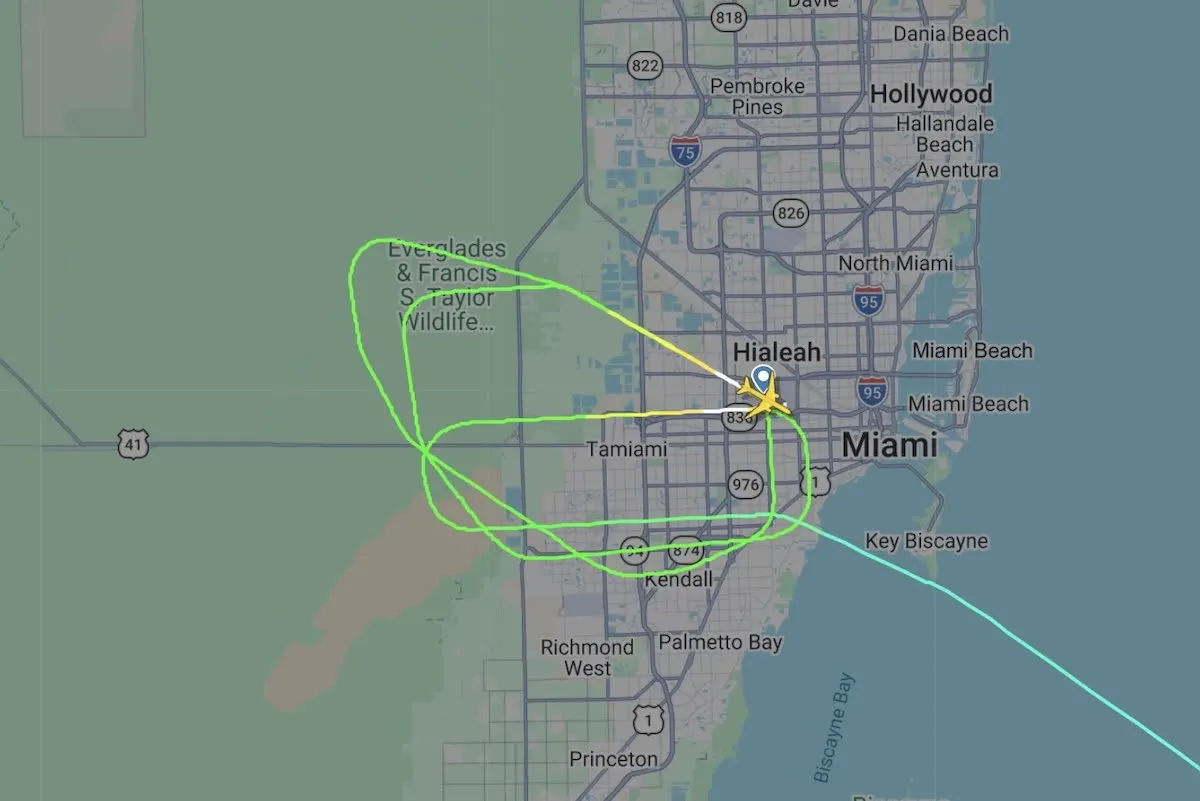
Emirates flight EK-213 declared a Mayday fuel emergency in Miami after a 17-hour flight and two aborted landings due to severe weather.
Key Takeaways
- •Emirates EK-213 declared a Mayday fuel emergency over Miami.
- •The 17-hour flight faced headwinds and two aborted landings.
- •Incident highlights tension in ultra-long-haul fuel planning.
- •An FAA investigation and Emirates fuel policy review are expected.
An Emirates flight EK213 emergency was declared on May 17, 2026, when the crew of a Boeing 777-300ER issued a Mayday low fuel declaration while on approach to Miami International Airport (MIA). The ultra-long-haul flight from Dubai International Airport (DXB) was forced into the distress call after a combination of unexpectedly strong headwinds and severe weather at the destination eroded its fuel reserves to a critical level.
The incident highlights the fine margins involved in modern aviation fuel planning regulations, where economic and environmental pressures to minimize fuel loads can clash with the operational realities of unpredictable weather. The aircraft, operating a flight that typically takes between 15.5 and 16.5 hours, remained airborne for 17 hours and 16 minutes, according to data from Flightradar24. Upon reaching Miami, the crew encountered adverse weather, including significant wind shear and thunderstorms, which resulted in two aborted landing attempts. These go-arounds consumed the remaining contingency fuel, forcing the pilots to declare an emergency to receive priority handling from air traffic control for a safe landing.
Regulatory Framework and Fuel Reserves
Commercial aviation operates under a strict set of international and national fuel requirements designed to prevent such scenarios. The International Civil Aviation Organization (ICAO) establishes the global standard in its Annex 6 document, which mandates that aircraft carry enough fuel to complete their flight, divert to an alternate airport if necessary, and hold for a specified period. It defines a two-stage warning system: a 'MINIMUM FUEL' advisory to air traffic control, followed by a 'MAYDAY' declaration if the aircraft is in danger of landing with less than its final reserve fuel.
In the United States, these standards are codified by the Federal Aviation Administration (FAA). According to 14 CFR 121.645, flag carriers like Emirates flying into the U.S. must carry sufficient fuel to fly to their destination, then to the most distant alternate airport, and then hold for an additional 30 minutes. Similarly, the European Union Aviation Safety Agency (EASA) has its own comprehensive rules under CAT.OP.MPA.180 and 181, which detail precise calculations for contingency and reserve fuel. The EK-213 incident will likely trigger a review by both Emirates and regulatory bodies to determine if the planned fuel load was sufficient given the forecast conditions.
Industry Context and Competing Pressures
The push for greater efficiency and reduced carbon emissions has led airlines to optimize fuel loads carefully. Carrying excess fuel adds significant weight, which in turn increases fuel consumption. According to ICAO and EASA studies, every extra ton of fuel can increase consumption by 2.5% to 4.5% per hour. This creates a delicate balancing act for dispatchers and pilots.
This operational pressure is a point of contention. Aviation environmental advocates argue that consistently carrying excessive 'tankered' fuel is unsustainable. Conversely, pilot unions and safety advocates express concern that commercial pressure to minimize fuel costs can reduce the safety margin needed to handle unforeseen events like the severe, unforecasted weather encountered by EK-213 in Miami. The incident underscores the critical importance of accurate meteorological forecasting and conservative fuel planning on ultra-long-haul routes.
Historical Precedents
This event is not without precedent. The most foundational incident in modern fuel management was the crash of Avianca Flight 52 in 1990. The aircraft ran out of fuel and crashed while in a holding pattern near New York's JFK airport, an accident that led to a complete overhaul of how pilots communicate fuel status to air traffic control. The terms 'minimum fuel' and 'Mayday' were standardized to eliminate ambiguity.
A more recent and analogous event occurred in October 2022, when Singapore Airlines Flight SQ319, also a Boeing 777-300ER, declared a fuel emergency after three aborted landings due to bad weather. That flight landed safely at a diversion airport, but the incident prompted a formal investigation and updated fuel management training. The Emirates situation in Miami follows a similar pattern, demonstrating that despite advanced technology and refined regulations, fuel exhaustion remains a persistent risk in complex operational environments.
Technical Analysis
The Emirates EK-213 incident is a clear illustration of how multiple, individually manageable factors can compound to create a critical safety event. The combination of a longer-than-planned en-route segment due to headwinds and unexpected terminal weather with multiple go-arounds systematically depleted the aircraft's layers of fuel reserves. While modern fuel planning is highly sophisticated, this event suggests that models may need to account for a higher frequency of severe, localized weather events, particularly at coastal airports like MIA known for rapid weather changes. The crew's decision to declare a Mayday was the correct and final action in the safety chain, ensuring ATC provided immediate priority to get the aircraft on the ground safely. It serves as a real-world stress test of the regulations established in the wake of tragedies like Avianca 52.
What Comes Next
Following the incident, the Federal Aviation Administration (FAA) is expected to conduct a review and publish a preliminary report, which is anticipated by June 2026. Internally, Emirates is expected to complete a comprehensive review of its fuel planning policies and forecasting models for its ultra-long-haul routes, with results likely to be implemented by the third quarter of 2026. This review will focus on ensuring that contingency fuel calculations are robust enough to handle increasing weather volatility.
Why This Matters
This fuel emergency serves as a critical reminder for the aviation industry of the non-negotiable importance of conservative fuel planning. For airlines, it highlights the need to balance economic efficiency with operational resilience. For regulators, it may prompt a re-evaluation of whether existing reserve requirements are adequate in an era of more frequent extreme weather events. Ultimately, the incident reinforces that pilot authority to declare an emergency is a crucial final safeguard in the complex system of global air travel.
Frequently Asked Questions
- Why did Emirates flight EK-213 declare a fuel emergency?
- Emirates flight EK-213 declared a Mayday for low fuel after its flight from Dubai to Miami lasted over 17 hours due to strong headwinds. Upon arrival, severe weather forced two aborted landings, which consumed the aircraft's critical final fuel reserves.
- What are the rules for minimum fuel on international flights?
- International flights are governed by ICAO Annex 6 and national regulations like the FAA's 14 CFR 121.645. These rules require aircraft to carry enough fuel to reach their destination, proceed to an alternate airport, and then hold for a minimum of 30 minutes.
- What happens after a pilot declares a Mayday for fuel?
- A 'Mayday' declaration for fuel gives the aircraft absolute priority with Air Traffic Control. ATC will clear other aircraft and provide the most direct and immediate route for landing. Emergency services are also deployed on the ground as a mandatory precaution.
From airline operations to fleet updates, commercial aviation news lives at omniflights.com. For reporting on UAP sightings, investigations, and aviation-related encounters, see the UAPs section at omniflights.com/uaps.

Written by Hardik Vishwakarma
Co-Founder & Aviation News Editor leading initiatives that improve trust and visibility across the global aviation industry. Covers airlines, airports, safety, and emerging technology.
Visit ProfileYou Might Also Like
Discover more aviation news based on similar topics
Flydubai FZ1073 Hijacker Flagged as Security Risk by Oman
A Flydubai co-pilot accused of attempting to crash flight FZ1073 had been previously barred from flying in Oman due to extremist concerns.

FAA Clears Boeing 737 MAX Software Issue, Resumes MAX 10
The FAA cleared a Boeing 737 MAX software issue after a safety review, allowing the 737 MAX 10 certification process to resume immediately.

Flydubai Flight 1073 Hijacking Attempt Over Jordan
A Flydubai Flight 1073 co-pilot attacked the captain mid-flight on September 30, 2026, forcing passengers to intervene and stabilize the aircraft.

Families Demand DCA Midair Collision Safety Reforms
Families of 67 victims from the 2025 DCA midair collision are pressing Congress for mandatory ADS-B In technology to prevent future aviation tragedies.

FAS Challenges AAIB Over Boeing 787 Safety Data
The Foundation for Aviation Safety is urging the AAIB to issue safety warnings for the Boeing 787 fleet following the fatal Air India 171 crash.
NTSB Safety Recommendations Lag Amid 6 Monthly Near-Misses
Approximately 6 near-miss incidents occur monthly at U.S. airports as 270 NTSB safety recommendations remain unaddressed by federal regulators.