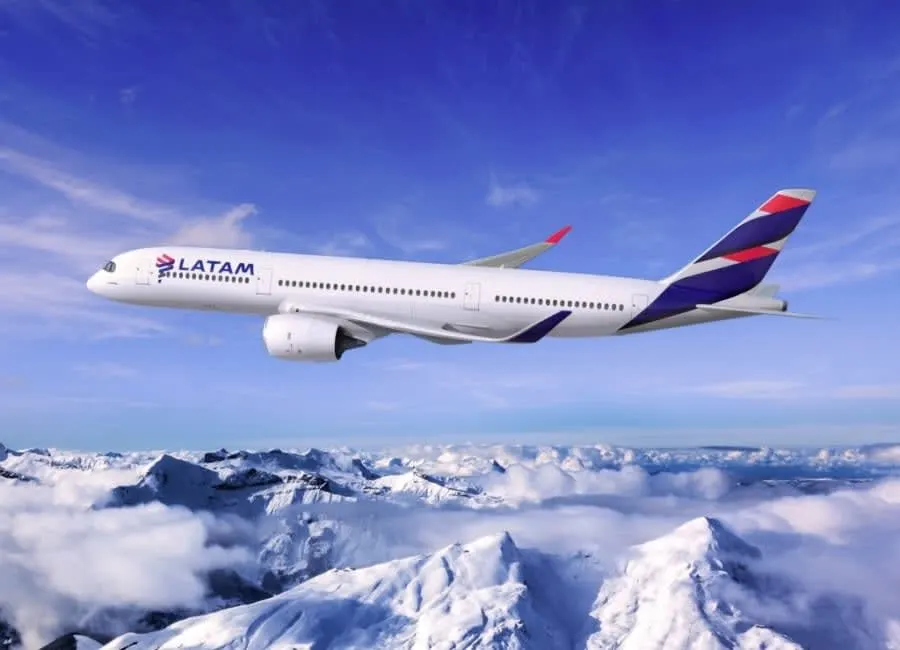
DHL and IAG Cargo Sign 5-Year SAF Deal at London Heathrow


DHL Group and IAG Cargo signed a five-year deal for 240 million liters of SAF at Heathrow, targeting a 640,000-tonne CO2e emissions reduction.
Key Takeaways
- •Secures 240 million liters of Sustainable Aviation Fuel over five years at London Heathrow.
- •Targets a lifecycle emissions reduction of approximately 640,000 metric tons of CO2e.
- •Supports DHL's goal of a 30% SAF blend by 2030 and IAG's 10% usage target.
- •Utilizes a 'book and claim' system to provide Scope 3 emissions reductions to DHL customers.
Logistics giant DHL Group and International Airlines Group (IAG) Cargo have significantly expanded their partnership with a new five-year agreement for Sustainable Aviation Fuel (SAF). The deal secures the uplift of approximately 240 million liters of SAF at London Heathrow Airport (LHR), marking one of the largest such agreements in the air freight industry to date.
The collaboration is designed to reduce Scope 3 greenhouse gas emissions for DHL Express’s global air cargo operations. According to a DHL Group press release, the agreement is projected to reduce lifecycle emissions by approximately 640,000 metric tons of carbon dioxide equivalent (CO2e) over the contract period. This volume provides a substantial boost to both companies' efforts to meet aggressive decarbonization targets by 2030.
Agreement Details and Impact
Under the terms of the agreement, DHL Express will benefit from the environmental attributes of approximately 40 million liters of neat SAF annually. The fuel supplied is certified by the International Sustainability & Carbon Certification (ISCC), a global standard ensuring the feedstock, derived from used cooking oil, meets stringent sustainability criteria. The ISCC-certified SAF used in this partnership achieves a lifecycle greenhouse gas emissions reduction of approximately 90% compared to conventional jet fuel.
This partnership directly supports the sustainability goals of both organizations. DHL has publicly committed to achieving a 30% SAF blending ratio across all its air transport operations by 2030 as part of its Sustainability Roadmap. Similarly, IAG, the parent company of British Airways and Iberia, has a mandate to fulfill 10% of its total fuel requirements with SAF by the same year. Travis Cobb, EVP of Global Network Operations & Aviation at DHL Express, stated the deal “shows what is possible when two committed SAF users in the industry pool their efforts” to decarbonize major trade lanes.
The primary beneficiaries beyond the two partners are corporate customers of DHL Express. Through mechanisms like DHL's GoGreen Plus service, these shippers can claim verified Scope 3 emissions reductions, helping them decarbonize their own supply chains and meet corporate climate targets. For IAG and its carriers like British Airways, the deal reduces their direct Scope 1 emissions for flights operating from London Heathrow, a critical hub.
Industry Context and Precedents
This agreement reflects a broader industry trend toward long-term SAF offtake agreements. Such multi-year contracts provide SAF producers with the revenue certainty required to secure financing and scale up new biorefineries, a critical step in making the fuel more accessible and affordable. The deal also leverages a 'book and claim' model, which allows logistics providers to purchase SAF and allocate its environmental benefits to customers regardless of whether their specific cargo flew on a SAF-powered aircraft. This model is seen as essential for scaling the market while SAF remains a scarce commodity.
Both companies have a history of pioneering SAF partnerships. In March 2022, DHL secured over 800 million liters of SAF from producers bp and Neste, establishing its strategy of large-scale procurement. For IAG Cargo, this builds on a June 2023 partnership with Kuehne+Nagel, which part-funded the purchase of 6 million liters of SAF. The current agreement with DHL represents a significant escalation in volume and commitment, signaling a maturation of the SAF market. Camilo Garcia Cervera, Chief Sales and Marketing Officer at IAG Cargo, reinforced this, noting that “partnerships like these will be critical to scaling the use of sustainable aviation fuel.”
Technical Analysis
This development indicates a pivotal shift in aviation decarbonization strategy, moving from smaller, pilot-program-sized purchases to large-scale, multi-year commitments that can meaningfully impact corporate emissions inventories. The partnership structure, where a major freight forwarder (DHL) and an airline group (IAG) pool their resources, provides a viable model to bridge the 'green premium'—the significant cost difference between SAF and conventional jet fuel. By guaranteeing demand, they de-risk investment for producers and help drive the economies of scale needed to lower costs. This collaborative approach is essential to meet increasingly stringent regulatory mandates, such as the European Union's ReFuelEU Aviation regulation, which sets binding SAF blending targets for fuel suppliers and airlines. The deal accelerates the trajectory set by previous partnerships, moving from symbolic gestures to a functional, scalable market mechanism.
What Comes Next
The five-year agreement runs through 2030, aligning with key interim climate targets for both companies. The industry will be watching to see if this model of direct collaboration between logistics providers and airline groups is replicated on other major trade lanes.
According to their respective sustainability strategies, the key milestones for the partners are:
- 2030: IAG is committed to using 10% SAF across its airline operations.
- 2030: DHL Group targets a 30% SAF blend for all its air transport services.
Meeting these goals will require a portfolio of similar large-scale agreements. The International Air Transport Association (IATA) continues to advocate for government incentives to further accelerate SAF production and adoption, which will be crucial for the industry to reach its goal of net-zero carbon emissions by 2050.
Why This Matters
This landmark agreement between DHL and IAG Cargo serves as a powerful demand signal to the nascent SAF production market. It demonstrates a scalable financial and operational model for decarbonizing air freight, one of the most challenging sectors to abate. For the broader industry, it proves that cross-value-chain partnerships are not just possible but essential for achieving ambitious climate targets and meeting the growing demand for green logistics solutions.
Frequently Asked Questions
- How much sustainable aviation fuel is part of the DHL and IAG Cargo agreement?
- The five-year agreement secures approximately 240 million liters of Sustainable Aviation Fuel (SAF) to be uplifted at London Heathrow Airport. This provides DHL Express with the environmental attributes of about 40 million liters of neat SAF per year.
- What are the emissions reduction goals for the DHL and IAG Cargo SAF deal?
- The partnership is expected to deliver a lifecycle greenhouse gas emissions reduction of approximately 640,000 metric tons of CO2e. The ISCC-certified SAF being used achieves around a 90% reduction in lifecycle emissions compared to conventional fossil jet fuel.
- What are DHL's and IAG's long-term SAF targets?
- By 2030, DHL Group aims to achieve a 30% SAF blending ratio across all its air transport operations. By the same year, International Airlines Group (IAG) has committed to fulfilling 10% of its total fuel needs with SAF.
From airline operations to fleet updates, commercial aviation news lives at omniflights.com. For reporting on UAP sightings, investigations, and aviation-related encounters, see the UAPs section at omniflights.com/uaps.

Written by Hardik Vishwakarma
Co-Founder & Aviation News Editor leading initiatives that improve trust and visibility across the global aviation industry. Covers airlines, airports, safety, and emerging technology.
Visit ProfileYou Might Also Like

American Airlines Flies First U.S. eSAF Passenger Flight
Akasa Air Partners with BPCL to Advance SAF in India

Delta, Shell Aviation Ink 5-Year SAF Supply Agreement
Indonesia to Mandate 1% SAF Blend for Flights by 2027
Gulfstream G800 Completes 100% SAF High-Altitude Emissions Test